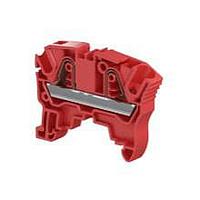
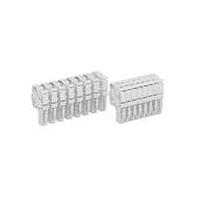
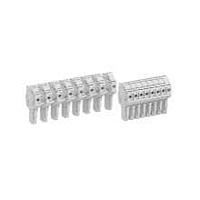
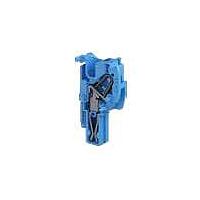
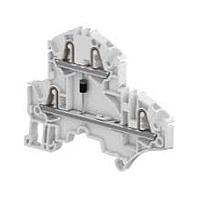
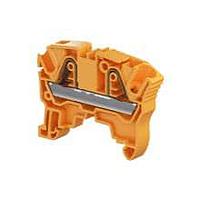
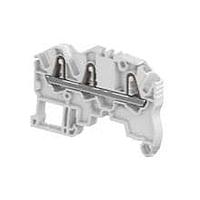
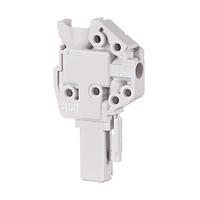
DIN Rail Terminal Blocks
Reliable panel wiring depends on more than just conductor size and layout. In industrial control cabinets, machine panels, and power distribution assemblies, the connection method has a direct impact on safety, serviceability, and troubleshooting speed. DIN Rail Terminal Blocks are widely used because they create organized, modular connection points that are easy to install, expand, and maintain.
For engineers, panel builders, and maintenance teams, this category supports practical needs such as clean wire routing, signal segregation, and faster replacement during service work. Whether you are building a new cabinet or standardizing spare parts for ongoing projects, selecting the right terminal block format helps improve both assembly efficiency and long-term reliability.
Why DIN rail mounting remains a standard in control panels
DIN rail mounting is favored in industrial environments because it supports a modular approach to wiring. Instead of creating fixed point-to-point connections that are harder to modify later, terminal blocks mounted on a rail can be arranged by function, voltage level, or circuit group. This makes panel design easier to document and easier to service in the field.
Another practical advantage is maintainability. When terminals are grouped clearly on a rail, technicians can isolate circuits, identify wiring paths, and replace components with less disruption to adjacent connections. In systems where downtime matters, this layout can reduce diagnostic time and help keep maintenance work more controlled and repeatable.
Where these terminal blocks are commonly used
DIN rail terminal blocks are common in automation cabinets, building control systems, OEM machinery, and utility interface panels. They are often used wherever multiple field wires need to be terminated cleanly before connecting to PLCs, relays, power supplies, sensors, or distribution points. Their structure supports neat panel organization in both compact enclosures and larger multi-section cabinets.
They are also relevant in applications that require future expansion. If a control system is likely to gain extra I/O, monitoring circuits, or auxiliary power branches, a rail-mounted terminal system can make those changes easier to implement. For related connection styles in compact assemblies, users may also compare options in wire-to-board terminal blocks when the application is on-device rather than panel-based.
Key selection points before choosing a part
The right choice usually depends on the conductor type, the expected current path, the available panel space, and the preferred installation method. Teams should check whether they need feed-through connections, grounding arrangements, multi-level terminals, or dedicated positions for signal and control wiring. A well-matched terminal strategy improves panel readability and reduces the risk of wiring errors during assembly.
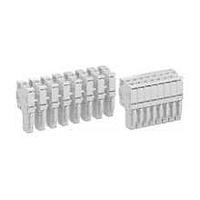
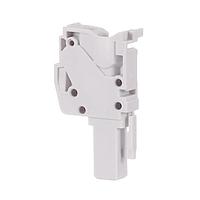
Connection technology also matters. Some designs prioritize screw-based retention, while others may favor push-in or spring-assisted handling for faster repetitive wiring. In the product range shown here, parts such as the Amphenol FLTS12WR00 illustrate how push-in style termination can support straightforward wire insertion in suitable applications, while other Amphenol references in this category reflect broader terminal block options for different panel design needs.
Understanding product variety within the category
Not every DIN rail terminal block serves the same purpose. Some are intended for standard conductor pass-through, while others support higher-density arrangements, potential distribution, or more specialized wiring schemes. This is why product naming alone is rarely enough for selection; the intended role inside the cabinet is just as important as the mounting format.
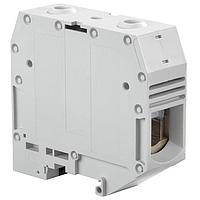
Examples such as Amphenol TM0319000000G, Amphenol TM0519000000G, and Amphenol VG2001000000G may be useful as representative options when reviewing layouts or comparing footprint and connection style requirements. For broader terminal strategies, some projects may also need power distribution terminal blocks where multiple outgoing circuits must be managed from a central feed point.
Manufacturer context and sourcing considerations
In this category, Amphenol is one of the most relevant manufacturers to review, especially where consistent connector ecosystem sourcing is important. Buyers often prefer working within a manufacturer family when they want more predictable mechanical design, documentation consistency, and long-term procurement planning across related interconnect components.
Other established connector and industrial component brands may also be relevant depending on the project environment, enclosure standard, and preferred termination method. The most effective sourcing approach is usually not to focus on brand alone, but to match the terminal block to the electrical load, wiring practice, service expectations, and available installation space.
How DIN rail terminal blocks support better panel organization
A well-structured terminal arrangement does more than terminate wires. It can create a clearer separation between field signals, control circuits, and power wiring, which helps both commissioning and maintenance. This organization becomes especially valuable in larger cabinets where multiple teams may interact with the same installation over its lifecycle.
When the application calls for a different mounting or interface style, it may be useful to compare with fixed terminal blocks for board or chassis-oriented designs. In contrast, DIN rail systems are typically chosen where modularity, labeling, and ease of rearrangement are part of the design priority.
Typical examples from this range
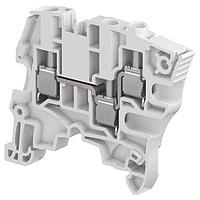
This selection includes multiple Amphenol references that can help buyers identify suitable formats for panel connection tasks. Models such as Amphenol DS2401208000G, Amphenol DS2401508000G, Amphenol DS2401308000G, and Amphenol DS2401018000G represent examples within the available assortment, while Amphenol DS2400718000G, Amphenol DS2400508000G, Amphenol DS2400208000G, and Amphenol DS2400118000G show that the range covers more than a single mechanical variation.
These examples are best used as starting points for evaluating connection architecture rather than as interchangeable parts by default. In terminal block selection, details such as mounting compatibility, conductor acceptance, and panel design intent should always guide the final decision.
Choosing with long-term maintenance in mind
Terminal block standardization can simplify both procurement and after-sales support. When a facility or machine platform uses a consistent DIN rail terminal approach, spare management becomes easier and technicians can work faster during inspections, retrofits, or emergency replacement tasks. This is particularly useful in industrial environments where small wiring differences can slow down service work.
If you are comparing options for a new build or retrofit, it helps to start with the circuit function, expected wiring density, and installation workflow. From there, the right DIN rail terminal block can support a cleaner cabinet design, more structured maintenance practices, and a more scalable wiring system over time.
For projects that require organized, service-friendly panel connections, this category provides a practical foundation for selecting rail-mounted terminal solutions. Reviewing the connection method, panel layout, and future maintenance needs up front will make it easier to narrow the range and choose parts that fit the application with fewer compromises.
Get exclusive volume discounts, bulk pricing updates, and new product alerts delivered directly to your inbox.
By subscribing, you agree to our Terms of Service and Privacy Policy.
Direct access to our certified experts