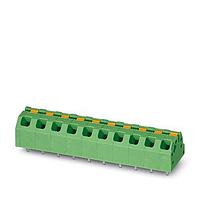
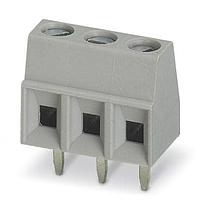
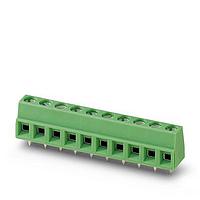
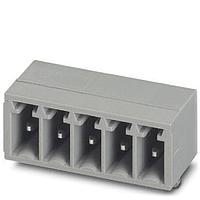
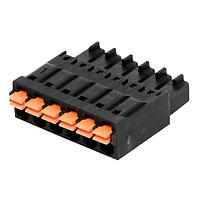
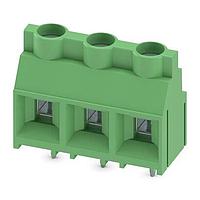
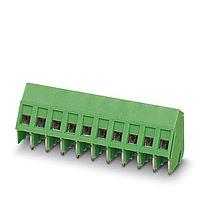
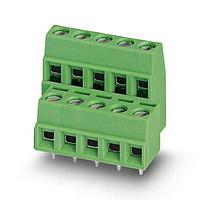
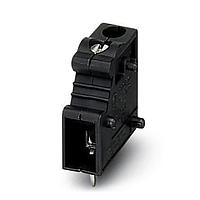
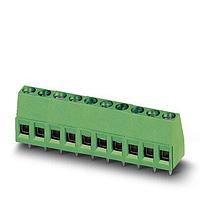
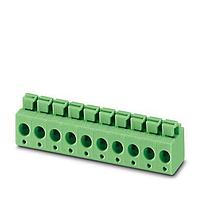
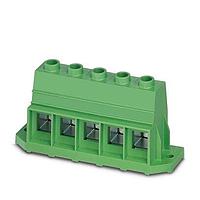
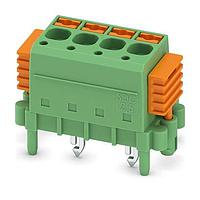
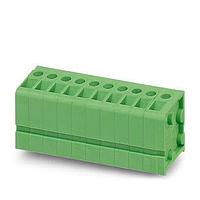
Fixed Terminal Blocks
Reliable field wiring often depends on small connection details that are easy to overlook during design. When conductors need a secure, repeatable, and serviceable termination point on a PCB or within compact equipment, Fixed Terminal Blocks are a practical choice for industrial electronics, control panels, embedded devices, and power interface sections.
In this category, buyers typically compare more than just part numbers. The right selection depends on conductor size, current path, mounting style, pitch, service access, and how the connection fits into the wider system architecture. That is why this range is relevant across both prototype builds and volume production, especially where stable mechanical retention and organized wiring are important.
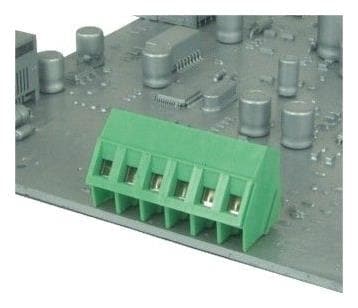
Where fixed terminal blocks fit in an electrical design
A fixed terminal block is typically mounted directly onto a board or installed as a dedicated connection point that remains in place during normal operation. Unlike plug-in styles that separate into mating halves, a fixed version is intended to provide a stable termination interface for wires entering the equipment. This makes it suitable for applications where vibration resistance, consistent assembly, and straightforward field wiring matter.
These components are commonly used in power entry sections, control I/O, signal distribution, and interface boards. In many designs, they help reduce wiring errors by creating clearly defined termination points for installers and service technicians. If your project requires a different connection approach, related options such as wire-to-board connectors or more application-specific barrier terminal blocks may also be worth reviewing.
Typical configurations and connection styles
The category covers a broad range of connection formats, even when the overall function remains the same: terminating wires securely in a fixed position. Depending on the installation environment, engineers may look for different pitches, circuit counts, wire entry directions, and screw or clamp-based attachment methods. These differences can affect enclosure layout, wiring density, and accessibility during assembly or maintenance.
Some products in this range illustrate that variety well. For example, the ams OSRAM 7602-501 Terminal Blocks show how a barrier-style construction can support more robust separation between connections, while products such as Amphenol ELVD405G0, ELVD265G0, and ELFT2016G reflect the kind of PCB terminal block formats often chosen for compact equipment interfaces. The best option depends less on brand preference alone and more on how the connection must behave in the final installation.
Key selection factors for engineers and buyers
When specifying a part, it helps to begin with the electrical and mechanical basics. Pitch, supported wire gauge, rated current, number of circuits, and wire attachment method all influence whether a terminal block is suitable for a given board or assembly. Even small differences in spacing or conductor accommodation can affect production efficiency and field serviceability.
Mechanical context is just as important. Consider whether technicians need front or side access, whether captive hardware would simplify installation, and whether the terminal block will be exposed to frequent rewiring. For higher-density or permanently wired assemblies, fixed PCB styles are often preferred. In panel-based systems, some teams may instead compare this category with DIN rail terminal blocks or power distribution terminal blocks depending on the wiring architecture.
Examples from leading manufacturers
This selection includes products from established connector and interconnect suppliers such as Amphenol, as well as parts from 3M, Adafruit, and ams OSRAM. In practical sourcing terms, that gives buyers access to a mix of terminal block formats suitable for industrial electronics, development work, and general-purpose equipment builds.
Within the listed products, Amphenol appears across several different series, including ELXP041G0, ELFF0824G, ELVF204G0E, APTS153PEYG00G, and SCM023100L. These examples highlight how one manufacturer may cover multiple board-level termination needs rather than a single use case. The presence of Amphenol ASMA41BG DIN TERMINAL BLOCKS MODULAR, RAIL-MOUNT INTERCONNECT SYSTEM also shows that some product families sit close to panel and modular control-system applications, where wiring organization and maintainability are central concerns.
How fixed terminal blocks support maintenance and assembly
In industrial and commercial equipment, a connection point is not only an electrical interface; it is also part of the service strategy. A well-chosen terminal block can make wire routing clearer, reduce installation mistakes, and simplify replacement work during commissioning or maintenance. This becomes especially valuable in low-voltage control systems, compact power assemblies, and boards that must be wired by technicians in the field.
Serviceability is often improved when terminals are easy to identify, physically separated well enough for safe handling, and matched to the expected conductor type. Fixed designs also help maintain consistent positioning on the board, which supports repeatable assembly processes in production environments. For OEM and contract manufacturing workflows, that consistency can be just as important as the electrical rating itself.
Use cases across industrial and electronic applications
Fixed terminal blocks are widely used wherever discrete wires need to transition into an electronic assembly without relying on free-hanging connectors. Common examples include controller boards, sensor interfaces, compact power supplies, building automation modules, laboratory instruments, and machine subassemblies. In these environments, engineers often prioritize a balance of wiring security, layout efficiency, and straightforward installation.
Board-level power and signal termination is one of the most common roles for this category, but not the only one. Some projects need only a simple two-position connection, while others require multi-circuit arrangements for grouped I/O or distributed field wiring. Products such as Adafruit 2135 Terminal Blocks can also be relevant in development-oriented or compact embedded builds where practical screw-terminal access is useful during integration and testing.
What to review before placing an order
Before finalizing a selection, verify the physical fit on the PCB or assembly, the expected conductor size, and the real operating current of the circuit rather than relying on nominal assumptions. It is also worth checking how the terminal orientation will affect screwdriver access, cable bend radius, and neighboring components. These considerations help avoid rework later in the design cycle.
For procurement teams, consistency across variants can also matter. Standardizing on a preferred family where possible may simplify documentation, assembly instructions, and replacement planning. If your application spans board-level terminations and panel-level distribution, reviewing adjacent categories alongside this one can help ensure the connection strategy remains coherent across the full system.
Choosing the right category for your project
Not every wiring problem should be solved with the same connector style. Fixed terminal blocks are especially suitable when the termination point should remain attached to the equipment, the wiring must be mechanically secure, and maintenance access is still important. They are a strong fit for many industrial, commercial, and embedded designs where permanent or semi-permanent wire connections are expected.
As you compare options in this category, focus on the real installation conditions: wire size, available space, required circuit count, and how the connection will be assembled and serviced over time. That approach makes it easier to narrow the range and choose a terminal block format that supports both immediate build requirements and long-term reliability.
Get exclusive volume discounts, bulk pricing updates, and new product alerts delivered directly to your inbox.
By subscribing, you agree to our Terms of Service and Privacy Policy.
Direct access to our certified experts