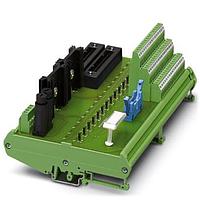
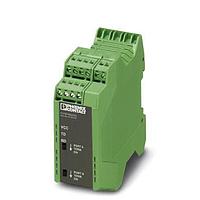
Terminal Block Interface Modules
In control cabinets and machine wiring, clean signal transfer is just as important as the PLC, relay, or I/O hardware behind it. Terminal Block Interface Modules help organize that connection layer by simplifying how field signals, control signals, and panel wiring are brought together in a compact, serviceable format. For engineers, panel builders, and maintenance teams, this category is especially relevant when wiring density, traceability, and faster installation matter.
These modules are commonly used to bridge controllers, terminal blocks, and peripheral devices without turning the panel into a difficult-to-service wiring assembly. Depending on the application, they can support structured signal breakout, passive signal routing, or integration with common industrial connection formats such as D-SUB, M12, and DIN rail-based interfaces.
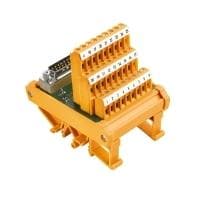
Where terminal block interface modules fit in a control system
In practical terms, these products sit between the control layer and the field or subsystem wiring layer. They are often selected to reduce wiring complexity, improve labeling and troubleshooting, and create a more modular panel design. Instead of landing every conductor directly on a controller or custom assembly, the interface module creates a structured handoff point.
This makes them useful in factory automation, process panels, machine control, and retrofit projects where existing signal wiring needs to be adapted to newer hardware. In many builds, they are used alongside DIN rail terminal blocks when a panel requires both signal interfacing and standard field termination in the same enclosure.
Common module styles in this category
The category includes both passive interface modules and terminal block-style interface modules for different wiring strategies. Passive modules are often chosen when the goal is organized signal distribution or breakout without adding active conversion functions. Terminal block interface modules, on the other hand, are often preferred where direct access to individual points, clear conductor landing, and fast service work are priorities.
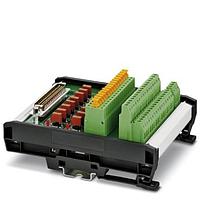
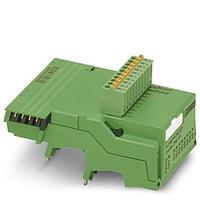
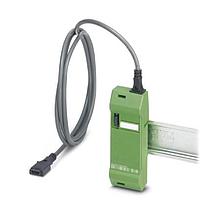
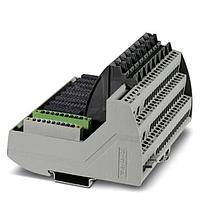
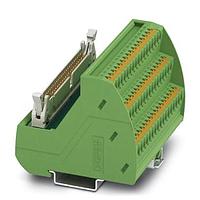
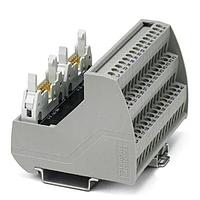
Examples in this range show how varied the format can be. Some modules are designed for high-density multi-pin connections, while others focus on compact I/O interfacing with screw or push-in connections. There are also versions intended for mounting on standard rails, which supports consistent cabinet layouts and easier replacement procedures during maintenance.
Connection options and installation considerations
One of the main reasons buyers compare interface modules carefully is the connection method. Within the available products, you can find configurations using screw connection, push-in termination, and connector-based interfaces such as M12. The right option depends on service philosophy, wiring standards, vibration conditions, and how often the module may need to be disconnected or replaced.
For example, the PHOENIX CONTACT 2701529 AXL E EC DI8 DO4 2A M12 6M is relevant in applications where M12 connectivity supports faster device-level integration. The PHOENIX CONTACT 2903036 DFLK 16/FKCT illustrates a more compact push-in style approach, while products such as the PHOENIX CONTACT 2315227 VIP-2/SC/FLK50/PLC and PHOENIX CONTACT 2901584 UM 45-D37SUB/M/HW/C300/AIO reflect multi-position signal interfacing for denser cabinet designs.
Why PHOENIX CONTACT is often associated with this product group
A large share of the representative products in this category comes from PHOENIX CONTACT, a well-known name in industrial connection and interface technology. That is helpful for buyers looking for consistency across panel components, especially when interface modules need to align with broader terminal, controller, or automation cabinet standards.
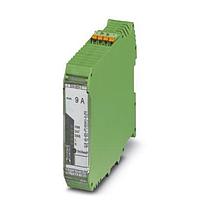
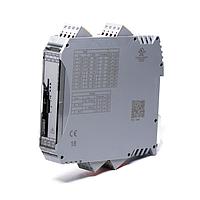
Within the featured range, you can see different module families serving different wiring needs. Examples such as the STGZ 10-RVS, MACX MCR-SL-2NAM-RO, and FLKM series show that the category is not limited to one single form factor. Instead, it covers a practical spectrum from compact signal interfacing to structured passive modules for organized cabinet integration.
How to choose the right interface module
The best selection process starts with the signal and wiring architecture rather than the product name alone. Buyers usually compare the number of positions, connection style, mounting approach, panel space, and compatibility with existing control hardware. Environmental range may also matter, especially in cabinets exposed to wider temperature variation or installed in demanding industrial environments.
It also helps to think about future maintenance. A module that makes conductor identification easier, groups related channels logically, and supports faster replacement can reduce troubleshooting time later. If the design also requires adjacent power or conventional termination components, it may be useful to review related options such as power distribution terminal blocks or fixed terminal blocks for the rest of the panel layout.
Typical application scenarios
These modules are commonly used in PLC cabinets, remote I/O panels, machine skids, and instrumentation assemblies where multiple signals must be organized in a limited space. They are also useful in retrofit work, where a clean interface between existing field wiring and updated control hardware can reduce rework. In those situations, the module acts as a practical transition point rather than just a connector accessory.
Some listed products also indicate compatibility-oriented or format-specific use cases. The PHOENIX CONTACT 1100967 VARIOFACE module, for example, reflects how interface modules can be chosen for integration with established automation platforms and structured mounting arrangements. That kind of application-driven selection is often more important than choosing by dimensions alone.
Benefits for panel building and maintenance teams
From an operational perspective, the value of this category comes down to orderly wiring, repeatability, and easier service access. A well-matched interface module can shorten assembly time, improve documentation, and help reduce wiring errors during commissioning. For maintenance teams, clearer signal paths can make diagnostics faster and less disruptive.
This is especially relevant in projects where cabinets must remain scalable over time. Adding or modifying subsystems is easier when signal interfaces are already structured through dedicated modules instead of direct point-to-point wiring everywhere. For that reason, interface modules are often treated as a small component with a large impact on panel usability.
Finding the right fit for your project
Whether the priority is compact signal breakout, DIN rail integration, multi-position interfacing, or service-friendly field wiring, this category supports a broad range of industrial cabinet requirements. The available PHOENIX CONTACT modules illustrate several practical approaches, from passive FLKM variants to connectorized and application-specific interface designs.
When comparing options, focus on the wiring method, channel count, mounting style, and the role the module will play in the wider panel architecture. A careful choice here can make the entire control system easier to build, document, and maintain over the long term.
Get exclusive volume discounts, bulk pricing updates, and new product alerts delivered directly to your inbox.
By subscribing, you agree to our Terms of Service and Privacy Policy.
Direct access to our certified experts