
Terminal Block Tools & Accessories
Reliable panel wiring depends on more than the terminal block itself. In everyday assembly, maintenance, and retrofit work, the right Terminal Block Tools & Accessories help technicians terminate conductors correctly, organize circuits clearly, and keep installations easier to service over time.
This category is relevant for control cabinets, industrial machinery, building automation panels, and communication infrastructure where connection quality and workflow efficiency matter. Beyond the core connection point, these supporting items contribute to cleaner routing, simpler identification, and more consistent installation practices across small builds and large-volume projects.
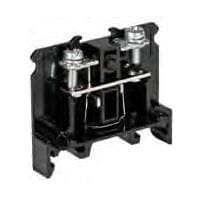
Why tools and accessories matter in terminal block applications
In many projects, attention goes first to current rating, conductor size, or mounting format. However, the supporting ecosystem around a terminal block often has a direct impact on installation speed, wiring accuracy, and long-term maintainability. Accessories such as markers, bridging elements, end pieces, and connection aids can reduce wiring errors and make troubleshooting much faster.
Tools also play an important role in repeatable assembly. When technicians work on dense panels or field wiring tasks, having application-appropriate accessories helps maintain spacing, labeling clarity, and secure conductor handling. This is especially useful in industrial environments where uptime and serviceability are priorities.
Typical roles of terminal block tools and accessories
This category generally supports the terminal block system rather than replacing the block itself. Depending on the application, accessories may be used for circuit identification, grouping, insulation support, cross-connection, or finishing the assembly so that the completed rail or mounting layout remains organized and easier to inspect.
In practical terms, these products are often selected when engineers or panel builders want to standardize cabinet layouts, simplify field maintenance, or improve documentation consistency. In installations with many conductors and repeated terminations, even small accessories can make a noticeable difference in assembly quality and service access.
For applications built around rail-mounted connection systems, it can also be useful to review related DIN rail terminal blocks to ensure accessory compatibility with the intended mounting and wiring approach.
How to choose the right items for your project
A practical starting point is to confirm the terminal block family, panel layout, and maintenance requirements. Accessories should match the connection style and installation method already defined in the design. In control panels with frequent servicing, identification and separation accessories can be just as important as the electrical connection itself.
It also helps to think in terms of workflow. If the goal is faster panel assembly, choose items that support consistent marking, conductor preparation, and neat grouping. If the project prioritizes easy expansion or future modifications, look for accessories that make circuits easier to trace and reconfigure without disturbing adjacent wiring.
Where the design includes fixed-position connection points rather than modular rail systems, related options in fixed terminal blocks may provide useful context for selecting suitable supporting parts and installation methods.
Representative manufacturers and product examples
This category can involve accessory and connectivity solutions from recognized suppliers such as Amphenol, Commscope, Broadcom, and 3M. While many of the featured items in the broader connector ecosystem are fiber-oriented rather than classic terminal block hardware, they still illustrate how accessories and connection components support reliable signal routing, interface protection, and structured installation.
Examples from the available product set include the Amphenol CF-594611-01P Connector Fiber Optics, Commscope 1339123-2 ST coupler, Broadcom AFBR-4536BZ plastic optical duplex bulkhead connector, and 3M 6112 Connector Fiber Optics. These products highlight an important purchasing reality in B2B sourcing: engineers often evaluate not only the main connector or block, but also the surrounding interface components that enable secure mounting, coupling, transition, and service access.
For more specialized assemblies, items such as the Amphenol M29504/05-4046 and M29504/04-4040 fiber optic termini show how accessory-level parts can be essential within a larger interconnect system. In the same way, terminal block tools and accessories are often small components with a large influence on overall installation quality.
Common application environments
Control panels, machine wiring, process skids, and infrastructure cabinets are common use cases for this category. In these environments, installers need connections that are easy to identify, easy to service, and arranged in a way that supports safe intervention. Accessories help maintain order when multiple circuits are concentrated in limited space.
They are also relevant in projects that must balance initial assembly efficiency with long-term maintenance. Clear marking and properly selected supporting parts can shorten fault-finding time and reduce the chance of wiring mistakes during upgrades or replacement work. This is particularly important in industrial settings where downtime has a direct operational cost.
If the project includes higher-density wiring transitions between subsystems, reviewing adjacent categories such as wire-to-board connectivity can help clarify how terminal block accessories fit into the wider connection architecture.
Selection considerations for procurement and engineering teams
For engineering teams, compatibility should remain the first filter. The accessory must fit the intended terminal block series, conductor handling method, and installation environment. It is also worth checking whether the project requires easier future labeling changes, jumper configuration, or modular expansion within the enclosure.
For procurement teams, consistency across multiple builds can be just as important as unit cost. Standardized accessory sets can simplify purchasing, reduce assembly variation, and support more predictable maintenance practices across machines or panels built to a similar design. This becomes more valuable when the same cabinet architecture is deployed repeatedly across sites.
Documentation quality matters as well. Accessories that support better circuit identification and cleaner organization can make wiring diagrams, panel schedules, and field service instructions easier to follow, which benefits both the original builder and the end user.
Final thoughts
Choosing terminal block accessories is really about improving the usability of the complete connection system. The right mix of support items can help teams build neater panels, reduce installation errors, and make service tasks more straightforward throughout the equipment lifecycle.
When comparing options in Terminal Block Tools & Accessories, focus on compatibility, installation workflow, and how the finished assembly will be maintained in the field. A well-supported terminal block layout is easier to wire, easier to inspect, and easier to keep reliable over time.
Get exclusive volume discounts, bulk pricing updates, and new product alerts delivered directly to your inbox.
By subscribing, you agree to our Terms of Service and Privacy Policy.
Direct access to our certified experts
