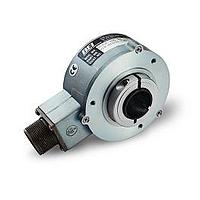
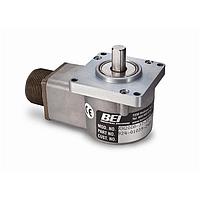
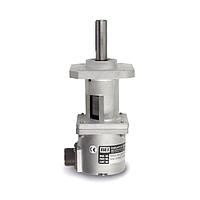
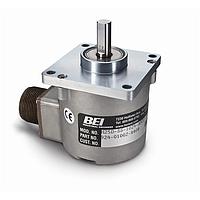
Encoders
Precise motion feedback is essential in control panels, automation equipment, industrial networking, and machine interfaces. Whether the goal is tracking shaft position, converting rotational movement into readable signals, or supporting operator input on a front panel, encoders help translate motion into data that control systems can use reliably.
This category brings together encoder-related products used across industrial and electronic applications, from compact rotary components for PCB or panel mounting to encoder, decoder, and converter devices used in communication and signal handling. For engineers, buyers, and maintenance teams, the key is not only finding a compatible part, but choosing the right signal type, mechanical format, and installation method for the job.
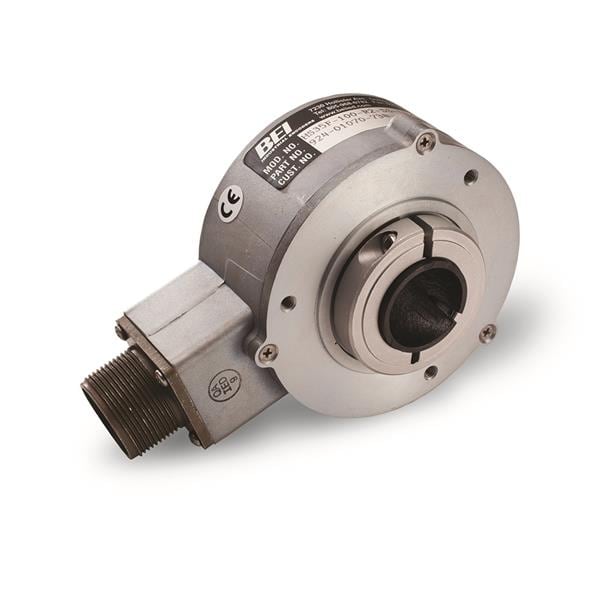
Where encoders are used in real systems
Encoders are widely used wherever rotational or positional information must be detected and passed to a controller, drive, display, or monitoring system. In practical terms, that can mean a rotary knob on an HMI, position feedback in a machine assembly, or signal conversion between equipment in an industrial communication environment.
In electromechanical design, encoders often sit alongside other interface and control components such as relays, contactors, and solenoids, especially in systems where motion, switching, and control logic interact. The right encoder helps improve usability, signal accuracy, and repeatability in both industrial and embedded applications.
Common encoder types found in this category
A large part of this category centers on rotary incremental encoders, which generate pulse outputs as the shaft turns. These devices are commonly selected for user input, menu navigation, speed sensing, and relative position tracking. Many mechanical encoder designs provide quadrature output, allowing the system to detect both movement and direction.
Examples in this range include compact through-hole parts such as the Alps Alpine EC11K0920401, Alps Alpine EC11G1524402, and Bourns PEC11-4015F-N0018. These products illustrate typical design considerations such as pulses per revolution, shaft style, mounting approach, detent feel, and expected operating life. For applications needing different mechanical formats, options like the Alps Alpine EC40A1520401 or Bourns ECW0J-B36-BC0006 show how encoder selection can vary depending on panel layout and user interaction requirements.
Industrial signal handling and encoder-related converters
Not every product in this category is a simple panel-mount rotary part. Some devices support broader industrial communication and signal processing tasks, including encoder, decoder, and converter functions used in networked or distributed systems. These are relevant in installations where encoder data must be transmitted, adapted, or integrated with control infrastructure.
Products such as the Advantech IMC-721I-SL, IMC-750-SSET, IMC-751-SST, and IMC-390-M1-US represent this side of the category. In such cases, selection is less about knob feel or shaft style and more about system architecture, signal compatibility, and how motion or status data will move between field devices and higher-level control platforms.
How to choose the right encoder
The best starting point is the application itself. For operator controls, designers often focus on tactile response, detent behavior, shaft geometry, and PCB or panel mounting. For motion feedback, pulse resolution, output format, mechanical durability, and environmental suitability become more important. In industrial communication use cases, interface compatibility and deployment context may matter most.
It also helps to review whether the application needs incremental output, directional sensing through quadrature signals, or a specific number of pulses per revolution. A low-PPR encoder may be suitable for simple menu navigation, while a higher-resolution option may better support finer control. Mechanical details such as vertical orientation, PC pin terminals, or snap-in mounting can also determine whether a part fits an existing design without rework.
Representative manufacturers and product examples
This category includes products from widely used manufacturers in electronics and industrial automation. Alps Alpine and Bourns are well known for compact mechanical rotary encoders used in control interfaces and embedded hardware, while BAUMER appears in more industrial encoder applications with products such as the BHF 16.25W.1024-12-5.
The available range also reflects different design priorities. Alps Alpine models in the EC11 and EC40 families highlight compact rotary control use, while Bourns parts such as the ECT1D-C24-GC0024 and PEC11-4015F-N0018 show options for varying torque, life, and pulse output needs. This mix is useful for buyers who need one category page to support both electronic product development and industrial maintenance sourcing.
Selection factors that affect long-term performance
Encoder choice should go beyond basic fit. In real operating environments, durability, rotational life, temperature range, and mounting stability can all influence long-term reliability. For manually operated products, tactile consistency and mechanical wear matter just as much as electrical output. For industrial installations, vibration resistance and signal integrity may be more critical.
It is also worth considering the surrounding hardware ecosystem. Encoders are often installed with panel hardware, shafts, knobs, brackets, or enclosure components, so mechanical integration should be checked early. In broader machine assemblies, related categories such as hardware or protection components like circuit breakers and accessories may also be relevant depending on the final system design.
Choosing by application instead of by part number alone
For B2B sourcing, it is often more effective to compare encoder options by function than to search only by model. A design engineer may need a through-hole incremental encoder with a defined pulse count and shaft shape, while a maintenance team may be replacing an installed industrial feedback device with matching signal behavior. These are different tasks, even though both fall under the same category.
By reviewing encoder type, output behavior, mounting method, and operating conditions together, buyers can narrow the shortlist more efficiently. This approach also helps avoid mismatches between electrical expectations and mechanical reality, which is especially important when integrating encoders into established control systems or retrofitting legacy equipment.
Find encoder options that fit your control and feedback needs
This encoder category is intended to support a broad range of industrial and electronic requirements, from compact rotary interface components to encoder-related conversion devices for more complex systems. With products from recognized manufacturers such as Alps Alpine, Bourns, Advantech, and BAUMER, the range is suitable for both new designs and replacement sourcing.
If your application depends on accurate motion feedback, consistent operator input, or reliable signal conversion, a careful review of encoder type, mounting style, and output characteristics will make selection easier. Start with the application need, then compare the available options in this category to identify the most practical fit.
Get exclusive volume discounts, bulk pricing updates, and new product alerts delivered directly to your inbox.
By subscribing, you agree to our Terms of Service and Privacy Policy.
Direct access to our certified experts