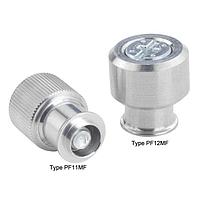
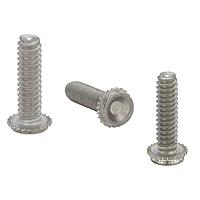
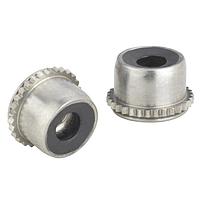
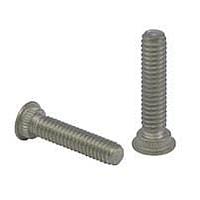
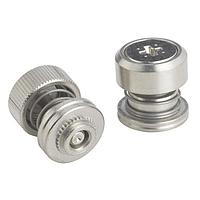
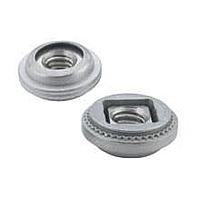
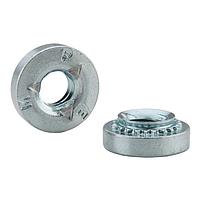
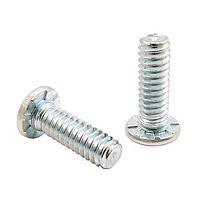
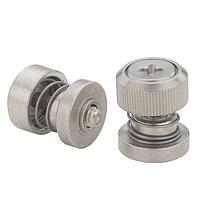
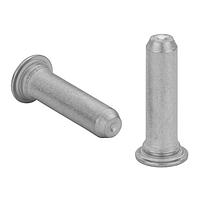
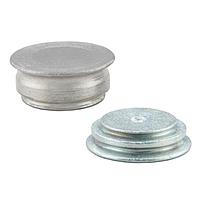
Mounting Hardware
Reliable mechanical installation often depends on small parts that do a very specific job well. In control panels, enclosures, industrial devices, and electronic assemblies, the right mounting hardware helps secure components, maintain alignment, reduce vibration-related issues, and support long-term serviceability.
This category brings together hardware used to fasten, position, or support equipment in practical installation environments. Whether the requirement is a clamp-mount accessory, a sealing O-ring, or general support hardware for assembly work, choosing the correct part matters not only for fit, but also for durability, maintenance, and overall system performance.

Where mounting hardware fits in an industrial build
Mounting hardware is often selected late in a project, but it has an outsized impact on installation quality. These components help connect devices to panels, brackets, frames, clamp systems, or mating mechanical surfaces, making them essential for OEM assembly, machine building, retrofit work, and maintenance operations.
In many applications, hardware must do more than simply hold a part in place. It may also help manage spacing, support repeatable positioning, or contribute to sealing and environmental protection. If your project also involves related mechanical accessories, it can be useful to review the broader mounting hardware range alongside adjacent items such as PCB circuit board hardware for assembly-level integration.
Typical product types in this category
The product mix shown here includes both general-purpose and application-specific items. A clear example is the Advantech DLG-A-MNT-701262 sandwichplate for clamp mount, which illustrates how mounting hardware can serve as a dedicated installation accessory for a particular equipment setup rather than a generic fastener.
The category also includes multiple O-ring based hardware items from Aavid, such as Buna N, silicone, EPDM, and Viton/FKM variants. In these cases, the hardware function is closely tied to sealing, cushioning, or interface protection within a mounted assembly. This makes the category relevant not only for mechanical fixing, but also for applications where material compatibility and operating conditions are important.
Material selection and why it matters
When selecting mounting hardware, material compatibility should be reviewed as carefully as size and shape. Elastomer-based parts such as O-rings can behave very differently depending on whether the material is nitrile, silicone, EPDM, or fluorocarbon/FKM. Each material family is generally chosen to match different demands related to oils, chemicals, temperature, pressure, or sanitation requirements.
For example, Aavid products in this category include Buna N NBR nitrile options, FDA-grade silicone versions, EPDM variants, and Viton/FKM styles. That range is useful when the mounting interface must withstand contact conditions or environmental exposure beyond basic indoor use. Instead of treating all O-rings as interchangeable, buyers should confirm that the selected material matches the actual operating environment and maintenance expectations.
How to choose mounting hardware for industrial and electronic applications
A practical selection process starts with the mounting method. Ask whether the part is intended for clamping, sealing, spacing, vibration control, or direct equipment attachment. A dedicated accessory such as the Advantech clamp-mount sandwichplate serves a different purpose from an O-ring used in a sealed mechanical interface, so function should guide the shortlist before part dimensions are compared.
Next, consider the installation environment. Temperature, exposure to fluids, required hardness, and any food, sanitary, or regulated-use considerations may affect the preferred material. In service-heavy installations, it is also worth checking how easy the hardware is to replace during maintenance. For broader enclosure or panel builds, related categories such as racks and accessories may also support the overall mechanical design.
Examples from leading manufacturers
Among the featured brands, Aavid appears prominently in this category with several O-ring based mounting hardware options. Examples include the N140-90/2-425 and N100-70/2-228 in Buna N NBR nitrile, the S500-70/2-319 and S500-70/2-164 in FDA-grade silicone, and the V768-75/2-320 or V700-75/2-250 in Viton/FKM. These products show how buyers can compare material families and hardness levels within a similar hardware function.
Advantech is represented by the DLG-A-MNT-701262, which highlights the other side of the category: hardware intended to support a defined equipment mounting arrangement. This combination of sealing-oriented items and device-specific mounting accessories is common in industrial commerce, where the term mounting hardware can cover both general mechanical elements and purpose-built installation parts.
Common application considerations
In electronics and industrial equipment, the right hardware contributes to more consistent assembly results. A poor fit can lead to misalignment, inadequate sealing, premature wear, or unnecessary service calls. That is especially relevant in installations exposed to motion, repeated opening and closing, contamination, or thermal cycling.
It also helps to think in terms of the full assembly rather than one isolated part. If a device requires panel support, vibration damping, operator-access hardware, or finishing components, related categories such as bumpers and feet can complement the mounting solution without forcing compromises elsewhere in the design.
What buyers should verify before ordering
Before purchasing, confirm the basic mechanical fit, including the intended interface, dimensions, and form factor. For O-ring style items, buyers should also review material type, hardness, and any environmental or application constraints. Even where two parts appear similar, differences in elastomer composition or hardness can affect sealing behavior and service life.
For project-based procurement, it is often useful to standardize around a manageable set of approved hardware types. This can simplify maintenance, reduce replacement errors, and improve consistency across builds. A category like this is most valuable when used as part of a deliberate component selection process rather than as an afterthought at the end of a bill of materials.
Find the right hardware for a more dependable installation
Choosing mounting hardware is ultimately about matching function, material, and installation context. Some applications call for a dedicated clamp-mount accessory, while others depend on the correct O-ring material to maintain sealing and long-term reliability. Reviewing those factors early can help avoid rework and improve assembly outcomes.
Explore the available range to compare mounting accessories and sealing-oriented hardware from manufacturers such as Aavid and Advantech. With the right part selection, even small mechanical components can make a meaningful difference in equipment fit, protection, and maintainability.
Get exclusive volume discounts, bulk pricing updates, and new product alerts delivered directly to your inbox.
By subscribing, you agree to our Terms of Service and Privacy Policy.
Direct access to our certified experts