
Solid State Contactors
Fast, repeatable switching is essential in modern control panels, heating systems, packaging lines, and automated machinery. When mechanical wear, contact bounce, or switching noise becomes a concern, solid state contactors offer a practical alternative for controlling loads with high cycle frequency and stable electrical performance.
On this page, you can explore solid-state switching solutions used in industrial control and electronic power interfaces. The category is especially relevant for engineers and buyers looking for compact switching devices, panel-friendly designs, and relay-based solutions that fit automated equipment, OEM builds, and maintenance requirements.
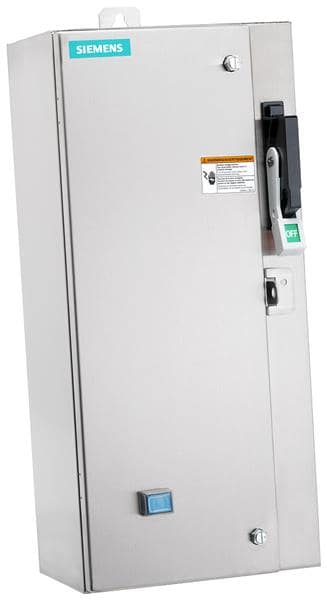
Where solid state contactors fit in industrial systems
A solid state contactor is typically chosen when an application requires frequent switching, quiet operation, or longer service life without the moving contacts found in electromechanical devices. These devices are commonly used to switch heaters, valves, lamps, small motors, and other loads in systems where reliability and response consistency matter.
Compared with many general purpose relays, solid-state designs are often better suited to repetitive switching cycles and environments where reduced maintenance is desirable. They can also help improve control stability in automated equipment where switching performance needs to remain predictable over time.
Key benefits of solid-state switching
The main advantage of this category is the use of semiconductor switching rather than mechanical contacts. That means no physical contact arcing in the usual sense, lower acoustic noise during operation, and less mechanical fatigue in applications with constant on/off cycles.
Another important benefit is compact integration. Many models are designed to support control boards, DIN-rail assemblies, or dense panel layouts where space is limited. For machine builders and maintenance teams, this can simplify replacement planning and help match switching components to the electrical and thermal requirements of the system.
Typical product formats in this category
Solid-state switching solutions are available in several formats, from PCB-mount relay-style components to more power-oriented devices used for panel control. In practice, that means the category can serve both low-power signal isolation tasks and higher-load switching roles, depending on the device structure and output characteristics.
Examples from this range include compact MOSFET-based and optically isolated relay solutions such as the OMRON G3VM-62J1 Solid State Relays and OMRON G3VM-61QV4H(TR05) Solid State Relays, as well as panel-oriented options like the OMRON G3PA-220B-VD-X DC5-24 Solid State Relays and OMRON G3NA-410B-UTU AC100-240 Solid State Relays. For designs requiring specific DC switching behavior, products such as the Littelfuse CPC1786J 1-FORM-A DC OPTOMOS 1000V 2 OHMS i4-PAC illustrate how solid-state technology can be used in compact electronic control circuits.
How to choose the right solid state contactor
Selection usually starts with the load type: AC or DC, resistive or inductive, low-level signal or power switching. Input control voltage, output voltage range, current demand, isolation level, and mounting style should all be checked together rather than in isolation. Thermal conditions are also important, especially in enclosed cabinets or applications with continuous switching duty.
It is also useful to review whether the device is intended for board-level integration or direct panel use. For instance, a compact part like the OMRON G3R-102PN DC5 Solid State Relays may fit signal or interface tasks, while more robust panel-oriented devices are better aligned with machine control loads. If the application involves heavier industrial power switching, it may also be worth comparing this category with solid-state switching options intended for broader load-handling roles.
Leading manufacturers and platform consistency
This category includes products associated with established manufacturers used across industrial automation and electronic control design. OMRON appears prominently in the available product examples, with a range that spans compact SSRs through panel-suitable models for control integration. That variety is useful when standardizing around one supplier family for maintenance, procurement, or design continuity.
Littelfuse is another relevant name in this space, particularly where solid-state switching overlaps with protection-aware circuit design and compact semiconductor-based relay formats. Depending on the application, buyers may also evaluate how form factor, isolation approach, and switching topology align with the rest of the control architecture.
Applications across automation, control, and OEM equipment
Solid state contactors are widely used in temperature control, packaging machinery, semiconductor equipment, laboratory instruments, process systems, and control cabinets that require frequent switching with minimal mechanical wear. In heater control applications, for example, they are often selected to support repeated cycling without the maintenance profile associated with mechanical contacts.
They can also play a valuable role in interface circuits, especially where designers need electrical isolation, compact packaging, or quiet operation. In broader relay selection work, engineers may compare these products with automotive relays or other relay families when environmental conditions, switching frequency, and load characteristics differ by project.
Practical buying considerations for B2B sourcing
For OEM procurement, maintenance stock planning, and engineering replacement, the most useful approach is to verify the switching method, control input range, output form, and installation constraints before ordering. A similar-looking SSR or contactor may behave very differently depending on whether the target load is DC, AC, high-voltage, or signal-level.
It also helps to think in terms of system compatibility rather than just part availability. Checking the intended use case, cabinet conditions, and expected switching frequency can reduce redesign risk and improve long-term reliability. When the application is clearly defined, it becomes easier to narrow the range to a smaller group of suitable products instead of comparing devices only by part number.
Final thoughts
Choosing the right solid-state switching device starts with understanding the load, control method, and installation environment. Within this category, buyers can compare compact SSR-style components and more application-focused solutions for industrial control, electronic interfaces, and machine automation.
If your project calls for quiet operation, repetitive switching, and reduced mechanical wear, solid state contactors are a strong category to review alongside adjacent relay technologies. A careful match between input requirements, output behavior, and system conditions will lead to a more reliable and maintainable design.
Get exclusive volume discounts, bulk pricing updates, and new product alerts delivered directly to your inbox.
By subscribing, you agree to our Terms of Service and Privacy Policy.
Direct access to our certified experts