
Finished Units Distance Sensor Modules
Reliable distance sensing is a practical requirement in automation, object detection, positioning, and machine monitoring. When a project needs a ready-to-install solution rather than a bare IC or board-level component, Finished Units Distance Sensor Modules provide a more straightforward path to integration with industrial and embedded systems.
These modules are typically selected when users need stable measurement performance, easier mounting, and a form factor suited to real equipment. In this category, the focus is on complete sensing units that help simplify deployment in applications ranging from presence detection and spacing checks to machine-area monitoring and non-contact measurement.
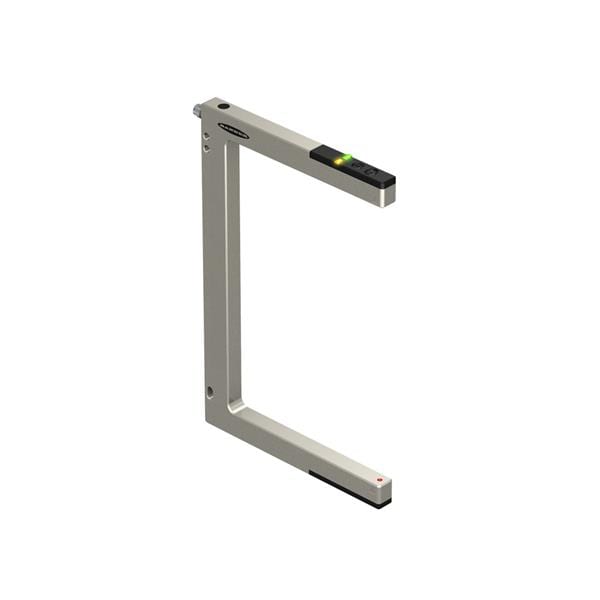
Where finished-unit distance sensor modules fit
Compared with component-level options, finished units are designed for users who want a more complete sensing assembly. That usually means less development effort around optics, housing, alignment, and protection, which is especially useful in industrial environments where installation speed and repeatability matter.
They are commonly used in packaging lines, material handling, access control zones, object counting, and machine interfaces where non-contact measurement is preferred. If your design is still at the board or subsystem level, it may also be useful to review distance sensor ICs and embedded modules for lower-level integration options.
Common applications in industrial and embedded systems
Distance sensor modules are often chosen when a process needs fast response without mechanical contact. Typical use cases include detecting object presence on conveyors, verifying part position, monitoring approach distance, and supporting basic ranging functions in smart equipment.
In broader sensing architectures, these modules may work alongside other sensor types. For example, a machine may combine distance sensing with acceleration sensor modules for motion-related diagnostics, or use separate sensing channels for thermal or user-interface inputs depending on the application.
Understanding ToF-based distance sensing
Many products in this category are described as ToF sensors, referring to time-of-flight measurement. In simple terms, the sensor emits light and evaluates the return signal to estimate the distance to an object. This approach is widely used because it supports non-contact detection and can be effective in dynamic automation scenarios.
In practice, ToF-based finished units can help where traditional contact switches are not suitable, or where consistent object spacing needs to be monitored without touching the target. Actual performance still depends on installation conditions such as target surface, alignment, sensing distance, and surrounding light.
Representative products in this category
This category includes several finished-unit solutions from OMRON, illustrating the range of formats available for different integration needs. Examples include the OMRON MSF4800S-40-0360-14-0920-10X-10R-SB1, OMRON F420-F102M50C-NNS, and OMRON FHV7H-M016-S16, all listed as optical distance measuring or ToF sensor products.
Other listed models such as the OMRON MS4800S-14-0320, OMRON MS46SR-30-1215-Q1-15X-15R-NC-A, and OMRON MS4800B-20-0600-10X-10R show that finished sensing units may also differ in protective coverage, mounting geometry, and intended machine-side use. Some entries in the catalog can also support the surrounding sensing ecosystem, such as connection-related accessories like the OMRON E39-ECONW 2M, which should be evaluated based on the needs of the overall installation rather than as a stand-alone measurement device.
How to choose the right module
Selection should start with the application rather than the product name. Key considerations usually include sensing range, target size, required response behavior, installation space, environmental exposure, and whether the sensor will be used for simple presence detection or for more measurement-oriented tasks.
For industrial deployments, it is also important to check enclosure suitability, beam arrangement, and integration requirements such as supply voltage, wiring, and controller compatibility. Where the application calls for a more protected assembly, users may also compare options in enclosed distance sensor modules to determine which product style better fits the installation environment.
Installation and integration considerations
A finished-unit module can reduce development effort, but correct installation still has a major effect on results. Mounting position, target reflectivity, mechanical stability, and the presence of dust, vibration, or stray light can all influence repeatability. For this reason, it is good practice to define the sensing window and environmental conditions early in the design process.
System designers should also consider how the distance sensor interacts with PLCs, machine controllers, or embedded logic. In some systems, these modules are only one part of a wider sensing strategy that may also involve temperature, motion, or human-interface sensing. The value of a finished unit is often that it helps shorten the path from specification to deployment.
Why this category is useful for procurement and engineering teams
For buyers, OEMs, and integrators, this category helps narrow the search to sensor modules that are closer to field-ready implementation. That can save time during sourcing and make it easier to compare solutions intended for practical mounting and machine integration, rather than starting from chip-level components.
For engineering teams, the category supports faster evaluation of products suited to real operating environments. Instead of reviewing only optical sensing technology in abstract terms, users can focus on complete modules that better match commissioning, maintenance, and replacement needs in industrial settings.
Final considerations
Choosing a distance sensing solution is rarely just about range on paper. The most suitable option depends on how the module will be mounted, what it needs to detect, and how it will perform under actual operating conditions.
This selection of finished units is intended for projects that need practical, ready-to-integrate distance sensing hardware. By comparing application fit, installation requirements, and system architecture, buyers and engineers can identify the module style that aligns more closely with their automation or embedded design goals.
Get exclusive volume discounts, bulk pricing updates, and new product alerts delivered directly to your inbox.
By subscribing, you agree to our Terms of Service and Privacy Policy.
Direct access to our certified experts
