Enclosure Boxes & Cases
Protecting electronics is rarely just about putting a device in a box. In industrial, automation, and equipment-building environments, the right housing helps manage installation constraints, basic mechanical protection, cable access, airflow, serviceability, and overall product finish. That is why Enclosure Boxes & Cases remain a core part of many electrical and electronic assemblies, from small control units to packaged power solutions.
This category brings together enclosure-oriented products and related accessories used to support device integration in a practical, build-ready way. Whether you are designing a compact embedded system, protecting a power module, or organizing equipment for field or workshop use, the enclosure choice affects both reliability and day-to-day usability.
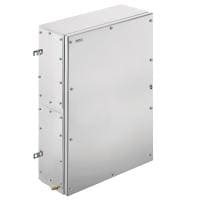
Where enclosure boxes and cases are used
Enclosures are used across panel building, industrial controls, power electronics, instrumentation, communications hardware, and portable equipment. In many applications, they provide a defined structure for mounting components, routing cables, reducing accidental contact, and giving the final assembly a cleaner and more serviceable format.
The required form can vary significantly. Some projects need compact housings for small electronics, while others need stronger protective cases for transport or workshop use. If your application extends beyond general-purpose housings, it can also be useful to review options in industrial automation enclosures for control-oriented installations or more structured storage and mounting solutions.
What to consider when selecting an enclosure
A good enclosure decision usually starts with the device inside it. Engineers and buyers typically look at component dimensions, mounting method, connector access, cable entry, heat generation, and how often the unit will be opened for maintenance. Even when the enclosure seems like a secondary item, these practical factors can determine whether installation is straightforward or unnecessarily complex.
Material and mechanical design also matter. A case used in a light-duty indoor environment may have very different needs compared with a housing installed near machinery or transported between sites. In some builds, accessories such as bumpers, brackets, covers, or fan-related parts are just as important as the main housing because they improve protection, handling, and integration.
Accessories that support enclosure performance
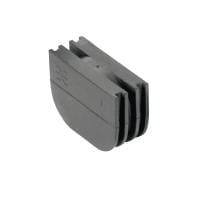
Many projects do not rely on a single enclosure part alone. Instead, they use a combination of housing components and small accessories to refine the final assembly. Examples in this category include protective bumper-style parts from 3M, such as the SJ5017S, SJ-6115, SJ-5027-BLACK, SJ5008BLACK, and SJ5012S Bumpon products. These types of accessories are often used to reduce surface marking, improve stability, or add light shock and vibration buffering where equipment rests on a bench, door, or housing surface.
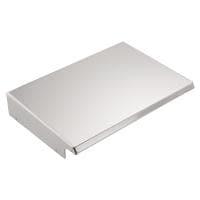
For power conversion and embedded power assemblies, accessory kits can also play an important role. Several items from Advanced Energy, including the LPX100 enclosure kit, LPX110-B bracket kit, LPX250-C cover kit, LPX250-CF top fan cover kit, and LPX250-CEF end fan cover kit, illustrate how enclosure-related parts help adapt open-frame or modular power products for safer, cleaner, and more manageable installation.
Different enclosure needs across technical applications
Not every enclosure serves the same purpose. In a compact electronics project, the priority may be footprint, board fit, and connector clearance. In a power application, the enclosure discussion may shift toward airflow, shielding of live parts, and mounting support. For portable tools or field kits, the emphasis may be on transport protection and keeping parts organized.
The presence of products such as the DEWALT N871595 Kitbox for impact driver use also shows that cases can be part of a broader equipment ecosystem, not only a static electronics cabinet. In B2B purchasing, this distinction matters because the right product is often defined by workflow: assembly, installation, service access, shipping, or repeated field handling.
How enclosure choices affect maintenance and integration
Well-matched enclosure boxes and cases can simplify more than protection alone. They help teams standardize builds, improve cable management, reduce accidental damage during handling, and make replacement or servicing easier over time. For OEMs and panel builders, consistency in enclosure format can also support cleaner documentation and more repeatable assembly processes.
When planning a larger hardware ecosystem, it may be worth comparing adjacent formats as well. For example, some projects may move from small boxes toward rack-based enclosure formats for centralized equipment layouts, while others may fit better into purpose-built housings used around control equipment or compact computing hardware.
Related manufacturer ecosystems in this category
This category includes products associated with several recognized industrial and electronics brands. Depending on the application, buyers may encounter enclosure-related solutions or accessories from names such as 3M, Advanced Energy, Advantech, APC by Schneider Electric, DEUTSCH - TE Connectivity, DEWALT, Eaton, Eaton Bussmann, HARTING, and HellermannTyton. The relevance of each brand depends less on name alone and more on the intended installation, mechanical requirements, and supporting hardware around the assembly.
That is especially important in technical procurement. A bumper, bracket, cover kit, or equipment case may appear simple, but the right choice supports the broader design intent. Matching the enclosure approach to the system architecture generally leads to better fit, easier deployment, and fewer compromises during installation.
Choosing the right fit for your project
When comparing enclosure boxes and cases, start with the real operating context: what needs protection, how it will be mounted, what access points are required, and whether the assembly needs extra support parts. From there, it becomes easier to narrow down whether you need a simple housing, a more application-specific enclosure, or complementary accessories that improve protection and usability.
If your requirement is broader than a standard box or case, it may also help to explore standard electrical enclosure options for more traditional electrical installations. For many buyers, the best outcome comes from viewing the enclosure not as an afterthought, but as a functional part of the complete system.
Enclosure boxes and cases support the practical side of equipment design: protection, organization, mounting, and long-term serviceability. By selecting the enclosure format and accessories that match your application, you can build assemblies that are easier to install, easier to maintain, and better aligned with real operating conditions.
Get exclusive volume discounts, bulk pricing updates, and new product alerts delivered directly to your inbox.
By subscribing, you agree to our Terms of Service and Privacy Policy.
Direct access to our certified experts