
Battery Enclosures
Reliable battery-powered equipment depends on more than the cell itself. The enclosure, mounting method, access door, and internal battery compartment all affect serviceability, safety, cable routing, and the overall durability of the finished assembly. For engineers, panel builders, and OEM buyers, choosing the right Battery Enclosures category helps simplify both integration and long-term maintenance.
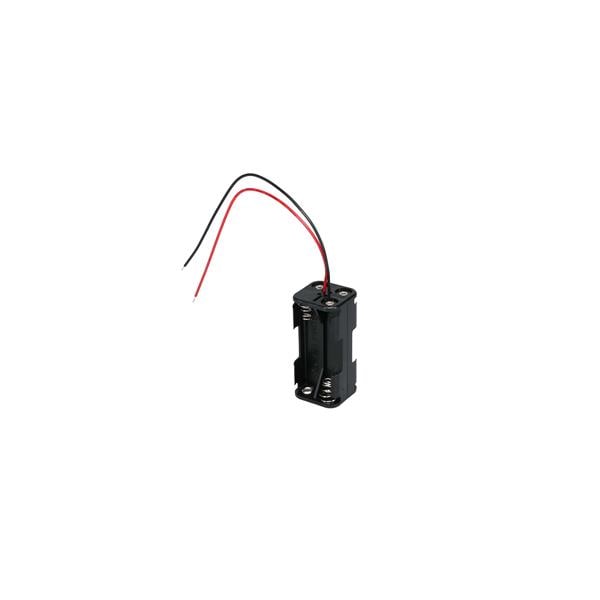
Where battery enclosures fit in an equipment design
A battery enclosure is used to house, protect, or provide access to a battery assembly within a device, cabinet, or portable instrument. Depending on the application, this can range from a compact battery holder or battery door in a handheld unit to a larger cabinet-style enclosure for backup power systems.
Within the broader ecosystem of battery enclosure solutions, buyers may be looking for very different formats. Some projects require a dedicated battery compartment inside a handheld case, while others need a mounting case or cabinet with cable management and supporting hardware for higher-capacity power systems.
Common product types in this category
This category can support several practical enclosure roles. At the compact end, battery holders are useful when a designer needs a defined cell arrangement inside a portable product. A good example is the Bud Industries HH-3631 battery holder for 4 AAA cells, which is suited to handheld enclosure ecosystems where battery placement must be predictable and easy to wire.
Another common format is the battery door or access cover. Components such as Hammond Manufacturing 53TTBATDOORBK-5, 53TBATDOORBK-5, and 53BATDOORRD-5 are not standalone power systems; instead, they support enclosure serviceability by making battery replacement faster and cleaner in compatible housings. This is especially useful for field devices that need routine battery access without opening the entire enclosure.
At a larger scale, cabinet-style products like Eaton FXEBM06, Eaton 17FE, and Eaton FXEBM01 are relevant where batteries are part of a protected installed system. These products are more closely associated with structured power or backup installations, where enclosure strength, cable accommodation, and installation environment matter as much as battery storage itself.
Portable and handheld battery enclosure options
For handheld instruments, test devices, and portable electronics, the enclosure often needs to do more than simply hold a battery. It may also need to support an LCD cutout, ergonomic handling, removable panels, or a defined compartment for 9 V or AA cells. Bud Industries examples in this category illustrate that the battery section is frequently integrated into the overall device housing rather than added as a separate afterthought.
The Bud Industries HH-3421-BC, for instance, is a handheld plastic box with LCD cutout and battery compartment, while the HH-3430-BCB is a grabber-style plastic box with a built-in battery compartment and removable end panel. For buyers working on portable electronics or custom instrument housings, it can be helpful to explore the broader Bud Industries range when enclosure form factor and battery access need to be considered together.
Industrial cabinet and mounting case applications
In fixed installations, battery enclosures are commonly selected for protection, organization, and maintainability. These applications may involve backup power assemblies, protected battery storage, or system layouts where batteries must be secured in a dedicated cabinet or mounting case with appropriate cable routing.
Products from Eaton, such as FXEBM06 and FXEBM01, show the cabinet-oriented end of the category, where enclosure design supports structured installation rather than handheld use. The Eaton 103004194-5501 seismic kit also highlights that some accessories in this category are intended to reinforce installation stability or compliance needs around the battery enclosure system, rather than serving as the primary housing itself.
PHOENIX CONTACT 1134645, described as a battery mounting case, is another example of how this category extends beyond simple covers or holders. In many industrial projects, the mounting approach is just as important as the enclosure body because it affects service access, cable strain management, and mechanical integration inside the larger system.
How to choose the right battery enclosure
The first step is to match the enclosure type to the actual use case. A battery holder is suitable when the goal is controlled cell placement inside a product. A battery door makes sense when the main need is repeatable access for replacement. A mounting case or cabinet is more appropriate when batteries must be installed as part of a larger electrical assembly.
Material and construction also matter. In this category, examples include polypropylene, ABS, and general plastic housing formats for compact designs, while larger cabinet systems are intended for heavier-duty installations. The right choice depends on expected handling, environmental exposure, and whether the enclosure is part of a portable device, a benchtop unit, or a fixed industrial installation.
It is also worth checking practical integration details such as cell format support, wiring access, cutouts, removable panels, and compatibility with the surrounding enclosure family. Buyers comparing cabinet-based products may also want to review related offerings from PHOENIX CONTACT when evaluating mounting-oriented battery protection options.
Why enclosure details matter for maintenance and lifecycle cost
A well-matched battery enclosure can reduce service time, minimize handling errors, and improve the consistency of assembly work. Simple features such as a dedicated battery compartment, removable door, or integrated cable path can make replacement and inspection much easier over the product lifecycle.
This is particularly important in B2B environments where equipment may be deployed across multiple sites or maintained by different teams. Standardized enclosure components help support repeatable servicing, cleaner documentation, and more predictable spare-part planning. Even small accessory parts, such as battery doors for a defined housing family, can have an outsized effect on maintainability.
Typical buyers and project scenarios
Battery enclosures are relevant to a wide range of technical buyers. Product developers may need compact battery compartments for handheld instruments or embedded electronics. Panel builders and industrial integrators may require mounting cases or cabinets for larger battery assemblies. Maintenance teams may be sourcing replacement doors, holders, or related enclosure accessories for installed equipment.
Because the category includes both complete enclosure elements and supporting parts, it is useful to review each product in the context of the final assembly. Some items are intended for direct battery retention, while others are accessories that complete or enhance an enclosure platform. That distinction helps prevent mismatch during sourcing and shortens the selection process.
Final considerations
Battery enclosure selection is ultimately about fit: fit for the battery format, fit for the installation environment, and fit for the way users will access and maintain the device. From compact handheld battery compartments to cabinet-scale battery housings and supporting accessories, this category covers multiple design paths without forcing a one-size-fits-all approach.
If you are narrowing options for a portable device, a serviceable field enclosure, or a larger installed battery system, focus on enclosure role, access requirements, and mechanical integration first. That approach makes it easier to identify the right product family and build a battery-powered system that is practical to assemble, protect, and maintain over time.
Get exclusive volume discounts, bulk pricing updates, and new product alerts delivered directly to your inbox.
By subscribing, you agree to our Terms of Service and Privacy Policy.
Direct access to our certified experts
