
Embedded Tools & Accessories
Developing and validating embedded hardware often requires more than the core board or IC itself. The supporting ecosystem around programming, debugging, evaluation, signal adaptation, and mechanical integration can make a significant difference in how quickly a design moves from concept to prototype and from prototype to deployment. That is where Embedded Tools & Accessories become especially useful for engineers, system integrators, and technical buyers working in embedded design flows.
This category brings together practical development support items used around embedded platforms, sensors, interfaces, and evaluation environments. Rather than focusing on a single device type, it covers the tools and accessory-level hardware that help teams configure components, test functions, interface with target hardware, and shorten development cycles across a range of embedded applications.
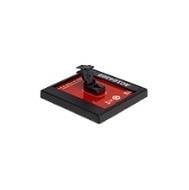
Where these tools fit in an embedded workflow
In a typical embedded project, the main processor, sensor, or interface chip is only one part of the overall development environment. Engineers also need programmers, debugger interfaces, socket adapters, evaluation kits, and device-specific mechanical or electrical accessories to verify behavior and work efficiently during bring-up. These supporting products reduce friction when testing firmware, validating peripheral connections, or assessing component suitability before full design-in.
This is why the category includes a broad mix of hardware roles. Some products are aimed at firmware access and device configuration, while others are intended for evaluation, adapter use, optical or magnetic sensor alignment, or bench-level prototyping. For related ecosystems such as wireless or protocol-oriented design, teams may also explore communication development tools when embedded projects involve interface validation beyond the local target board.
Typical product types included in this category
The scope of embedded support hardware is diverse, but the common thread is that these items help bridge the gap between a component and a usable development setup. Examples in this category include USB-connected programmers, JTAG/SWD debuggers, evaluation kits, socket adapters, and application-specific holders or interface boxes used during testing and configuration.
For instance, the ams OSRAM AS5000 PROGRAMMER is a USB-based programming tool designed for supported device families, while the Adafruit 4001 Particle Debugger represents the kind of compact interface tool engineers use for firmware-level access during debug sessions. Products such as the Dialog Semiconductor SLG46867M-SKT socket adapter illustrate another important use case: simplifying evaluation and repeated handling of devices during development without immediately committing to a finalized hardware setup.
Examples of accessory roles in real design environments
Not every item in this category is a standalone development platform. Many are support accessories that enable a specific test method, evaluation arrangement, or hardware interface. The ams OSRAM RMH05-DK-XX rotary magnetic holder is a good example of a mechanical accessory that supports proper use of a rotary position sensor adapter board. In sensor development, correct alignment and repeatable positioning can be just as important as the electronics themselves.
Similarly, the ams OSRAM USB-BOX for the AS1119 LED driver shows how accessory hardware can simplify communication and evaluation with a target device. In other cases, evaluation kits such as the Broadcom HEDS-8969 kit for an optical encoder help engineers assess functionality and integration considerations before moving into system-level design.
Vendor ecosystems and platform compatibility
Because embedded development is often tied to specific chip families or product ecosystems, compatibility matters more than broad feature claims. This category includes tools and accessories associated with recognized suppliers such as ams OSRAM, Broadcom, Adafruit, and Dialog Semiconductor. In practice, buyers should check whether a tool is intended for a certain supported family, target board, interface standard, or evaluation platform.
For example, a product described as “for use with” a particular sensor adapter board or LED driver should be treated as part of a device-specific development chain, not as a universal accessory. This is especially important in B2B sourcing, where procurement teams may need to align tooling purchases with engineering BOMs, lab setups, and existing development inventory to avoid mismatches and delays.
How to choose the right embedded tool or accessory
A practical selection process usually starts with the target device and the development task. If the immediate need is firmware access, a programmer or debugger may be the right choice. If the goal is proof-of-concept testing, an evaluation kit or socket adapter can be more useful. If the project involves motion sensing, optical feedback, or magnetic position measurement, the right holder or alignment accessory may be essential for meaningful test results.
It also helps to confirm the interface method and form factor early. USB-connected tools are often preferred for quick bench integration, while JTAG, SWD, or serial connectivity may be required for lower-level interaction with the target. In vision-related embedded projects, teams working with image capture hardware may also need adjacent categories such as cameras and camera modules or camera lenses to complete the evaluation setup.
Examples from storage, sensing, and interface development
This category can support a wide range of embedded application areas. On the connectivity and infrastructure side, products such as the Broadcom LPE35004-M2, LPE35002-M2, and LPE32002-AP show how host bus adapters fit into environments where embedded or edge systems interact with high-speed storage and networked data paths. These products are not generic accessories in the hobbyist sense; they are relevant to more specialized integration, validation, and system expansion scenarios.
On the sensing side, evaluation and mechanical support products for optical encoders and magnetic position sensing highlight how embedded development often combines electronics, firmware, and physical setup. Even a smaller accessory such as an analog switch board or socket adapter can play an important role when building a repeatable lab environment for signal routing, device characterization, or early-stage functional verification.
Why this category matters for engineering and procurement teams
For engineering teams, the right accessory can save time during setup, reduce rework, and improve test consistency. For procurement and operations teams, clear categorization of these products makes it easier to source the supporting hardware that often gets overlooked until late in the project. That includes everything from debuggers and programmers to device-specific adapters and evaluation support items.
If your application spans multiple embedded domains, it can also be useful to review related supplier ecosystems such as Broadcom offerings where interface and evaluation hardware connect to broader platform requirements. Looking at the complete tool chain early helps avoid situations where the main component is available, but the necessary support hardware is missing.
Final considerations
Choosing embedded development support hardware is rarely about buying a single universal tool. It is about matching the accessory, programmer, adapter, or evaluation item to the target device, development phase, and lab workflow. A well-matched set of embedded tools can simplify debugging, improve validation quality, and make prototype work more efficient.
Within this category, buyers can compare accessory-level products for programming, evaluation, sensor setup, and interface support with better context around their intended use. That makes Embedded Tools & Accessories a practical destination for teams building a more complete and reliable embedded development environment.
Get exclusive volume discounts, bulk pricing updates, and new product alerts delivered directly to your inbox.
By subscribing, you agree to our Terms of Service and Privacy Policy.
Direct access to our certified experts
