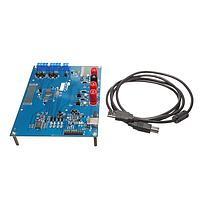
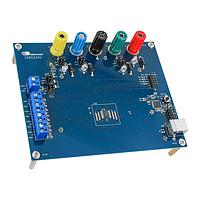
Data Conversion IC Development Tools
When you need to evaluate signal chain accuracy before committing to a production design, a dedicated development platform can save substantial time in validation, debugging, and performance comparison. Data Conversion IC Development Tools are used to assess how ADCs, DACs, and related mixed-signal devices behave in real operating conditions, helping engineers move from datasheet review to hands-on measurement with greater confidence.
These tools are especially relevant in industrial control, instrumentation, embedded systems, and precision electronics, where small errors in sampling, resolution, noise, or interface timing can affect the whole design. Rather than treating data conversion as an isolated component choice, development boards and evaluation kits make it easier to examine the converter in the context of power, reference, input conditioning, and digital communication.
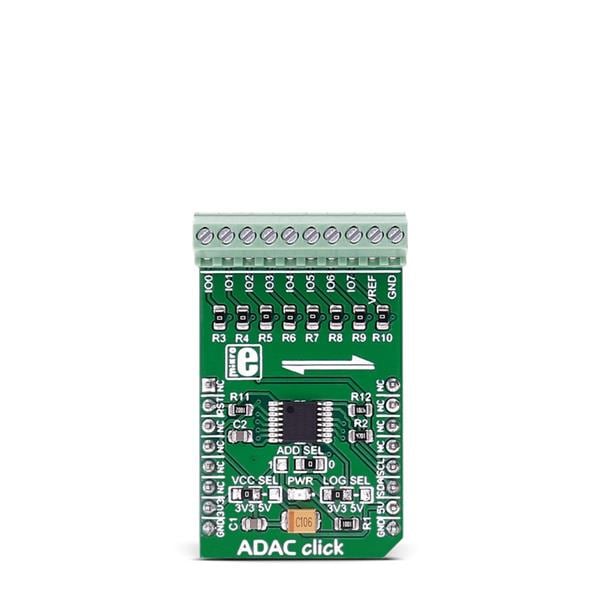
Why these development tools matter in converter design
Data conversion sits at the boundary between the analog and digital domains. That means performance is influenced not only by the converter IC itself, but also by grounding strategy, reference stability, front-end signal quality, clocking, and the way data is captured or driven by the host system. A suitable evaluation platform gives engineers a structured environment to verify these interactions.
In practice, these kits are often used to shorten early-stage prototyping, compare multiple converter options, and confirm whether a device fits the target application before PCB layout begins. For projects that also involve signal conditioning, it can be useful to explore related amplifier IC development tools as part of the broader analog front-end workflow.
Typical devices covered in this category
This category is centered on boards and kits for data conversion components, including platforms for analog-to-digital conversion and digital-to-analog conversion. Depending on the device family, a development tool may focus on precision measurement, higher-speed sampling, multichannel outputs, or application-specific converter behavior.
Examples in this range include the Analog Devices DC2677A Data Conversion Evaluation Development Board Kit, Analog Devices EVAL-AD3552RFMC2Z Data Conversion Evaluation Development Board Kit, and Analog Devices EVAL-AD4080-FMCZ Data Conversion Evaluation Development Board Kit. For ADC-focused evaluation, products such as the Analog Devices EVAL-AD7656-1CBZ AD7656-1 ADC Evaluation Board 250KSPS and Analog Devices AD9204-65EBZ AD9204 ADC Evaluation Board 65MSPS illustrate how developers can assess converter response across different performance targets.
How engineers use evaluation boards for ADC and DAC testing
An ADC evaluation board is typically used to study how accurately an analog input is sampled and represented in the digital domain. Engineers may review parameters such as resolution, throughput, noise behavior, and input handling while validating communication with a controller, FPGA, or software environment. A board like the Analog Devices AD9204-65EBZ AD9204 ADC Evaluation Board 65MSPS is relevant when sampling performance is a key concern, while the EVAL-AD7656-1CBZ aligns with more measurement-oriented evaluation.
DAC evaluation follows a similar logic, but from the opposite direction: the focus is on how digital commands are translated into stable, repeatable analog outputs. The Analog Devices EVAL-AD5766SD2Z Data Conversion Evaluation Development Board Kit and Analog Devices EVAL-AD5371EBZ evaluation kit are examples of platforms used to explore voltage output behavior, channel handling, and integration into larger control or instrumentation systems.
Key selection factors for data conversion development tools
Choosing the right kit starts with the converter architecture and the actual design goal. For some projects, the main requirement is verifying ADC evaluation under expected input conditions. In other cases, the need is to test DAC output control, multichannel behavior, or how a converter interacts with a digital processing platform. The development board should support the learning or validation task you need to complete, not just the chip family name.
It is also important to look at practical integration details. Interface style, software support, measurement convenience, board accessibility, and compatibility with the intended processing environment can all affect evaluation speed. If the project includes broader timing validation around the converter path, related clock & timer development tools may also be relevant when reviewing synchronization and sampling behavior.
Representative manufacturers and product direction
Within this category, Analog Devices stands out in the current product mix, with multiple evaluation and development kits covering different converter use cases. The range includes platforms such as DC474A, DC1532A-A, DC432B, and specialized evaluation boards built around distinct ADC or DAC families. This gives design teams a practical way to examine converter performance across application types without relying only on theoretical comparison.
Maxim Integrated is also represented with kits such as MAX1403EVKIT and MAX1403EVL11, which support hands-on exploration of data conversion functions in real design workflows. While the broader manufacturer landscape in IC development tools is extensive, the most useful approach is to choose a board based on converter type, evaluation objective, and the surrounding system architecture rather than brand name alone.
Where these tools fit in the broader IC development workflow
Data converter evaluation rarely happens in isolation. In many systems, developers move between front-end filtering, amplification, timing, and conversion as part of one continuous optimization process. That is why this category often works best when viewed alongside other specialized development platforms rather than as a standalone purchase decision.
For example, signal-path projects may also benefit from active filter development tools when shaping or conditioning the analog signal before conversion. Looking across adjacent tool categories can help engineering teams build a more complete prototype environment and reduce redesign risk later in the project.
What to look for when comparing boards on this page
As you compare products, focus on the intended converter function, evaluation format, and how closely the board matches your target use case. Some kits are better suited to proof-of-concept work, while others are more useful for detailed measurement, firmware integration, or interface testing. The best choice often depends on whether you are validating signal fidelity, output control, data acquisition, or mixed-signal system behavior.
It is also worth considering whether the board will be used only for initial lab testing or as a repeated reference platform during development. A well-matched evaluation kit can support device selection, software bring-up, and performance benchmarking over multiple design stages, making it more than just a short-term demo board.
Final considerations
Finding the right development kit for data conversion work is ultimately about reducing uncertainty in the analog-to-digital or digital-to-analog path. Whether you are assessing an ADC for measurement accuracy or a DAC for controlled analog output, the boards in this category support a more informed design process by turning specifications into testable results.
Browse this selection of data conversion IC development tools with your application, interface needs, and evaluation goals in mind. A carefully chosen board can make early verification faster, improve component selection decisions, and provide a stronger foundation for the rest of the mixed-signal design.
Get exclusive volume discounts, bulk pricing updates, and new product alerts delivered directly to your inbox.
By subscribing, you agree to our Terms of Service and Privacy Policy.
Direct access to our certified experts