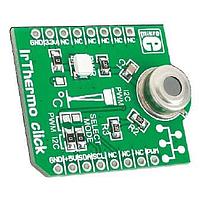
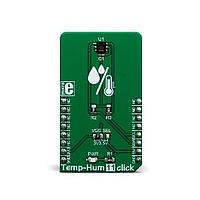
Temperature Sensor Development Tools
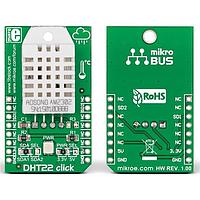
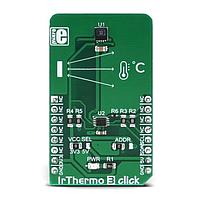
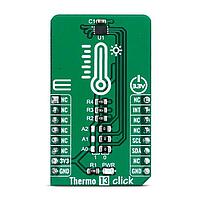
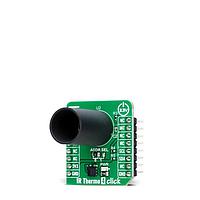
Accurate temperature measurement often sits at the center of product validation, thermal management, environmental monitoring, and embedded system design. When engineers need to evaluate sensing performance quickly, Temperature Sensor Development Tools provide a practical way to test interfaces, compare accuracy, verify response behavior, and shorten the path from concept to prototype.
This category brings together development kits, breakout boards, demo boards, and evaluation platforms built for digital temperature sensing workflows. Whether you are working on compact electronics, industrial monitoring nodes, connected devices, or lab evaluation, these tools help you assess integration effort before moving to a custom hardware design.
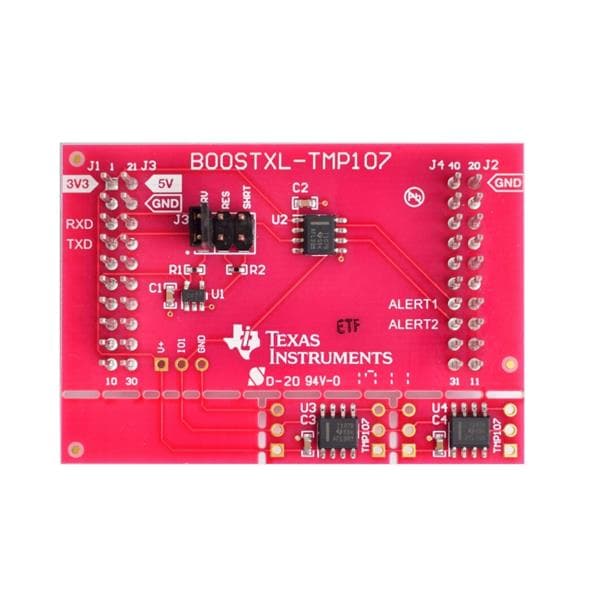
Why temperature sensor development tools matter in early design stages
In many projects, the challenge is not only reading temperature data, but understanding how the sensing device behaves in the real application. A development platform makes it easier to review communication, power requirements, placement considerations, and firmware integration without first building a dedicated test board.
These tools are especially useful when comparing I2C, 1-Wire, or other digital interface options, or when validating whether a sensor is suitable for local board temperature, ambient monitoring, or higher-accuracy measurement tasks. For teams building broader sensing systems, it can also be helpful to explore related platforms such as multiple function sensor development tools when temperature is only one part of the design.
What you can expect in this category
The range typically includes small breakout boards for fast breadboard-level testing, complete evaluation kits for device characterization, and demo boards intended to showcase a sensor IC or a measurement platform. Some products focus on single-sensor evaluation, while others support more advanced thermal measurement architectures and signal processing.
Examples in this category include the Analog Devices MAX31826EVSYS1# evaluation system, the MAX30210EVKIT#, the ams OSRAM AS6200-WL_EK_AB, and compact Adafruit boards such as the PCT2075 and MCP9808-based breakouts. There are also more application-specific options like the Analog Devices MAXREFDES173# for IO-Link local temperature sensing and the NXP NHS3100THADADKUL development kit for device evaluation in connected sensor concepts.
Common development scenarios
Temperature sensor development tools are used across a wide range of engineering tasks. In embedded design, they help teams validate sensor reading stability, bus communication, and software libraries before committing to PCB layout. In industrial and automation environments, they are useful for checking local hotspot monitoring, cabinet temperature tracking, and digital sensor connectivity in distributed nodes.
They are also valuable in proof-of-concept work for wearables, handheld devices, data logging, HVAC controls, and smart building systems. If your project also needs motion, current, or proximity data, related categories such as acceleration sensor development tools or current sensor development tools can support broader multi-sensor evaluation.
How to choose the right platform
A good starting point is the intended communication method and host environment. Many boards in this category are designed around digital sensor interfaces such as I2C, making them easy to connect to common microcontroller platforms and development ecosystems. For rapid prototyping, breakout-style boards can be the fastest option, especially when physical size and wiring simplicity matter.
It is also important to match the tool to the type of evaluation you need. If the goal is quick functional testing, a compact breakout may be enough. If you need to assess precision behavior, calibration strategy, or system-level thermal measurement, an evaluation kit or demo board may provide a better foundation. In some applications, a combined humidity and temperature device such as the Adafruit 3721 AM2320 board can be useful where ambient conditions are more important than point measurement alone.
Representative manufacturers and product ecosystems
Several well-known suppliers are represented in this space, each serving slightly different development needs. Analog Devices appears prominently with evaluation systems and demo boards aimed at more in-depth sensor and platform assessment, including products built around devices such as MAX31826, MAX30210, LTC2986-1, and LTC2984.
Adafruit is often a practical choice for fast prototyping, especially when developers want compact breakout boards and straightforward integration into maker, education, or early-stage embedded workflows. The category also includes options from ams OSRAM and NXP, giving engineers a useful mix of evaluation styles from simple board-level access to more application-oriented kits.
From breakout boards to system-level thermal evaluation
Not every temperature sensing task has the same level of complexity. A breakout like the Adafruit MCP9808 or PCT2075 board is well suited to quick prototyping, firmware testing, and proof-of-concept builds. These tools are often chosen when teams want to bring up sensor communication quickly and confirm that the device fits the application envelope.
By contrast, a more advanced board such as the Analog Devices DC2608A or DC2420A can support deeper evaluation of a measurement platform and its role in a larger thermal acquisition system. This distinction matters in professional design work, where the selection process may involve not just a sensor element, but also signal handling, integration architecture, and deployment constraints.
Practical selection points for engineers and buyers
When comparing products in this category, focus on the integration path rather than only the sensor name. Key considerations typically include interface compatibility, supply voltage fit, physical form factor, evaluation objective, and whether the tool is intended for direct experimentation or for structured characterization. For example, an I2C breakout and a dedicated evaluation kit may both target temperature sensing, but they support very different stages of development.
It is also worth considering how the thermal sensing function connects to the rest of the system. In edge devices and smart nodes, temperature monitoring may be paired with other sensing functions, digital communications, or control logic. Where applications involve object detection or spatial awareness in addition to thermal data, engineers may also review distance sensor development tools as part of the same design workflow.
Finding the right fit for your project
This category is designed for engineers who need a faster, lower-risk way to evaluate thermal sensing options before final hardware selection. From compact I2C breakouts to complete evaluation systems, the available tools support everything from simple firmware validation to deeper platform-level testing.
If you already know your target interface, accuracy needs, or integration environment, narrowing the selection becomes much easier. The right development tool can help you confirm feasibility early, reduce redesign cycles, and build a more reliable path toward production-ready temperature measurement.
Get exclusive volume discounts, bulk pricing updates, and new product alerts delivered directly to your inbox.
By subscribing, you agree to our Terms of Service and Privacy Policy.
Direct access to our certified experts