
Infrared Communications
Reliable short-range optical signaling is still widely used in industrial and embedded design, especially where engineers need a simple, direct, and electrically isolated way to transmit or detect light-based signals. In these applications, Infrared Communications components support everything from sensing and object detection to emitter-based communication links, control interfaces, and compact optoelectronic assemblies.
This category is focused on infrared emitter devices and related optoelectronic building blocks used in designs that rely on IR light rather than visible indication. For buyers, design engineers, and sourcing teams, the key is not just finding an emitter that turns on, but choosing a device with the right optical behavior, package style, and integration fit for the target system.
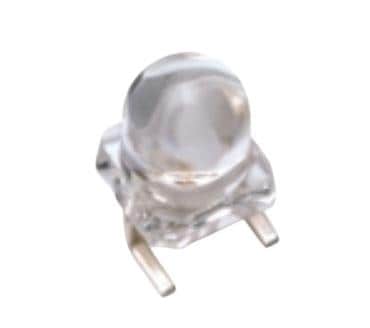
Where infrared communication components are used
Infrared emitters are commonly selected for systems that need light transmission without visible output. Depending on the design, they may be used in proximity sensing, object counting, photo-interrupter arrangements, optical switching, simple point-to-point signaling, or control interfaces where IR light is paired with a detector on the receiving side.
They also appear in broader optoelectronic ecosystems alongside products such as camera-related components and accessories when a design involves optical capture, alignment, or light-based monitoring. In industrial and OEM environments, these parts are often chosen because they are compact, fast, and easy to integrate into electronic assemblies.
What matters when selecting an infrared emitter
The most important selection factors usually include peak wavelength, radiant intensity, forward voltage, package format, mounting style, and beam characteristics. Even when two emitters look similar on paper, small differences in wavelength or optical output can affect compatibility with the receiving sensor, detection distance, ambient light immunity, and overall signal reliability.
Mechanical fit is equally important. A through-hole IR LED may suit legacy assemblies or straightforward board layouts, while a surface-mount part may be preferred for compact production designs. Engineers should also consider thermal behavior, drive conditions, and whether the device is intended for pulsed or continuous operation in the end application.
Representative products in this category
Several parts in this category illustrate the range of use cases available. The ams OSRAM portfolio includes devices such as SFH4715AS-FR and SFH4651-U, both relevant for designs that require established IR emitter options from a recognized optoelectronics supplier. Another example is the ams OSRAM SFH4750, listed as an infrared emitter with an 860 nm peak wavelength, which is a common range for many IR sensing and communication designs.
For buyers comparing alternatives, Lite-On offers parts such as LTPL-G35UVC275GM, LTE-4206, LTE-C9506B, and LTE-3271B, while Honeywell provides options including SEP8506-019 and SE5470-121. PANASONIC devices such as LN660000R and LNA4905L further expand the available choices for projects with specific packaging or optical interface requirements.
Choosing by wavelength and system compatibility
Infrared systems work best when the emitter and receiver are matched as a functional pair. Wavelength selection affects how efficiently the detector responds and how the system performs in real operating conditions. In the provided product set, examples include emitters around 860 nm and 880 nm, which are typical regions used in many IR designs.
That match becomes especially important in systems exposed to ambient light, reflective surfaces, dust, or varying target materials. A well-matched emitter can improve signal discrimination and reduce the risk of unstable readings. For more specialized optical transmission environments, some buyers may also review related technologies in fiber optic components when the application goes beyond free-space IR signaling.
Integration considerations for industrial and embedded design
In practical design work, an infrared emitter is rarely selected in isolation. It becomes part of a larger circuit that may include a photodiode, phototransistor, optical sensor, driver stage, controller, and mechanical housing. This means the right component choice depends on both electronic parameters and system-level constraints such as board space, line-of-sight, enclosure geometry, and operating duty cycle.
For embedded products, engineers often evaluate emitter performance together with control logic, timing, and the required communication method. In industrial equipment, reliability under repeated switching and stable optical output over time may matter more than simply maximizing brightness. That is why sourcing decisions usually benefit from reviewing the emitter in the context of the full optical path, not just the standalone part number.
How this category fits within the optoelectronic landscape
Infrared communication parts sit within a broader family of light-based electronic components used for emission, detection, indication, and control. They differ from visible indicators and display elements because the functional goal is typically signal transfer or sensing, not human-readable output. That makes this category especially relevant for machine functions, hidden interfaces, and automated equipment.
In some projects, IR emitter devices may be considered alongside solid state relays or other optically coupled components when designers are building isolated control paths. While these categories serve different purposes, they are often reviewed together during architecture planning for industrial electronics and control assemblies.
What B2B buyers should compare before ordering
For procurement teams, comparing infrared communication components is usually less about brand count and more about application fit, lifecycle confidence, and assembly compatibility. It is useful to confirm package type, electrical interface, wavelength alignment, and whether the selected emitter matches the receiving side of the circuit already specified by engineering.
It also helps to shortlist parts from established suppliers with relevant product depth in optoelectronics. Within this category, names such as ams OSRAM, Lite-On, Honeywell, and PANASONIC provide useful starting points for comparing available emitter options across different design needs. If the project requires a broader user-facing optical interface, related product groups such as displays may also be part of the wider BOM discussion.
Final considerations
Infrared communication design depends on more than selecting any IR LED that fits the footprint. The right choice supports consistent optical performance, practical integration, and better alignment with the receiving circuitry and operating environment. For that reason, this category is most valuable when approached as part of a complete optoelectronic system.
Whether you are sourcing for sensing, control, or embedded signal transmission, reviewing emitter wavelength, package style, and system compatibility will make product selection more efficient. The available range of infrared emitters from manufacturers such as ams OSRAM, Lite-On, Honeywell, and PANASONIC gives buyers a solid base for evaluating parts that fit real industrial and OEM requirements.
Get exclusive volume discounts, bulk pricing updates, and new product alerts delivered directly to your inbox.
By subscribing, you agree to our Terms of Service and Privacy Policy.
Direct access to our certified experts

