LED Indication
Clear visual status feedback is still one of the simplest and most effective ways to improve usability in machines, control panels, instruments, and embedded electronic products. Whether the goal is power-on confirmation, fault signaling, process indication, or user guidance, LED indication components help engineers deliver compact, low-power, and highly visible interfaces across industrial and electronic applications.
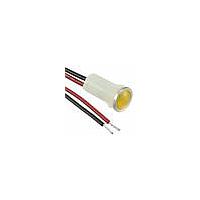
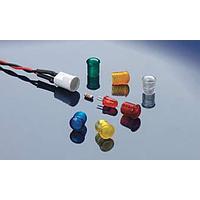
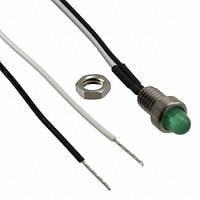
This category brings together indicator-oriented LED components and supporting parts used in display, signaling, and board-level integration. It covers both the light-emitting devices themselves and selected accessories that support installation, interface design, or system integration in practical assemblies.
Where LED indication is used
Indicator LEDs appear in a wide range of products, from factory equipment and building controls to telecom devices, medical electronics, test systems, and consumer-facing hardware. In many cases, a simple colored light is enough to communicate operating state, alarm condition, communication activity, or mode selection without adding display complexity.
Compared with larger lighting elements, indicator LEDs are typically selected for visibility, response speed, compact footprint, and long operating life. They are especially useful where designers need direct status communication on PCB assemblies, front panels, switchgear, or operator interfaces.
Typical product types in this category
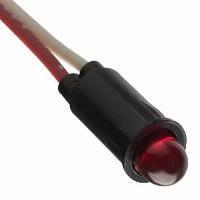
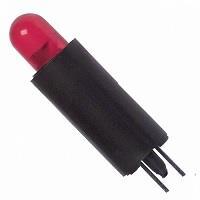
The category includes single-color indicator devices as well as related support items that are often required in real-world builds. For example, products such as the Broadcom ASMT-RR45-AQ902 Single Color LEDs and Broadcom ASMT-JG31-NTU01 Uni-Color illustrate common indicator roles where a specific color output and compact package are important for board-level status display.
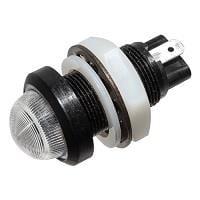
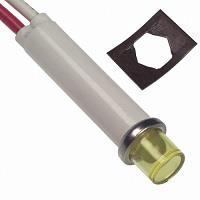
It also includes LED accessories that support mounting, electrical interfacing, or integration around the light source. Parts such as Amphenol FLB-P77-011, Eaton NO.232, Eaton NO.233, Eaton NO.234, Finder 15.10.8.230.0010, Finder 15.11.8.230.0400, and ams OSRAM OT-FIT-35/220-240/700-CS-L show how indication solutions often depend on more than just the emitter itself.
If your project requires adjacent product families for broader visual signaling or linear illumination, you may also want to review LED light bars and strips or lighting fixture accessories depending on the installation style.
Key selection factors for LED indication design
Choosing the right part starts with the intended signaling function. Color is often the first decision point because it directly affects human interpretation in the field. Red is commonly used for alarms, stop states, or fault signaling, while green is often associated with normal operation, ready state, or process confirmation. The examples in this category reflect that logic, including red and green devices from Broadcom and ams OSRAM.
Mounting style is equally important. Surface-mount LEDs support compact PCB layouts and automated assembly, while accessory parts may be useful where panel integration, wiring, or additional mechanical support is needed. Designers should also consider viewing angle, brightness, package size, and electrical compatibility with the driving circuit so that the indicator remains visible without becoming excessive in the target environment.
Environmental conditions matter as well. For industrial or extended-use applications, engineers typically evaluate operating temperature range, assembly process compatibility, and long-term reliability under vibration, enclosure constraints, or continuous duty conditions.
Examples of indication options in this range
For compact board-level status indication, the Broadcom ASMT-RR45-AQ902 provides a surface-mount red LED format suited to space-conscious designs. The Broadcom ASMT-JG31-NTU01 Uni-Color, with its green output, fits applications where immediate visual confirmation is needed on equipment interfaces or PCB assemblies.
From ams OSRAM, the KR DELPS1.22-UHVI-26-H3Q4-20-S represents a red single-chip option, while the LT PWSG-BACA-36-N626-20-S offers a true green alternative. These examples are useful when selecting by indication color, board density, and general integration direction rather than treating all LEDs as interchangeable parts.
Where the application extends beyond the LED package itself, accessories from manufacturers such as Eaton, Finder, and Amphenol can be relevant to the complete assembly. This is especially true in designs where the LED is part of a larger signaling, control, or panel interface system.
How accessories fit into an LED indication system
In many industrial and OEM projects, the visible LED is only one part of the final solution. Accessory components may support connection, mounting, retention, conversion, or compatibility with the surrounding hardware. That is why this category includes both direct indication components and selected supporting items rather than limiting the range to bare emitters only.
This broader approach is helpful for buyers sourcing complete design support around visual indicators. A project may need one set of products for the actual signaling element and another for integration into switches, panel assemblies, or electrical subsystems. If your application moves toward assembled luminaires instead of simple indicators, related options in LED lighting fixtures may be more appropriate.
Manufacturer coverage and sourcing considerations
This category includes products and accessories associated with recognized suppliers used across electronics and industrial sourcing channels. Brands highlighted in the current range include Amphenol, ams OSRAM, Broadcom, Eaton, and Finder, each relevant to different parts of the indication ecosystem.
When comparing manufacturers, the most useful approach is to focus on application fit rather than brand repetition. Some projects prioritize compact SMD indicators for dense boards, while others need accessories that help translate a board-level design into a panel or equipment-level interface. In both cases, consistent sourcing and compatibility with the rest of the assembly are often more important than selecting parts by name alone.
Choosing the right LED indication solution for your application
A good starting point is to define what the indicator must communicate and who needs to see it. An operator-facing panel may need strong contrast and intuitive color coding, while an internal board diagnostic point may only require local visibility during service. This immediately narrows the decision around color, brightness, package format, and whether additional accessories are needed.
It is also worth considering the surrounding product ecosystem. Some applications stay entirely within simple status indication, while others evolve into broader signaling or illumination requirements. In those cases, selecting components with a clear path into related product families can simplify future design updates and maintenance planning.
Final thoughts
Reliable visual signaling does not need to be complex, but it does need to be well matched to the device, environment, and user. This LED indication range supports that need by covering both core indicator LEDs and practical accessories used in real assemblies.
By comparing color, package style, mounting approach, and system-level integration needs, buyers can narrow down the most suitable parts for control panels, embedded electronics, and industrial equipment. If you are building around compact status feedback, this category provides a useful starting point for both component-level selection and broader indication system planning.
Get exclusive volume discounts, bulk pricing updates, and new product alerts delivered directly to your inbox.
By subscribing, you agree to our Terms of Service and Privacy Policy.
Direct access to our certified experts