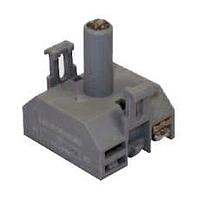
LED Lighting Accessories & Hardware
Mechanical details often determine whether an LED lighting design is easy to assemble, thermally stable, and reliable over time. In many projects, the light source gets most of the attention, but the surrounding mounting parts, holders, covers, bases, and shielding components are what help turn an LED module into a practical, serviceable system.
LED Lighting Accessories & Hardware covers the supporting parts used to mount, position, protect, and integrate LED elements in commercial, industrial, and equipment-level designs. This category is especially useful when you need a cleaner mechanical interface, more consistent installation, or a better fit between LEDs, optics, drivers, and enclosure structures.
Why these components matter in LED assemblies
An LED system is more than the emitter itself. Designers and maintenance teams often need accessories that simplify alignment, reduce assembly variation, and support safe fastening to panels, boards, or luminaire housings. Using the right hardware can also help with repeatability in production and make field replacement more straightforward.
This is particularly important in applications where compact layouts, vibration, thermal stress, or service access must be considered from the start. A properly selected holder or mounting accessory can support mechanical stability, while compatible covers and bases can contribute to better fit, protection, and long-term usability.
Typical product types in this category
This category includes several kinds of supporting components for LED lighting builds. Common examples are LED holders, mounting clips, module bases, protective covers, and shielding parts used around indicator or luminaire assemblies. Each part plays a different role in the overall integration of the lighting system.
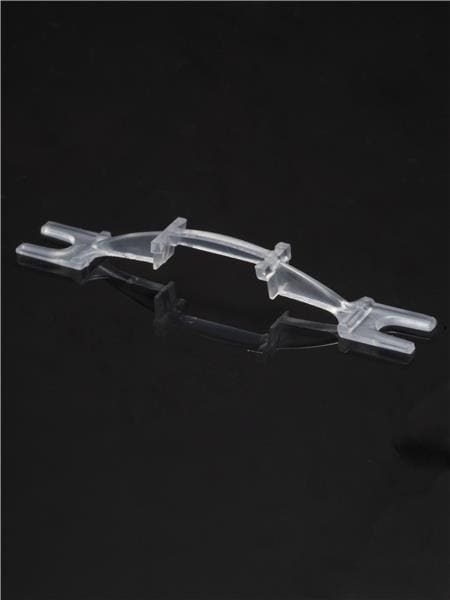
For example, TE Connectivity offerings in the LUMAWISE family illustrate how a holder or base can help position LED packages within a defined footprint, while parts such as the Ledil C14353_FLORENCE-1R-CLIP-A show the role of compact mounting accessories in securing optics-related elements. If your project requires a broader range of related mechanical parts, you can also explore LED lighting hardware and accessories as part of the same product space.
Examples of accessories used in real designs
Several featured parts show the range of use cases within this category. The TE Connectivity 1-2325807-3 Lumawise Z45 LED Holder 19x19 and TE Connectivity 6-2154874-3 solderless holder are good examples of components selected when installers need a defined LED interface and easier physical mounting. These types of parts are often chosen to improve assembly consistency and reduce ad hoc fixture methods.
Other products serve a more protective or structural role. The TE Connectivity 1-2338716-1 LUMAWISE ENDURANCE N cover and TE Connectivity 2213831-2 module base illustrate how covers and bases can support enclosure-level integration. In indicator-style lighting, the Banner Engineering K50DS Sun Shield is an example of an accessory designed to support visibility and application-specific installation needs rather than acting as the light source itself.
How to choose the right LED accessory or hardware
Selection usually starts with compatibility. Check what the part is intended to be used with, such as a specific LED size, optics platform, or module family. In this category, many products are designed around known mechanical formats, so matching the accessory to the LED package or lighting platform is often the first and most important step.
Next, review the mounting method and physical form. Screw-mount, panel-mount, and clip-based parts each fit different assembly workflows. Diameter, height, and shape also matter when space is limited or when the accessory must fit inside a housing with tight tolerances.
It is also worth thinking about maintenance and assembly efficiency. A holder that simplifies positioning or a cover that helps protect the installed light engine can reduce installation time and improve repeatability across multiple builds. Where the lighting design involves a larger ecosystem of supporting parts, related TE Connectivity solutions may be useful for standardizing the mechanical interface across projects.
Common application contexts
LED lighting accessories and hardware are used in a wide range of industrial and commercial equipment. These parts are relevant in luminaires, control panel indicators, signaling devices, machine-mounted lights, and custom assemblies where the LED source must be integrated into a mechanical structure with a predictable installation method.
They are also valuable in projects that combine lighting with optics or environmental shielding. A clip, holder, or cover may seem secondary, but it can directly affect ease of assembly, serviceability, and the final mechanical quality of the product. For optics-oriented builds, components associated with Ledil can be relevant when the design calls for a defined interface between lighting and optical elements.
Working with different manufacturers and product families
This category includes parts from well-known suppliers used in electronic and industrial design. AMP Connectors - TE Connectivity, TE Connectivity, PHOENIX CONTACT, Banner Engineering, and Ledil are among the manufacturers commonly referenced here. Each brand may approach the problem from a different angle, such as holder systems, protective accessories, or application-specific lighting hardware.
When comparing options, it is better to focus on fit, mounting style, and intended use rather than brand name alone. A compact clip accessory, a round LED holder, and a module base are not interchangeable parts even if they all belong to the same general category. The right choice depends on the assembly architecture and the role the component plays in the final lighting system.
Practical buying considerations for B2B users
For engineering, purchasing, and maintenance teams, the most useful approach is to define the lighting platform first and then shortlist compatible mechanical parts. This avoids mismatch issues and helps ensure that the selected hardware supports the intended LED package, optics interface, or enclosure geometry.
It is also helpful to think beyond the immediate part number. In many B2B environments, buyers need consistency across multiple builds, easier replacement planning, and fewer installation variables on the production floor. Choosing suitable LED holders, covers, bases, and mounting accessories can support those goals without overcomplicating the design.
Final thoughts
Well-chosen LED lighting accessories help bridge the gap between an LED component and a deployable product. Whether you are refining a luminaire design, building an indicator assembly, or standardizing a panel-mounted lighting solution, the right hardware can improve fit, installation quality, and long-term maintainability.
By reviewing compatibility, mounting style, and the specific function of each accessory, buyers can narrow the selection to parts that genuinely support the application. That makes this category a practical starting point when the success of the lighting design depends on more than the LED itself.
Get exclusive volume discounts, bulk pricing updates, and new product alerts delivered directly to your inbox.
By subscribing, you agree to our Terms of Service and Privacy Policy.
Direct access to our certified experts