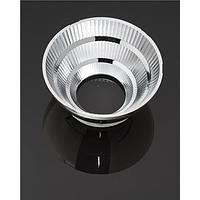
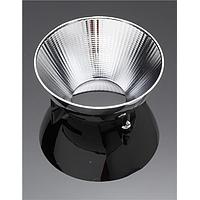
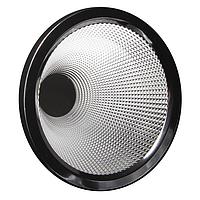
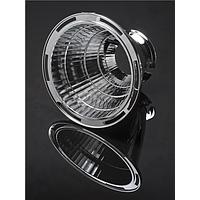
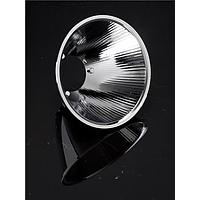
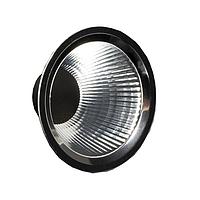
LED Lighting Reflectors
Light distribution is one of the most important factors in LED fixture performance. Even when the LED source itself is well selected, the final beam shape, intensity, glare control, and optical efficiency depend heavily on the reflector design. For engineers, lighting designers, and OEM buyers, choosing the right LED Lighting Reflectors helps align optical performance with the needs of the application rather than relying on the emitter alone.
In this category, you will find reflector solutions used to direct, shape, and control LED output in a wide range of lighting assemblies. These components are commonly selected for product development, fixture optimization, replacement needs, and custom lighting projects where consistent beam behavior matters.
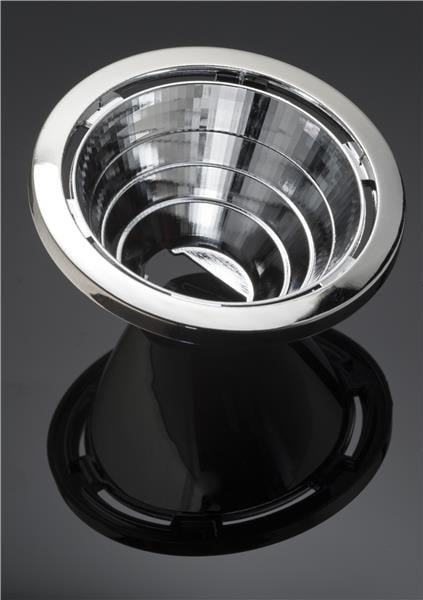
Why reflectors matter in LED optical design
A reflector works by redirecting light emitted from the LED package into a more useful pattern. Depending on the optical geometry, it can help concentrate light into a tighter beam, spread it more evenly across a target area, or improve overall control in luminaires where precision is important. This is especially relevant in applications where beam consistency, viewing comfort, or light delivery efficiency directly affect product performance.
Compared with a bare LED source, a system using a properly matched reflector can provide better beam control and more predictable illumination. In practical terms, that may support improved hotspot management, reduced spill light, and better use of available lumen output in the finished fixture.
Typical applications for LED lighting reflectors
LED reflectors are used across many lighting environments, from compact indicator and task lighting designs to more directional commercial or architectural assemblies. They are often chosen when a fixture needs to push light toward a working surface, highlight a defined area, or maintain a controlled distribution in a confined optical space.
They are also relevant in custom product development, where the mechanical and optical relationship between the LED, holder, lens, and reflector must be carefully considered. If your design requires a broader optical toolkit, it may also be useful to review related LED lenses and assemblies for configurations where refractive optics are preferred over reflective ones.
How to choose the right reflector
Selecting an LED reflector usually starts with the lighting objective. Some projects prioritize a narrow, directed beam, while others need a wider and softer spread. The required output pattern should be evaluated together with LED package compatibility, fixture dimensions, mounting constraints, and the surrounding thermal and mechanical design.
It is also important to consider how the reflector fits into the full optical system. In many fixtures, performance depends not only on the reflector itself but also on alignment with the light source and any supporting optical elements. For buyers comparing alternatives, this category can also be viewed alongside the broader range of LED lighting reflectors and nearby optical product families to support more informed selection decisions.
Representative products in this category
This category includes reflector products from recognized lighting optics suppliers such as Dialight, Ledil, and Greenlee. These manufacturers are frequently specified in LED lighting projects where optical consistency and integration flexibility are important.
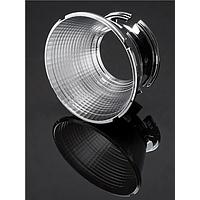
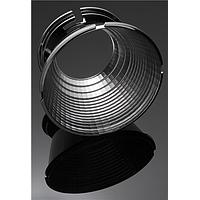
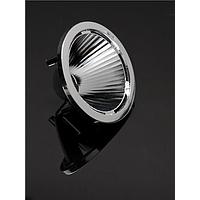
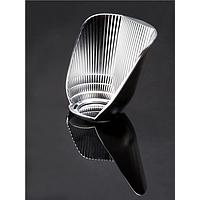
Examples in the current range include the Dialight 5151140225F LED Lense/Reflector, Dialight 5151140120F LED Lense/Reflector, and Dialight 5151166801F LED Lense/Reflector, as well as Ledil options such as FC13976_ANGELINA-RZ-W, C18319_ADELIA-110-S, and FCN13572_ANGELA-W. These product examples illustrate the diversity of reflector formats available for different beam and fixture requirements, without assuming that one geometry fits every lighting design.
Reflectors, lenses, and combination optics
In LED fixture development, reflectors and lenses are often considered together because both influence beam shape, efficiency, and visual appearance. Reflectors primarily redirect light through reflective surfaces, while lenses shape light through refraction. Depending on the application, one approach may be more suitable, or a combined optical structure may offer the best result.
Some listed products are described as LED lense/reflector components, which reflects how modern optical parts can serve hybrid roles within compact assemblies. When working on a new luminaire or upgrading an existing design, reviewing both reflector-based and lens-based options can help identify a more effective balance between output control, mechanical fit, and assembly simplicity.
Brand and sourcing considerations for B2B buyers
For OEM procurement, maintenance planning, and engineering support, supplier consistency matters as much as optical performance. Buyers often look for stable product lines, recognizable part numbering, and compatibility with established lighting platforms. That is one reason brands such as Dialight, Ledil, and Greenlee continue to appear in specification and replacement workflows.
When comparing parts, it is useful to verify not just the component family but also how the reflector will be used in the target assembly. A part intended for one LED platform or optical layout may not deliver the same result in another design. Reviewing products by manufacturer can help narrow the field when standardization or approved-vendor sourcing is part of the purchasing process.
What to review before placing an order
Before ordering, confirm the intended LED compatibility, reflector form factor, and the performance goal of the fixture. Mechanical fit is particularly important in compact housings, where small differences in height, diameter, or alignment can affect assembly and final light distribution. For design teams, prototype testing is often the most practical way to validate optical behavior before scaling to production.
If your project involves a broader lighting optics comparison, it can be helpful to explore adjacent categories such as LED Lenses & Assemblies to evaluate alternative beam-forming strategies. This approach supports a more complete selection process, especially in applications where visual comfort, directional accuracy, or fixture efficiency are key design goals.
Find reflectors that match your lighting design needs
The right reflector supports more than light redirection; it helps define how the finished product performs in real operating conditions. Whether you are refining a new LED assembly, sourcing a replacement optical part, or standardizing components across multiple fixtures, this category brings together practical options for controlled and application-focused light management.
Use the available product range to compare optical approaches, manufacturer families, and part formats that fit your design intent. A careful reflector choice can simplify integration, improve beam quality, and support more predictable results throughout development and production.
Get exclusive volume discounts, bulk pricing updates, and new product alerts delivered directly to your inbox.
By subscribing, you agree to our Terms of Service and Privacy Policy.
Direct access to our certified experts