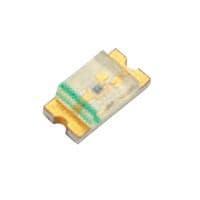
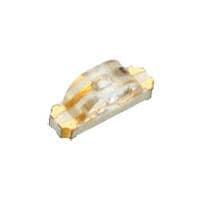
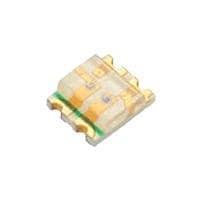
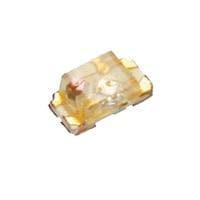
LEDs
From compact status indicators on control boards to high-output emitters used in lighting assemblies, LEDs sit at the center of many modern electronic and industrial designs. Choosing the right device is not only about color or brightness; engineers also need to consider package style, viewing angle, electrical drive conditions, thermal behavior, and the environment where the component will operate.
This LEDs category is intended for buyers and design teams looking for practical options across general indication, illumination, and application-specific use cases. Within this range, you can explore devices from established manufacturers such as ams OSRAM, Broadcom, and CITIZEN, covering everything from single emitters to LED modules for more integrated lighting solutions.
Where LEDs fit in electronic and lighting systems
LEDs are widely used in equipment that requires visual indication, compact light sources, energy-efficient illumination, or wavelength-specific output. In B2B and OEM environments, they are commonly selected for HMIs, instrument panels, automotive electronics, signaling devices, machine status displays, and embedded lighting assemblies.
Depending on the application, the device may function as a simple board-level indicator or as part of a broader optical and thermal system. If your project also requires more integrated lighting parts, it may be helpful to review related options in LED bulbs and modules for assemblies that combine emitters into ready-to-use lighting formats.
Typical product types available in this category
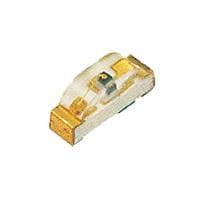
This category covers a broad spectrum of LED formats rather than a single device style. Buyers may be looking for compact surface-mount indicators, single-color emitters for panel and signage applications, white LEDs for illumination, or specialty parts for optical sensing and targeted wavelength output.
Examples from the current range illustrate that variety well. The ams OSRAM Q65110A2185 is a uni-color green automotive LED in a 2-pin PLCC format, while the Broadcom HSMA-A100-Q7NJ1 is a surface-mount LED indicator suited to board-level signaling. For lighting-oriented designs, products such as the Broadcom ASMT-JY33-NRS01 and ams OSRAM LWY1SG-BFCF-EKFM-1 show how package and output options can vary depending on the required color temperature, light distribution, and drive profile.
Key selection factors for engineers and buyers
A good LED selection process starts with the intended function of the device. For indication, the priority may be visibility, color consistency, and package footprint. For illumination, designers typically focus more on luminous output, current handling, heat dissipation, and optical integration. In applications such as automotive or embedded electronics, mounting style, reliability, and compatibility with the surrounding PCB design also become important.
It is also worth evaluating electrical and thermal constraints early in the design cycle. Forward voltage, test current, maximum current, and package dimensions affect not only component selection but also driver design, PCB layout, and long-term stability. When optics, drivers, or mechanical housings are part of the project scope, related categories such as LED lighting optics can help complete the system-level design.
Examples from leading manufacturers
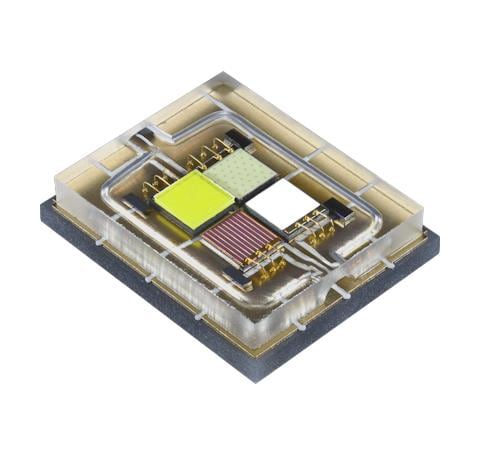
Broadcom appears in this category with both indicator-style devices and LED modules, making it relevant for projects that range from basic visual signaling to more structured lighting assemblies. The HLMP-EL2G-WYKDD LED Modules, for example, represent module-based solutions that may simplify integration where discrete emitter selection is not the only requirement.
CITIZEN is represented with parts such as the CLU024-1204B8-50AL7C8 LED Modules and CL270YG-C-TS LEDs, which can be useful reference points when comparing module-based lighting options with discrete LED components. ams OSRAM has especially broad representation in this range, including devices such as GW CSSRM2.PM-N1N3-A737-1 LED Modules, SFH320G-3 LEDs, and KW CELNM1.TG-Z7N4-EBXDEBZB46-1565-HE LEDs, reflecting the diversity of package styles and application targets available within one manufacturer ecosystem.
Discrete LEDs vs. LED modules
One of the most practical buying decisions is whether to use a discrete LED or move to a module-based format. Discrete LEDs are often preferred when PCB space, channel count, color control, or custom placement matters. They give design teams more flexibility in layout and can be ideal for indicators, segmented lighting, and tailored optical arrangements.
LED modules, on the other hand, may reduce assembly complexity by packaging emitters into a more application-ready format. This can be useful in lighting products where consistency, mechanical integration, or simplified sourcing is important. If your design also needs supporting circuitry, power interfaces, or control hardware, related products under LED lighting electronics can provide the electronic foundation around the light source itself.
Application considerations across industries
In industrial electronics, LEDs are frequently selected for machine state indication, operator feedback, and compact enclosure lighting. For these uses, visibility at the required viewing distance, color recognition under ambient light, and board assembly compatibility are often more important than raw luminous output alone. Surface-mount indicators such as Broadcom HSMA-A100-Q7NJ1 are typical of this use case.
In automotive and transportation-related designs, package reliability and operating conditions matter more strongly. The ams OSRAM Q65110A2185, identified as an automotive LED, is a reminder that not every LED is interchangeable across environments. Likewise, white and warm white parts such as Broadcom ASMT-JY33-NRS01 or module-based options from CITIZEN may be more appropriate where illumination quality and system thermal design are central requirements.
How to narrow down the right option
When comparing products on this page, it helps to begin with a short list of practical questions: Is the LED intended for indication or illumination? Does the design require a specific color or wavelength? Is the package constrained by PCB layout? Will the part be driven continuously or in pulses? Are optics, drivers, or thermal paths already defined in the assembly?
From there, you can refine the shortlist based on package style, mounting method, current range, and integration level. For simple signaling, a compact discrete device may be enough. For higher-output or lighting-focused assemblies, module options from manufacturers like ams OSRAM, Broadcom, or CITIZEN may offer a more efficient path from prototype to production.
Final thoughts
The right LED choice depends on how the component behaves inside the full electrical, mechanical, and optical system. A careful comparison of application type, package format, drive conditions, and integration needs will usually lead to a more reliable shortlist than selecting by brightness or color alone.
This category brings together a useful mix of discrete emitters and modules for engineering, maintenance, and procurement teams. Whether you are sourcing a compact indicator, evaluating white LEDs for illumination, or comparing module-based options for a larger assembly, the available range provides a solid starting point for technical selection.
Get exclusive volume discounts, bulk pricing updates, and new product alerts delivered directly to your inbox.
By subscribing, you agree to our Terms of Service and Privacy Policy.
Direct access to our certified experts