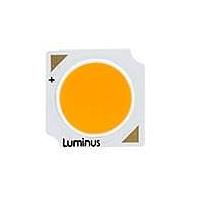
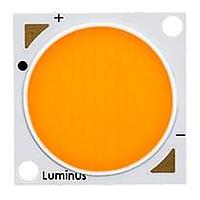
White LEDs
Lighting design often comes down to a few practical priorities: brightness, color appearance, mounting constraints, thermal behavior, and long-term reliability in the target environment. For engineers and buyers working on indicators, backlighting, general illumination modules, or compact electronic assemblies, White LEDs remain one of the most widely used options because they support efficient light output in space-limited designs and fit a broad range of industrial and commercial applications.
This category brings together surface-mount white LED components used across PCB-based products, from low-power status indication to higher-output lighting functions. You will find compact SMD packages, different white tones such as warm white, neutral white, and cool white, as well as devices suited to both general electronics and more demanding operating conditions.
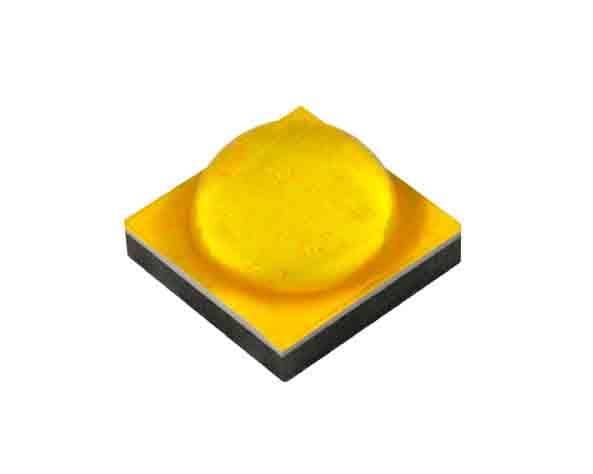
Where white LEDs are commonly used
White LED components are selected for far more than simple illumination. In electronics manufacturing, they are commonly integrated into control panels, display backlighting, machine status indicators, handheld devices, automotive-adjacent assemblies, signage modules, and embedded lighting systems. The exact device choice depends on whether the design needs a narrow footprint, balanced color rendering, higher luminous flux, or stronger current handling.
Compared with alternatives such as single-color LEDs, white versions are often used when the goal is visibility, readability, or area lighting rather than pure signaling. In applications where human perception matters, parameters such as correlated color temperature, viewing angle, and light uniformity can be just as important as package size.
Key variations within the category
Not every white LED is intended for the same job. Some parts are optimized for compact low-power PCB mounting, while others are designed for higher drive currents and stronger light output. You will also see meaningful variation in color temperature, from warm white tones around 3000K to cooler white outputs around 5700K or higher, which can influence user comfort, contrast, and perceived brightness.
Package style and mounting orientation also matter. For example, the Lite-On LTW-006DCG-E2 is a right-angle surface-mount option that can suit edge or side-emission requirements in constrained layouts, while top-mount SMD devices such as the ams OSRAM GWJTLMS1.EM-GWH4-XX52-1-60-R33 are more aligned with direct emission onto a front-facing surface. When comparing products, it is useful to look at the relationship between current rating, thermal design, and intended optical result rather than focusing on one specification alone.
Selection points for engineering and sourcing teams
A practical selection process usually starts with the optical target. If the application is a simple indicator or low-power backlight, a small 2-pin SMD white LED may be enough. For denser lighting modules or designs requiring stronger output, higher-current LED chips such as the Cree LED XHP35B-00-0000-0D0UC235G or the ams OSRAM GW PUSRA1.EM-MFN7-XX57-1-700-R33 may be more relevant, provided the board and thermal path are designed accordingly.
Next, review the environmental and assembly constraints. Operating temperature range, MSL rating, reflow tolerance, and package dimensions all affect manufacturability and long-term field performance. For compact assemblies, low-profile parts can help simplify mechanical integration, while wider viewing angles may improve uniformity in illuminated panels and diffused covers.
Representative manufacturers in this range
This category includes products from established LED suppliers used in electronic design and industrial sourcing. ams OSRAM is strongly represented with options spanning compact white SMD LEDs through higher-power LED chips in different color temperatures. Examples in this range include ultra white, neutral white 4000K, cool white 5700K, and warm white 3000K variants, which helps support different visual and application requirements.
Other notable names include Cree LED, Lite-On, PANASONIC, and Broadcom. A part such as the Broadcom ASMD-CWG7-NX7A2 may fit low-power cool white designs, while PANASONIC LNJ047X8ARA and selected Lite-On devices can be relevant for compact electronic assemblies. The value of a broad category is that sourcing teams can compare package styles and general application fit across multiple brands without leaving the same product family.
Understanding warm white, neutral white, and cool white
Warm white LEDs are typically chosen when a softer visual tone is preferred, such as in user-facing equipment, decorative assemblies, or lighting where comfort matters. Neutral white often provides a balanced appearance that works well in practical equipment lighting, inspection-adjacent visibility, or applications that benefit from a more natural tone. Cool white devices are often selected for crisp visual contrast, display enhancement, or designs where a brighter perceived output is preferred.
For example, the ams OSRAM LCWG6CP-EAFB-4L8N-0-140-R18-Z is identified as a neutral white 4000K LED chip, while the ams OSRAM GWJTLMS1.EM-GWH4-XX52-1-60-R33 is a cool white 5700K part. The Cree LED XHP35B-00-0000-0D0UC235G, listed as warm white 3500K, illustrates how the category supports different lighting intent rather than a single visual standard.
How white LEDs fit into a broader optoelectronic design
White LEDs are often one part of a larger LED strategy. A product family may use white devices for illumination and backlighting, while relying on IR LEDs for sensing or communication functions and multicolor LEDs for richer status indication. Looking at the LED ecosystem this way can make component planning more consistent across a platform or product generation.
In many B2B projects, the best choice is not simply the brightest device available. It is the component that aligns with the electrical budget, PCB real estate, optical target, assembly process, and expected operating life. That is why this category is useful for both design engineers narrowing a shortlist and procurement teams comparing compatible options for ongoing supply.
What to review before finalizing a part
Before locking in a white LED, confirm the basics of the application: desired brightness level, white tone, board footprint, lens or diffuser behavior, and drive conditions. For higher-current parts, thermal management should be reviewed early, especially if the LED is expected to operate continuously or in enclosed equipment. For smaller indicator-style devices, visibility at the intended viewing angle may be more important than raw flux.
It is also worth checking whether your design would benefit from a different LED type altogether. In some cases, UV LEDs or other specialized emitters are more appropriate for curing, sensing, or inspection-related tasks. The right category choice helps avoid overengineering and keeps the BOM aligned with actual performance needs.
Choosing the right white LED range
This selection of surface-mount white LEDs supports a wide spectrum of use cases, from compact indicators to more demanding lighting assemblies. With products from manufacturers such as ams OSRAM, Cree LED, Lite-On, PANASONIC, and Broadcom, buyers can compare practical options across package formats, color temperatures, and current ranges.
When evaluating parts, focus on the combination of optical performance, mounting style, environmental fit, and system-level design requirements. A well-matched white LED can improve both product usability and manufacturing consistency, which is exactly what makes this category an important starting point for many LED-based designs.
Get exclusive volume discounts, bulk pricing updates, and new product alerts delivered directly to your inbox.
By subscribing, you agree to our Terms of Service and Privacy Policy.
Direct access to our certified experts