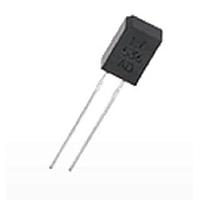
Phototransistors
In many optoelectronic designs, the sensing element needs more than simple light detection. It must respond quickly, fit the available package space, and work reliably with the emitter wavelength used in the circuit. Phototransistors are widely selected for this role because they combine light sensitivity with current amplification, making them useful in compact detection, switching, and isolation applications.
This category brings together phototransistor devices used in industrial electronics, embedded systems, consumer products, and optical sensing assemblies. Whether you are comparing response types, package styles, or suitable parts for IR-based detection, the range here supports both new designs and replacement sourcing.
Where phototransistors fit in optical sensing
A phototransistor converts incident light into an electrical response, much like other optical detectors, but with transistor action that helps amplify the resulting signal. This makes the device practical when designers need a stronger output than a basic light-sensitive junction can provide, especially in compact circuits where external amplification may be limited.
They are commonly used with infrared emitters in object detection, slot sensors, counters, encoders, reflective sensing, and basic optical switching. In broader sensing architectures, engineers may also compare them with photodiodes when speed and linearity are priorities, or with ambient light sensors for applications focused on measured light levels rather than simple optical triggering.
Common application patterns
The most typical use case involves pairing a phototransistor with an LED or IR emitter so the receiver changes state when light is present, blocked, or reflected. This principle appears in industrial counters, paper path detection, small appliance sensing, safety covers, and presence detection in compact equipment.
Phototransistors are also used inside optocoupler-style concepts and isolated optical paths where the goal is to transfer information using light. In these cases, the device selection often depends on wavelength compatibility, switching behavior, output characteristics, and operating environment rather than on a single headline specification.
How to choose the right phototransistor
A good starting point is the light source wavelength. Many parts in this category are intended for infrared operation, with examples centered around 850 nm, 935 nm, 980 nm, and 990 nm ranges. Matching the receiver to the emitter improves detection reliability and reduces the risk of weak or inconsistent output in the final assembly.
Package style is equally important. Through-hole formats such as T-1 and T-1 3/4 can suit legacy boards, prototyping, or mechanically aligned emitter-receiver assemblies, while packages such as TO-18, PLCC, or MIDLED may better support compact layouts and specialized mounting needs. Designers should also review pin count, operating temperature range where available, and whether the circuit benefits more from a standard phototransistor or a photodarlington structure with higher sensitivity.
For applications exposed to temperature variation or demanding operating conditions, environmental limits can matter as much as optical sensitivity. As an example, Honeywell SME2470-011 is listed with a wide operating temperature range, which can be relevant when selecting parts for industrial or outdoor-adjacent electronics.
Representative products in this category
Several listed parts illustrate the breadth of available options. From ams OSRAM, devices such as Q62702P3600, BP103-3/4-Z, SFH320-3, and Q65110A1573 show how phototransistors are offered across different wavelengths and package formats, including compact and automotive-oriented variants. These are useful references for designs that need IR-sensitive detection in established optoelectronic platforms.
Honeywell devices such as SDP8105-001, SME2470-021, and SME2470-011 are relevant when application engineers need robust optical receiver options for control and sensing systems. PANASONIC PNZ147 and PNZ14700R provide additional examples for general phototransistor selection, while ROHM Semiconductor RPM-20PBN, Lite-On CNY17-2S, and Sharp PT361 help round out the category for buyers evaluating package compatibility and sourcing alternatives.
Phototransistor vs. other optical detector types
Choosing the right optical detector depends on the job the circuit must perform. A phototransistor is often a practical choice when the output signal needs amplification and the switching speed requirements are moderate. That makes it attractive for beam interruption, reflective presence detection, and simple logic-level interfacing.
In contrast, photoresistors are typically associated with slower light-dependent resistance changes, while photodiodes are often preferred for faster response and more precise light measurement. For very low-light detection in specialized systems, engineers may instead review photomultipliers. Understanding these differences helps narrow the selection before comparing individual part numbers.
Key considerations for B2B sourcing
For purchasing teams and design engineers, part selection is not only about electrical fit. It also includes package continuity, approved manufacturer preference, second-source strategy, and consistency across production builds. In phototransistor sourcing, these points become especially relevant when the component is mechanically aligned with an emitter or integrated into a sensor housing.
It is also useful to check whether the listed device is a discrete detector intended for board-level integration or part of a broader optical subsystem concept. Reviewing manufacturer families from suppliers such as ams OSRAM, Honeywell, PANASONIC, ROHM Semiconductor, Lite-On, and Sharp can help align the shortlist with your application type, assembly constraints, and long-term procurement needs.
FAQ
Are phototransistors mainly used with infrared light?
Many are designed for IR-based detection, and several products in this category reference wavelengths in the infrared range. The correct choice depends on matching the detector to the emitter and the application environment.
What is the difference between a phototransistor and a photodarlington?
A photodarlington generally offers higher sensitivity because of additional gain, but this can come with trade-offs in speed and response behavior. The right option depends on whether your design prioritizes stronger output or faster switching.
When should I choose a photodiode instead?
If your circuit needs faster response, more linear behavior, or more measurement-oriented detection, a photodiode may be more suitable. Phototransistors are often preferred when simple amplified light-triggered switching is the main requirement.
Find phototransistors for stable optical detection
From compact IR receivers to general-purpose light-triggered switching elements, this category supports a wide range of design and maintenance needs. If you are comparing wavelengths, package formats, or manufacturer families, a careful review of the listed phototransistors can help you identify parts that fit both the optical path and the practical realities of production sourcing.
Get exclusive volume discounts, bulk pricing updates, and new product alerts delivered directly to your inbox.
By subscribing, you agree to our Terms of Service and Privacy Policy.
Direct access to our certified experts