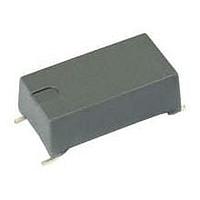
Optocouplers / Photocouplers
Electrical isolation is often a small design detail that makes a major difference in safety, noise immunity, and long-term reliability. In control boards, power interfaces, industrial I/O, and communication circuits, Optocouplers / Photocouplers are widely used to transfer signals while keeping two parts of a system electrically separated.
This category brings together devices for signal isolation across a range of output structures, channel counts, and insulation levels. Whether the priority is protecting a low-voltage controller from a noisy field side, separating logic from power stages, or supporting switching functions related to solid state relay technology, optocouplers remain a practical and proven building block.
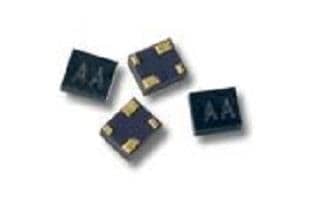
Why optocouplers are still important in electronic design
An optocoupler transfers information through light rather than a direct electrical connection. On the input side, an LED emits light when driven by a signal, and on the output side, a photosensitive element responds to that light. This structure helps designers create galvanic isolation between control and load circuits.
In practical applications, that isolation can reduce the risk of ground loop problems, improve tolerance to common-mode noise, and help protect sensitive logic devices from voltage transients. These benefits are relevant in industrial control panels, instrumentation, embedded systems, power conversion stages, telecom interfaces, and many other electronic assemblies.
Common output types and where they fit
Not all optocouplers behave the same way on the output side, so selection usually starts with signal type and interface requirements. Some devices are intended for general transistor output switching, while others support logic-compatible outputs, Darlington structures for higher gain, or photovoltaic and photoelectric outputs for specialized switching tasks.
For example, the Broadcom 6N139-060E Optocouplers use a Darlington-style output approach that can be useful where high current transfer ratio matters more than switching speed. By contrast, parts such as the Broadcom 6N137#020 are aimed at faster logic-oriented isolation scenarios. For designs involving isolated switching behavior, products like the Diodes Incorporated DPC217S-A-TR-V Transistor and Photovoltaic Output Photocouplers or Infineon PVI5033R Optocouplers may be more relevant because they fit applications where the output stage is not simply a basic transistor interface.
Typical selection criteria for engineers and buyers
When comparing devices in this category, it helps to look beyond package similarity and focus on the actual electrical role of the component. Important parameters often include isolation voltage, output topology, number of channels, input drive current, output current capability, and turn-on or turn-off timing. Operating temperature range and mounting format are also important in production and maintenance environments.
A dual-channel part such as Broadcom 5962-8767905KEA Optocouplers may suit compact designs where board space and channel density matter. If higher insulation rating is a priority, Broadcom HCNW4506#500 Optocouplers stand out in applications that need stronger isolation margins. Meanwhile, HPE HCPL-5431 Optocouplers and Broadcom HCPL2611560E Optocouplers are examples of parts buyers may review when balancing availability, familiar package style, and established optoelectronic isolation design practices.
Where these devices are used in real systems
Optocouplers are commonly found between microcontrollers and field signals, in PLC-style input stages, motor control interfaces, feedback paths in power supplies, battery systems, and communication ports that need electrical separation. They are also used in monitoring and status circuits where a signal must cross from a higher-noise domain to a cleaner logic domain without a direct conductive path.
In broader optoelectronic system design, they sit alongside other light-based technologies used for transmission, sensing, and display. Teams working across multiple optical component families may also compare related categories such as fiber optic components when signal integrity and isolation are addressed at a system level, even though the operating principles and application scope are different.
Representative manufacturers in this category
This category includes parts from recognized suppliers used in industrial and electronic design workflows. Broadcom appears prominently with several well-known optocoupler series covering logic output, transistor output, and high-isolation use cases. Infineon is also relevant for applications that need photovoltaic or specialized isolated output behavior.
Additional sourcing context can include names such as HPE and Diodes Incorporated, depending on the exact circuit function and lifecycle requirements. In procurement terms, having access to multiple manufacturers can help when engineers need to compare package style, isolation approach, response characteristics, and application fit without leaving the same category structure.
Choosing between general-purpose and application-specific parts
A practical way to narrow the list is to define whether the device is being used for simple signal isolation, fast digital interfacing, load switching support, or feedback and sensing. A general-purpose transistor-output part may be adequate for many control signals, but it may not be the best choice for higher-speed logic paths or for isolated switching functions that benefit from photovoltaic behavior.
For instance, Broadcom HCPL-7721-520 Optocouplers and Broadcom HCPL-550K-100 Optocouplers may be evaluated in designs where signal behavior and interface compatibility are more critical than a basic on/off transfer function. On the other hand, Infineon PVT412S-T Optocouplers can make more sense in use cases tied to isolated actuation or switching support. Matching the output structure to the real circuit role is usually more important than selecting by part family name alone.
How to review this category efficiently
For engineering teams, the fastest path is usually to start with the intended signal path: input type, output type, channel count, and insulation requirement. From there, narrow by switching speed, current transfer behavior, temperature range, and package or mounting preference. This approach helps separate suitable candidates from parts that are electrically similar at first glance but not interchangeable in practice.
For purchasing teams, it is also useful to review whether a part is intended for new design, maintenance replacement, or qualification comparison. A category like this is most effective when it supports both technical filtering and sourcing flexibility, especially for control electronics, industrial boards, and embedded products where signal isolation is a non-negotiable design requirement.
Final notes
Optocouplers remain a dependable solution wherever circuits must communicate across an isolation barrier without sacrificing simplicity. By comparing output type, insulation level, speed, and application role, it becomes much easier to identify the right device for control, interface, feedback, or switching tasks.
If you are reviewing options for a new design or a replacement part, this category is a practical starting point for comparing proven isolation components from established suppliers and narrowing the shortlist based on real circuit needs.
Get exclusive volume discounts, bulk pricing updates, and new product alerts delivered directly to your inbox.
By subscribing, you agree to our Terms of Service and Privacy Policy.
Direct access to our certified experts