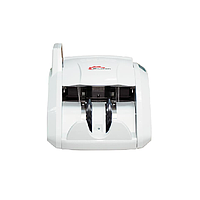
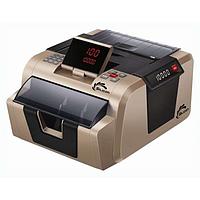
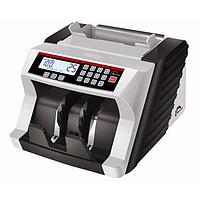
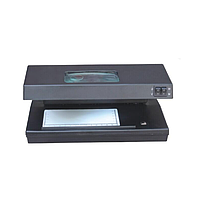
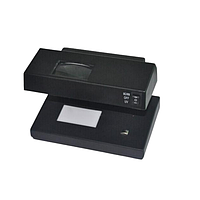
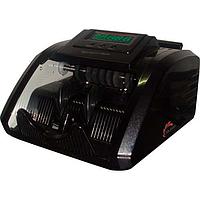
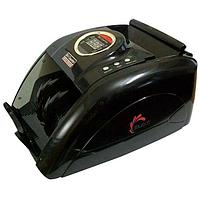
Bill Counter
Handling cash manually can slow down daily operations, especially in retail back offices, finance departments, banks, cashier counters, and service businesses where speed and accuracy matter. A reliable bill counter helps reduce counting errors, shortens reconciliation time, and adds an extra layer of control when checking suspicious notes or mixed denominations.
On this page, you can explore money counting machines designed for practical business use, from standard note counters to models with more advanced counterfeit detection and denomination recognition features. Depending on workload, currency requirements, and operating environment, the right machine can support both faster cash processing and more consistent day-to-day handling.
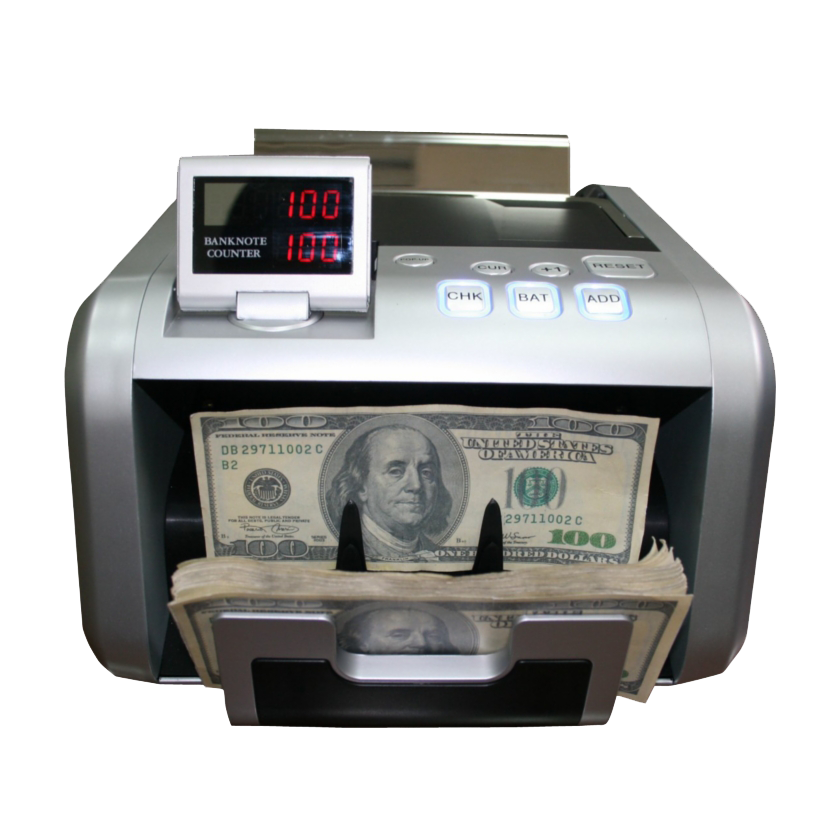
Why businesses use bill counters
Cash-intensive workflows often involve more than simply counting the number of notes. Teams may need to total batches, separate preset quantities, process mixed notes, or verify whether suspicious bills should be set aside for inspection. A modern bill counter supports these tasks with automated feeding, electronic sensing, and on-screen results that are easier to verify than manual counting.
In many workplaces, the real benefit is not only speed but also workflow consistency. When the same counting process is repeated across shifts or branches, businesses can reduce human variation and improve handover accuracy. For related cash handling steps after counting, some users also review equipment such as currency binding machines or banding machines to organize finished bundles more efficiently.
What to look for when choosing a money counting machine
The first factor is the type of cash workflow. If the main need is straightforward counting with batch or add modes, a compact standard machine may be sufficient. If your team frequently handles mixed denominations or multiple currencies, it is worth focusing on models with denomination recognition, total value calculation, and broader counterfeit detection methods.
The second factor is note condition. In real use, bills may be folded, worn, mixed by orientation, or inserted in uneven stacks. Machines designed for practical business environments are generally better suited to maintain stable feeding and accurate results under these conditions. It is also useful to check display visibility, hopper capacity, update method, and whether the machine supports software updates as counterfeit detection patterns change over time.
Common functions available in this category
Many products in this category include familiar counting modes such as fixed batch counting, cumulative counting, and automatic start/stop. These functions are useful for preparing cashier floats, reconciling tills, and processing routine deposit volumes. Some models are optimized for fast note counting, while others place more emphasis on mixed denomination processing and counterfeit screening.
More advanced systems may combine UV, MG, IR, and CIS detection to improve bill verification. In practical terms, this means the machine does not only count notes but also checks several physical and printed characteristics during the counting process. Certain models listed here also support multiple currencies, software upgrade ports, and serial number reading for selected foreign banknotes, which can be relevant in exchange counters or organizations dealing with international cash transactions.
Representative SILICON models for different needs
SILICON is one of the most visible brands in this category, with models covering both everyday office use and more advanced cash verification requirements. For businesses that need denomination counting and multi-currency support, the SILICON MC-8PLUS and SILICON MC-8PLUS (COMBO) stand out as examples of machines built for mixed note handling, counterfeit detection, and software-based updating.
For users looking for a balance between footprint and functionality, the SILICON MC-7PLUS (COMBO) offers multi-currency counting with counterfeit checking and serial-related features for selected currencies. At the more conventional end, models such as the SILICON MC-9900, MC-9900N, MC-8600, MC-3300, and MC-2300 are better aligned with routine counting, batch processing, and standard verification tasks in offices, stores, and service counters.
Some users also prefer faster high-volume models such as the SILICON MC-8800, while compact options like the SILICON MC-2550, MC-2900, and MC-3600 can fit tighter workspaces without giving up core counting functions. The best choice depends less on model popularity and more on whether your workflow centers on simple note counting, mixed denomination processing, or broader counterfeit control.
How advanced and standard bill counters differ
A standard machine is usually enough when your team mainly counts sorted notes of the same denomination and needs repeatable batch results. These models are often easier to operate, compact in size, and suitable for front-desk or back-office use where speed matters more than denomination analysis.
An advanced machine becomes more relevant when your operation needs mixed denomination counting, automatic value recognition, or more comprehensive counterfeit detection. This is particularly useful in banks, larger retailers, gaming venues, exchange counters, or finance teams that process varied note types throughout the day. Choosing beyond your actual use case can add cost without adding much value, so matching features to workflow is usually the most practical approach.
Practical operating and maintenance considerations
Even a good machine performs best when notes are loaded reasonably neatly and the unit is maintained on schedule. Dust, worn rollers, and contaminated sensors can affect feeding stability and lead to miscounts or unnecessary alarms. For this reason, regular cleaning and periodic inspection are just as important as the machine’s listed features.
It is also sensible to consider operator convenience. Clear displays, external display support, simple mode switching, and stable note feeding all contribute to smoother use during busy periods. If your process includes bundling or preparing counted cash for storage and transfer, pairing the counter with the right post-count handling equipment can improve the overall workflow rather than treating counting as a standalone step.
Which type of buyer is this category suitable for?
This category is relevant for organizations that handle cash on a daily basis and want to improve both speed and accuracy. Typical users include accounting teams, supermarkets, retail chains, pharmacies, fuel stations, hospitality businesses, financial service counters, and administrative offices that still process physical cash regularly.
It is also suitable for buyers comparing equipment at different levels of complexity. Some need a straightforward note counter for routine VND processing, while others need support for foreign currencies, denomination reading, or more advanced note authentication. Reviewing the intended use first will make the comparison process much easier than starting from model names alone.
Choosing the right bill counter for long-term use
The most effective purchase is usually the one that fits your actual counting volume, currency mix, and verification needs without adding unnecessary complexity. A smaller office may benefit from a simple and durable unit, while a higher-throughput environment may justify a model with better counterfeit detection, mixed note handling, and easier update capability.
This Bill Counter category brings together machines suited to a range of cash handling scenarios, with several SILICON models serving as useful examples across entry-level and advanced requirements. If you compare your workflow carefully—counting speed, denomination handling, counterfeit checking, and maintenance expectations—you will be in a much better position to select equipment that supports daily operations reliably.
Get exclusive volume discounts, bulk pricing updates, and new product alerts delivered directly to your inbox.
By subscribing, you agree to our Terms of Service and Privacy Policy.
Direct access to our certified experts