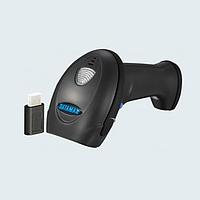
Handheld barcode reader
Fast, accurate code capture is a small detail that has a big impact on warehouse flow, retail checkout, healthcare identification, and shop-floor traceability. When operators need freedom of movement, quick aiming, and reliable decoding across different label types, a handheld barcode reader is often the most practical choice.
This category brings together scanning solutions designed for everyday point-of-use operation, from standard 1D reading to advanced 2D, PDF, OCR, and damaged-code decoding. Whether the priority is general-purpose scanning, rugged industrial use, or mobile workflows, choosing the right device starts with understanding the working environment, barcode quality, and interface requirements.
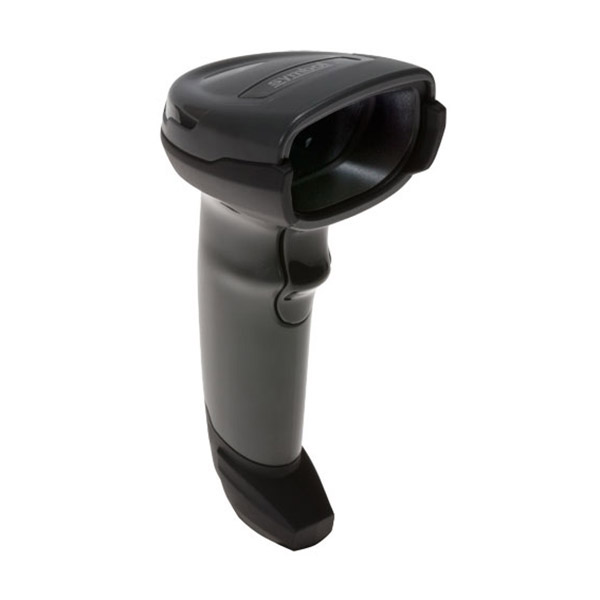
Where handheld scanners fit in daily operations
Handheld models are widely used when scanning needs to happen directly at the item, shelf, carton, sample, or workstation. Compared with fixed-position solutions, they give operators more flexibility when barcodes are placed at awkward angles, printed on curved packaging, or located in moving workflows.
In practice, these readers are common in retail counters, stock rooms, shipping stations, clinics, laboratories, and production areas. For users comparing form factors, it can also be useful to review desktop barcode readers for hands-free stations or mobile barcode readers for data collection on the move.
Key scanner types in this category
Not every handheld scanner is built for the same decoding task. Some models focus on fast 1D barcode capture for checkout and inventory work, while others use area imaging to read 1D and 2D symbols such as QR Code, Data Matrix, and PDF417. The right choice depends on what your labels actually contain and how consistently they are printed.
For example, the Honeywell Eclipse 5145 and Honeywell Hyperion 1300g are oriented toward standard 1D workflows, while models such as the Honeywell Voyager 1470G and Zebra DS4608-HD support broader 2D decoding capability. In environments where code condition is less predictable, readers that can handle blurred, low-contrast, or small-format symbols are often a better fit than entry-level linear scanners.
Choosing by environment and durability
One of the most important selection factors is the operating environment. In clean indoor locations such as retail and office logistics, a general-purpose handheld reader may be sufficient. Where devices are exposed to repeated drops, dust, moisture, or demanding shift patterns, durability ratings become more important than headline scan speed alone.
For tougher sites, Honeywell options such as the Granit 1990iSR and Granit 1990iXR are designed for more rugged use, with strong sealing and drop resistance. By contrast, scanners like the Zebra LI4278-SR or Honeywell Xenon XP 1950HHD suit many standard operational settings where a balance of ergonomics, decoding range, and interface flexibility matters more than extreme ruggedization. If the application is specifically harsh-duty, users may also want to compare with the broader industrial barcode reader range.
Decoding needs: 1D, 2D, OCR, and specialty labels
A scanner should be matched to the barcode symbologies used in your process, not just the device form factor. Many operations still rely mainly on linear codes such as UPC, EAN, Code 39, or Code 128, but newer workflows increasingly require 2D codes for traceability, healthcare identification, packaging compliance, and digital linking.
Several products in this category support more advanced decoding. The Honeywell Voyager 1470G and Honeywell Xenon XP 1950HHD are examples of handheld imagers that extend beyond basic 1D reading into 2D and additional symbol support. Zebra healthcare-focused units such as the DS4608-HC and DS8178-HC are relevant when scanning performance must remain dependable across small labels, wristbands, or dense code formats often seen in clinical workflows.
Connectivity and system integration
In B2B purchasing, scanner compatibility with the host system is just as important as decode performance. Common interfaces in this category include USB, RS232, keyboard wedge, and in some cases RS485-related connectivity. These options affect how easily a scanner can be deployed into POS systems, industrial terminals, PCs, weighing systems, or legacy infrastructure.
The KERN PET-A09 USB barcode scanner is a simple example of a scanner intended for USB-connected use, while many Zebra and Honeywell readers support multiple interfaces to simplify integration across mixed system environments. If you are planning a complete workstation, it may also be worth reviewing barcode accessories for cables, stands, and related setup components.
Representative brands and product examples
This category includes products from established manufacturers such as Honeywell, Zebra, and KERN, each covering different scanning priorities. Honeywell is well represented across general-purpose, healthcare, and ultra-rugged handheld scanning, while Zebra offers strong options for 2D imaging, cordless operation, and application-specific workflows.
Representative products include the Zebra DS4608-HD for high-density reading, the Zebra LI4278-SR for cordless linear imaging, and the Honeywell Voyager 1470G for accurate 2D scanning in mainstream operations. The KERN PET-A09 USB barcode scanner is useful as a straightforward accessory-compatible USB model, while healthcare and specialty environments may benefit from devices such as the Zebra DS4608-HC or Honeywell Xenon XP 1950HHD.
How to shortlist the right handheld barcode reader
A practical buying process starts with five questions: what barcode types you need to read, how far the scanner will typically be from the label, how harsh the environment is, which interfaces your system requires, and whether the operator needs corded or cordless use. These factors narrow the field much faster than comparing model names alone.
It is also worth checking label condition in the real application. Small codes, reflective packaging, low print contrast, damaged labels, and fast hand movement can all affect read reliability. In many cases, paying attention to scan engine type, sealing level, and supported host interfaces will lead to a better long-term fit than choosing only by price point.
FAQ
What is the difference between a 1D scanner and a 2D handheld scanner?
A 1D scanner is intended primarily for linear barcodes such as UPC or Code 128. A 2D handheld scanner uses imaging technology to read both linear and matrix codes, including QR Code, Data Matrix, and PDF417.
When should I choose a rugged handheld scanner?
Rugged models are a better choice for warehouses, manufacturing areas, outdoor logistics, and any site where drops, dust, or water exposure are common. They are also useful for multi-shift operations where equipment is used continuously.
Is USB enough for most barcode scanning applications?
USB is suitable for many PC-based and POS-style setups. However, RS232, keyboard wedge, or other interfaces may still be necessary for older equipment, industrial systems, or specialized terminals.
For most businesses, the right handheld scanner is the one that matches actual labels, operator workflow, and system connectivity without adding unnecessary complexity. A focused comparison of barcode type, durability, and interface support will help narrow the range and make this category easier to navigate.
Get exclusive volume discounts, bulk pricing updates, and new product alerts delivered directly to your inbox.
By subscribing, you agree to our Terms of Service and Privacy Policy.
Direct access to our certified experts