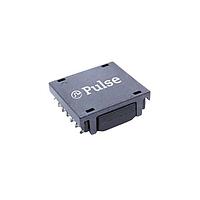
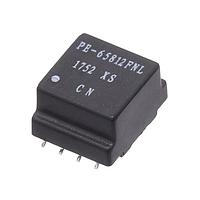
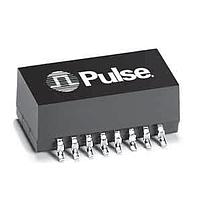
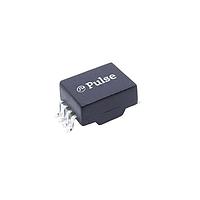
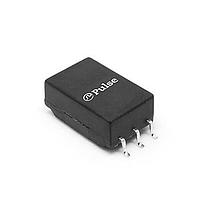
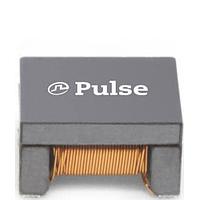
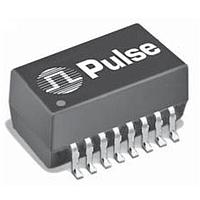
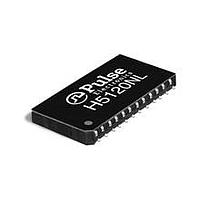
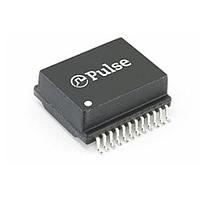
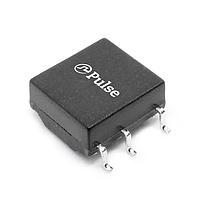
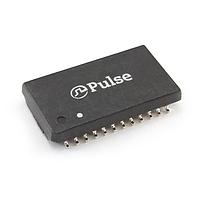
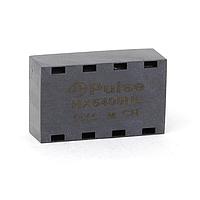
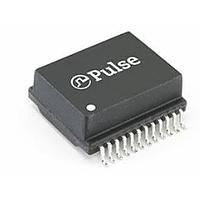
Audio / Signal Transformers
Signal integrity, isolation, and impedance matching are often the quiet requirements behind stable analog, audio, RF, and telecom designs. When those functions need to be handled passively and reliably, Audio / Signal Transformers remain a practical choice across communication equipment, interface boards, embedded systems, and industrial electronics.
This category brings together transformer types used to transfer low-level signals without direct electrical connection, adapt impedance between stages, or support coupling in high-frequency paths. Depending on the application, that can mean audio path isolation, RF signal transfer, or telecom interface functions in compact PCB-based assemblies.
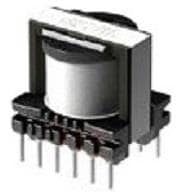
Where audio and signal transformers are used
These components appear in a wide range of circuits where the signal path matters as much as the power path. In audio systems, they are commonly selected for galvanic isolation, noise reduction, and impedance matching between stages or connected devices. In telecom and communications hardware, they help couple signals while maintaining isolation and supporting stable transmission characteristics.
RF designs use dedicated transformer structures for balun functions, matching, and signal coupling at higher frequencies. In many cases, these parts work alongside other passive devices such as filters and inductors, especially where bandwidth control and impedance behavior need to be managed together.
Understanding the main product groups in this category
Although grouped under one category, audio and signal transformers typically serve different design goals. Audio transformers are generally chosen for line isolation, signal coupling, and reducing ground-loop related noise in audio paths. Examples in this range include the Littelfuse ST32 Audio Transformers and the Bourns SM-LP-5001-2E Audio Transformers, which illustrate the role of compact transformer solutions in low-level signal handling.
RF transformers focus more on impedance transformation, balanced-to-unbalanced conversion, and high-frequency coupling. Representative products such as the Maxim Integrated MAX41463GUB+T RF Transformers, Maxim Integrated MAX41460GUB+ RF Transformers, and Mini-Circuits T4-1-KK81 RF Transformers show how this category also supports radio and wireless circuit design. For broader RF front-end design, related components like an antenna and matching passives are often part of the same signal chain.
Telecom transformer applications in interface design
Telecom transformer variants are commonly used where communication ports, Ethernet-related interfaces, and line coupling functions require both signal transfer and isolation. In these designs, transformer choice can affect insertion behavior, common-mode performance, and interface robustness under real operating conditions.
Products such as the Eaton POE7W3X5-0-R Telecom Transformers, Eaton POE4W2X12-R Telecom Transformers, and Bourns SM91074AL-E Telecom Transformers highlight the telecom-oriented side of this category. These parts are relevant for PCB assemblies that need compact mounting, controlled turns ratios, and dependable operation across a practical industrial temperature range.
How to choose the right transformer for your circuit
Selection should start with the actual signal environment rather than the part name alone. Important considerations include the intended frequency range, whether the circuit requires isolation, the needed turns ratio, and the source/load impedance relationship. For audio paths, noise behavior and coupling requirements are often central. For RF paths, matching and bandwidth are typically more critical.
Mechanical constraints also matter in production. Mounting style, package size, and thermal processing compatibility can influence assembly decisions just as much as electrical parameters. In dense boards, transformer selection should also be reviewed alongside nearby capacitor networks and termination elements to ensure the full signal path behaves as expected.
Featured manufacturers and representative options
This category includes parts from established component suppliers with different strengths across signal applications. Bourns appears in both audio and telecom examples, making it relevant for designers working across interface and analog signal tasks. Coilcraft is represented by the WBC11TLC RF Transformers, while Eaton appears with telecom transformer models suited to board-level communications designs.
Maxim Integrated is especially visible in the RF transformer portion of the category, with models such as MAX41461GUB+, MAX41461GUB+T, and MAX7044AKA+T. Mini-Circuits and Littelfuse also add useful breadth, covering RF and audio-related needs respectively. Rather than comparing brands in absolute terms, it is usually more productive to narrow the shortlist by application type, package preference, and interface requirements.
Design considerations beyond the transformer itself
A transformer rarely works in isolation from the rest of the circuit. PCB layout, shielding strategy, grounding approach, and the surrounding passive network all influence final performance. In low-level analog or audio sections, layout decisions can affect hum pickup and crosstalk. In RF and telecom sections, parasitics and routing geometry can change matching behavior and usable bandwidth.
That is why category-level selection should be viewed as part of a broader signal-chain decision. Choosing the correct transformer family early can reduce redesign effort later, especially in compact devices where isolation, footprint, and signal quality must all be balanced at once.
Finding the right fit for prototyping or production
For early-stage design work, it is often helpful to begin with a transformer that closely matches the target application class: audio, RF, or telecom. From there, engineers can compare mounting format, ratio, and integration needs before refining the bill of materials. Looking at representative products in each subgroup is usually the fastest way to narrow viable options.
If your project involves analog signal transfer, communications interfaces, or high-frequency matching, this category offers a focused starting point. By aligning the transformer type with the actual signal function and board constraints, you can make the product list more relevant to both prototype evaluation and long-term sourcing.
Get exclusive volume discounts, bulk pricing updates, and new product alerts delivered directly to your inbox.
By subscribing, you agree to our Terms of Service and Privacy Policy.
Direct access to our certified experts