Ferrites
Unwanted high-frequency noise can quietly reduce signal integrity, create EMC issues, and affect the stability of power lines in compact electronic designs. In many of these cases, Ferrites are one of the most practical passive solutions for suppressing interference without adding unnecessary design complexity.
This category brings together ferrite-based components used across power, signal, and EMI control applications. Whether you are selecting chip beads for a dense PCB, bead arrays for multi-line filtering, or magnetic cores for reactor and inductor design, the right ferrite element depends on frequency behavior, current handling, package size, and the electrical environment of the circuit.
Where ferrites fit in electronic design
Ferrite components are commonly used to attenuate high-frequency noise while allowing the desired DC or low-frequency signal to pass with limited loss. That makes them relevant in power conversion, automotive electronics, communication modules, industrial control boards, and embedded systems where EMI must be managed early in the design stage.
Depending on the application, ferrites may be selected as PCB-level suppression parts or as larger magnetic materials for transformer and reactor structures. In a broader passive design flow, they are often considered alongside filters, inductors, and impedance-matching elements that shape overall noise performance.
Main ferrite product types in this category
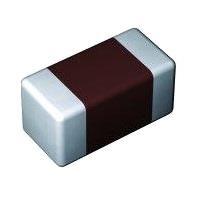
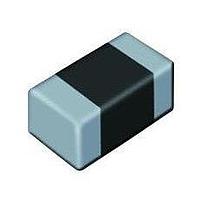
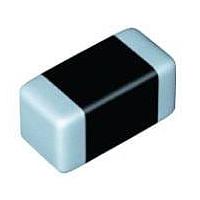
This category covers several distinct product roles. Ferrite beads are widely used on signal and power traces to suppress noise over a targeted frequency range, especially in space-constrained SMT assemblies. Chip bead arrays extend that concept to multiple lines in a compact footprint, which is useful for interfaces, buses, and grouped signal paths.
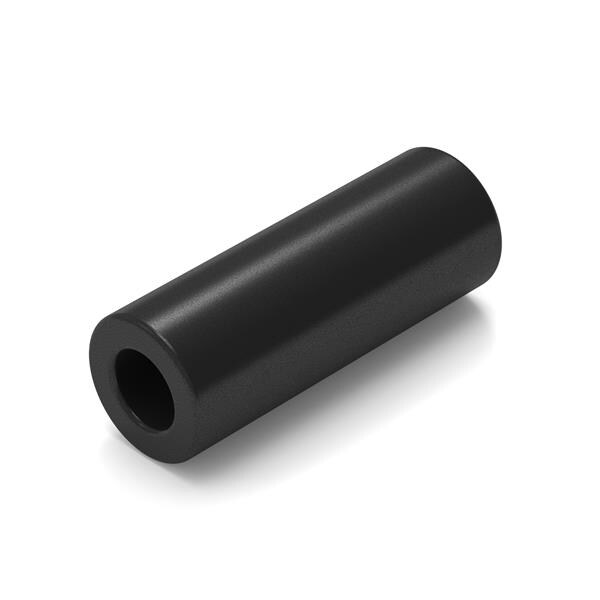
Ferrite cores serve a different function. Rather than acting as simple line suppressors, they provide the magnetic material foundation for wound components such as chokes, inductors, and reactors. For example, the Chemi-Con LRF462725MKCX Core illustrates the core-side of this category, while parts such as the KEMET UECESDR12C2000 Ferrite Cores address magnetic design requirements where material behavior and geometry are central to performance.
Examples of components used in practical applications
For general PCB noise suppression, Murata devices are representative of the compact multilayer bead format commonly used in modern electronics. The Murata BLM21A121SPB and Murata BLM21B30PT-T are examples of ferrite beads suited to board-level EMI control, where engineers need a balance between attenuation, package size, and acceptable DC resistance.
When designs involve higher current or automotive-oriented requirements, models such as the Murata BLM31KN271SZ1K or Murata BLM18EG391TH1D show how ferrite bead selection can shift toward current capability, lower resistance, and qualification needs such as AEC-Q200. For multi-line suppression, the Murata BLA31AG300SN4D Chip Bead Array provides a more integrated option than placing multiple individual beads.
In other cases, designers may use parts like the Bourns EMI103T-LF for EMI management at the board level, or move toward magnetic core solutions when building a larger power-stage structure. If your sourcing strategy includes preferred manufacturers, this category naturally aligns with suppliers such as Murata, KEMET, Bourns, and Chemi-Con for different ferrite-related needs.
How to choose the right ferrite component
The first step is to define the noise problem clearly. If the goal is suppressing high-frequency interference on a single line, a chip bead may be sufficient. If several lines need treatment in a tight area, an array can reduce placement count and simplify routing. If the requirement involves energy storage, magnetic coupling, or reactor construction, a ferrite core is usually the more relevant direction.
Key parameters typically include impedance at the target frequency, rated current, DC resistance, operating temperature range, package size, and any qualification requirements. Higher impedance does not automatically mean better performance in every circuit, because insertion loss, line current, and thermal effects must still be considered within the complete system design.
It is also important to evaluate whether the ferrite is intended for general-purpose EMI suppression, high-speed signal environments, or power-line use. For instance, a part intended for GHz-range high-speed signals may be optimized differently from one used on a noisier power rail, even if both belong to the same general ferrite family.
Ferrites in power, automotive, and high-density assemblies
Ferrite components are especially relevant in designs where PCB area is limited and EMC margins are tight. In compact industrial and automotive electronics, engineers often need to reduce radiated and conducted noise without a major redesign of the power architecture. Small SMD ferrite beads can help isolate noisy domains, clean local supply paths, or protect sensitive sections of the board.
Automotive-qualified examples in this category, including AEC-Q200 related parts, are useful when robustness and environmental consistency matter. At the same time, low-profile chip packages support dense layouts found in communication modules, control units, and mixed-signal boards where ferrites work together with capacitors and other passive components to build effective suppression networks.
Manufacturer coverage and sourcing considerations
This category includes ferrite solutions from established component manufacturers with broad usage across electronics production and industrial procurement. Murata is strongly represented in board-level ferrite beads and arrays, while KEMET and Bourns contribute options relevant to EMI suppression and magnetic component selection. Chemi-Con adds context on ferrite cores for applications where the magnetic material itself is the core design element.
From a sourcing perspective, buyers often evaluate ferrites not only by nominal electrical values but also by package consistency, application fit, qualification status, and long-term availability. That is particularly important for OEM, EMS, and maintenance purchasing teams managing recurring builds or approved-vendor lists across multiple product families.
Choosing ferrites as part of a broader passive component strategy
Ferrites rarely work in isolation. Their effectiveness depends on placement, grounding strategy, surrounding passive parts, and the frequency content of the noise source. In many designs, ferrite beads are used with decoupling capacitors to create practical suppression stages, while ferrite cores may support custom magnetic structures in power conversion sections.
If you are comparing technologies across an EMI or signal-conditioning design, it can also be useful to review related passive categories such as resistors for termination and sensing functions, or antennas when RF behavior is part of the wider system context. This helps ensure ferrite selection is aligned with the full electrical architecture rather than treated as a standalone fix.
Final considerations
The right ferrite choice depends on how noise appears in the real circuit: on a power rail, a sensitive signal line, a grouped interface, or inside a magnetic assembly. By focusing on application type, target frequency behavior, current demand, package constraints, and qualification needs, engineers and procurement teams can narrow the range efficiently and select parts that make sense in production as well as in testing.
For buyers and designers working across EMI suppression and passive component sourcing, this ferrites category provides a practical starting point for both compact chip-level solutions and larger magnetic core applications.
Get exclusive volume discounts, bulk pricing updates, and new product alerts delivered directly to your inbox.
By subscribing, you agree to our Terms of Service and Privacy Policy.
Direct access to our certified experts