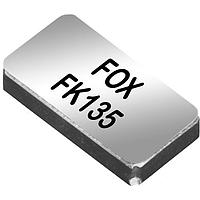
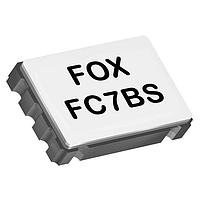
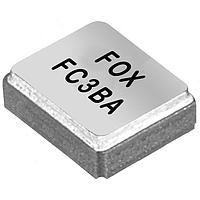
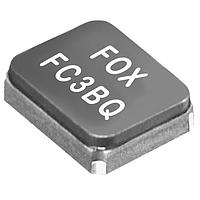
Crystals
Stable timing is a basic requirement in embedded electronics, communication hardware, industrial controllers, automotive modules, and many portable devices. When circuit designers need an accurate frequency reference with low power consumption and compact size, crystals remain one of the most widely used solutions across modern electronic systems.
On this page, you can explore crystal components used to support clock generation, signal synchronization, and frequency control in a broad range of designs. From compact SMD parts for space-constrained PCBs to versions intended for wider temperature operation or automotive environments, this category helps engineers and buyers compare options based on real application needs rather than part number alone.
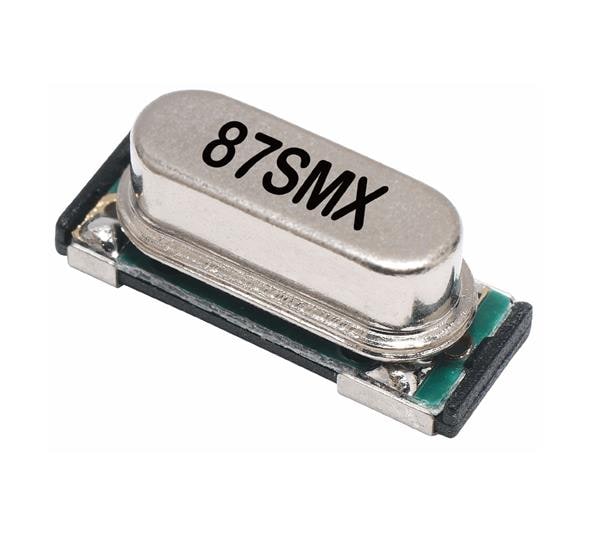
Where crystals fit in electronic design
A crystal provides a highly stable mechanical resonance that can be used as the basis for an electronic timing signal. In practice, it is often paired with an oscillator circuit inside a microcontroller, processor, RF module, or timing IC to establish the operating clock for the system.
This makes crystals relevant in designs where frequency accuracy, startup behavior, package size, and environmental performance all matter. If your application instead needs a complete clock source with integrated drive circuitry, it may be worth comparing available oscillator options alongside discrete crystal devices.
Common crystal formats and specification points
Most products in this category are surface-mount quartz crystals intended for compact PCB assembly. Typical selection factors include nominal frequency, package dimensions, load capacitance, tolerance, stability over temperature, and equivalent series resistance. These parameters influence how well a crystal matches the target IC and how reliably the clock circuit performs in the final product.
Examples in this category show how varied these requirements can be. Compact 2.0 mm x 1.6 mm class devices such as the KYOCERA AVX CX2016DB32000D0WZRC1 or Murata XRCGB32M000F2P10R0 are suitable for dense layouts, while parts like the KYOCERA AVX CX2520DB32000D0GEJZ1 offer another common footprint used in many digital designs. Lower-frequency references are also represented, including the Diodes Incorporated FL0800008 at 8 MHz for applications where the clock requirement differs from the common 24 MHz to 38.4 MHz range.
Application-driven selection considerations
Choosing the right crystal is usually less about finding a generic frequency part and more about matching the component to the actual circuit. Designers often begin with the IC manufacturer's reference design or required crystal conditions, then check operating temperature range, capacitance target, and acceptable tolerance and stability. A mismatch in these values can affect startup margin, frequency error, or long-term reliability.
For wireless, high-speed digital, or timing-sensitive embedded systems, frequency drift and tolerance can be especially important. In compact consumer and industrial electronics, package size and assembly compatibility often take priority. For harsher environments, broader temperature performance may be needed, which is why some parts in this category include ratings suitable for more demanding use cases.
Examples from leading manufacturers
This category includes products from recognized component suppliers such as Murata, KYOCERA AVX, and Diodes Incorporated. These manufacturers are frequently specified in designs that require dependable timing components for embedded systems, communications modules, automotive electronics, and industrial assemblies.
Murata models in this selection cover several popular frequencies, including 24 MHz, 24.576 MHz, 26 MHz, 27 MHz, 27.12 MHz, 32 MHz, and 38.4 MHz. This provides useful context for buyers sourcing around common processor, interface, or RF timing points. KYOCERA AVX examples highlight very small SMD footprints for dense boards, while Diodes Incorporated contributes options for designs needing more traditional clock references such as 8 MHz.
Crystals for compact, automotive, and temperature-sensitive designs
Not all crystal requirements are the same. In miniaturized electronics, package size can directly affect routing flexibility, placement density, and mechanical design. Small-format SMD parts in the 2.0 mm x 1.6 mm range are often chosen for handheld devices, communication modules, and compact control boards where board real estate is limited.
For automotive or elevated-temperature conditions, qualification and thermal range become more important. Some Murata devices listed here, such as AEC-Q200 qualified variants, are intended for applications where stronger environmental robustness is required. That does not automatically make them the right choice for every build, but it gives design teams a clearer path when filtering for operating conditions beyond standard commercial environments.
How crystals compare with related timing components
Crystals are one part of the wider timing ecosystem. They are often selected when the design already includes the oscillator circuitry and only needs the resonant element. By contrast, complete oscillators provide a finished clock output, which can simplify design integration in some systems.
In other applications, engineers may compare crystals with resonators when cost, simplicity, or tolerance requirements differ. The right choice depends on the balance between accuracy, integration level, startup behavior, and the needs of the target circuit.
What to review before ordering
Before selecting a crystal for production or prototyping, it is worth confirming a few practical points: required frequency, package footprint, mounting style, load capacitance, tolerance, stability, ESR, and minimum to maximum operating temperature. These details should align with the controller, transceiver, or timing IC used in the design.
It is also helpful to review whether the application is commercial, industrial, or automotive in nature, especially if qualification or wider temperature capability is relevant. A part that fits physically may still be a poor electrical match if its load or stability characteristics do not suit the circuit. For broader sourcing across the same component family, you can also browse the full crystal range available in this category.
Supporting efficient sourcing for engineering and purchasing teams
For B2B buyers, crystals are often sourced not as standalone items but as part of a larger BOM strategy. That means availability, approved manufacturer preference, package standardization, and application fit all matter. Reviewing representative products such as Murata XRCGE26M000FBA1BR0, Murata XRCGB24M000F2C00R0, or KYOCERA AVX CX2520DB32000D0GEJZ1 can help narrow down the specification window before moving to final part selection.
Whether you are supporting new product development, prototype builds, or ongoing production purchasing, this category is structured to help you compare surface-mount quartz crystals by meaningful electrical and mechanical criteria. A well-matched crystal supports stable system timing, smoother validation, and fewer integration issues later in the design cycle.
When timing accuracy, footprint, and environmental fit all need to align, selecting the right crystal becomes a practical engineering decision rather than a simple frequency lookup. Use this category to compare suitable parts, review options from established manufacturers, and narrow your shortlist based on the requirements of the actual circuit and operating environment.
Get exclusive volume discounts, bulk pricing updates, and new product alerts delivered directly to your inbox.
By subscribing, you agree to our Terms of Service and Privacy Policy.
Direct access to our certified experts