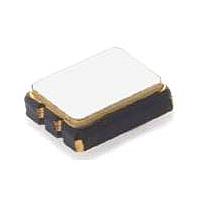
Oscillators
Reliable timing is one of the quiet foundations of modern electronics. Whether a design is driving a microcontroller, synchronizing data transfer, supporting communication circuits, or maintaining signal integrity in embedded equipment, the clock source has a direct impact on overall system behavior. That is why selecting the right Oscillators category matters for engineers, buyers, and OEM teams working with precision electronic assemblies.
On this page, you can explore oscillator options used across industrial, embedded, and general electronic applications. The range includes standard and programmable solutions, with practical examples from Epson such as the SG-8002CE, SG-8002CA, SG-8101CB, SG-9101CA, and SG-210SED series, which illustrate how frequency control devices are offered for different clocking requirements.
Why oscillators matter in electronic design
An oscillator generates a periodic electrical signal from a DC supply and provides the reference timing needed for digital and mixed-signal circuits. In many systems, this clock signal acts as the coordination point for processing, communication, conversion, and control functions. If the timing source is unstable or poorly matched to the application, the effect can be seen in data errors, drift, startup issues, or degraded performance.
External oscillators are often chosen when a design needs better stability, tighter frequency control, or easier integration than a simple internal clock can provide. This is especially relevant in boards and modules where designers need predictable startup behavior, defined output type, and repeatable performance across production volumes.
Common oscillator options found in this category
The oscillator landscape is broader than just “pick the required MHz value.” In practical sourcing, engineers often compare fixed-frequency and programmable oscillator devices, as well as different package sizes, supply requirements, and output formats. Product families such as Epson SG-8002CE 23.04000MHZ PHC, SG-8002CE 60.60600MHZ PCC, and SG-8101CB 50.3033M-TBGSA0 show how a category like this can support varied clock frequencies without changing the overall design approach too drastically.
Some projects may also involve adjacent frequency-control parts depending on circuit architecture. If you are comparing timing solutions more broadly, it can be useful to review related options in crystals or resonators, especially when evaluating cost, stability, external circuitry, and board space.
How to choose an oscillator for your application
The first selection point is frequency, but that should never be the only filter. Buyers and design teams also need to consider operating voltage, output logic compatibility, startup characteristics, package dimensions, and the expected operating environment. In systems exposed to changing temperature or electrical noise, these details can become just as important as the nominal frequency itself.
It is also useful to think in terms of the whole design target: is the oscillator for a simple controller clock, a communication interface, a measurement board, or a tightly synchronized subsystem? A programmable device may simplify procurement and design flexibility when multiple frequency variants are needed, while a more conventional crystal oscillator can be appropriate for stable, well-defined timing requirements.
- Frequency accuracy and stability for the intended system timing
- Voltage and output compatibility with the downstream IC or controller
- Package size and mounting constraints on the PCB
- Environmental conditions such as temperature variation or vibration
- Power consumption and standby behavior where relevant
Programmable oscillators for flexible designs
Programmable oscillator families are often selected when product variants, prototyping cycles, or supply-chain flexibility are important. Instead of redesigning around many different fixed timing components, teams can align on a compatible platform and source the needed frequency version for each build. Examples in this category include Epson SG-8002CA 1.280000MHz SCC, SG-8002CA 62.18750MHZ SHC, and SG-9101CA 41.580000MHZ C15SHAAA.
This approach is especially practical in embedded products, communications hardware, and contract manufacturing environments where BOM control matters. It can reduce redesign effort and make it easier to support multiple board revisions or customer-specific configurations while staying within a familiar device family.
Examples of oscillator products in this range
The products highlighted in this category show a useful spread of timing options. For example, the Epson SG-8018CE 91.8750M-TJHSA0 and Epson SG-8018CA 32.5710M-TJHPA0 represent crystal oscillator options used where stable reference timing is needed in compact electronic assemblies. The Epson SG-210SED 75.000000MHZ L is another example suited to designs that require a defined clock source rather than building a timing stage from discrete parts.
There is also context for related timing components. The Epson TCO-7087D1A1 10.0000M3 Crystal is not an oscillator in the same sense as a powered clock generator, but it helps illustrate the surrounding ecosystem of frequency-control devices. For teams comparing architectures, understanding the difference between a passive crystal element and an active oscillator can make sourcing decisions faster and more accurate.
Oscillators in industrial and embedded applications
Oscillators are used in a wide range of systems, from controller boards and I/O modules to communication hardware, interface circuits, and signal-processing assemblies. In industrial electronics, timing reliability matters because even small deviations can affect synchronization between subsystems, serial communication quality, or measurement repeatability. That is why sourcing from established product lines is often preferred for long-term maintenance and production continuity.
When reviewing suppliers, many buyers start with recognized semiconductor and component ecosystems. Alongside Epson, broader sourcing research may include manufacturers such as Analog Devices when evaluating supporting signal-chain or timing-related components in a larger design context. The goal is not just to buy a part number, but to match the oscillator to the real electrical and operational demands of the application.
Working with the wider timing-device ecosystem
Oscillators rarely exist in isolation during product development. They are typically selected alongside controllers, communication ICs, power stages, and passive components that all influence signal quality and startup behavior. For this reason, category-level comparison is useful: it helps engineers narrow down the timing approach before focusing on exact device codes.
If your project requires a powered clock source with defined output characteristics, this category is the natural place to start. If the design instead relies on an external resonant element for an IC’s internal oscillator circuit, the better fit may be a crystal or resonator category. Looking at these options together can help reduce selection errors early in the design cycle.
Final considerations before ordering
Choosing an oscillator is ultimately a balance between electrical fit, environmental reliability, package constraints, and procurement practicality. A suitable part should support the required system frequency while also matching voltage, layout, and long-term product goals. Reviewing representative devices such as Epson SG-8002CE, SG-8002CA, SG-8101CB, and SG-210SED can be a good starting point for narrowing the shortlist.
This category is designed to support that process with a focused range of timing components for professional electronic sourcing. If you are comparing clock-source strategies for new designs, prototypes, or production builds, use the available oscillator listings as a practical base for evaluating frequency, integration style, and application fit.
Get exclusive volume discounts, bulk pricing updates, and new product alerts delivered directly to your inbox.
By subscribing, you agree to our Terms of Service and Privacy Policy.
Direct access to our certified experts
![CTS Electronic Components CA70C12507NLT Standard Oscillators 7.0mmx5.0mm Surface Mount Automotive Grade [AEC-Q200] HCMOS Clock, 125.0000MHz, +3.3V, Stab 150ppm, -40 C/+150 C, Pin 1 Enable, Phase Jitter 500fs typical, 1k/reel](/s-cdn/20/2045207a75c320daee51a3e8ab9e78662b26ffe4.jpg)
![CTS Electronic Components CA25C2212HMT Standard Oscillators 2.5mmx2.0mm Surface Mount Automotive Grade [AEC-Q200] HCMOS Clock, 22.1184MHz, +1.8V, Stab +/-100ppm, -40C/+125C, Pin 1 Enable, Phase Jitter 500fs typical, 1k/reel](/s-cdn/14/1457435b9ad01f80bcd3a6602e9f67a6e879bdc3.jpg)
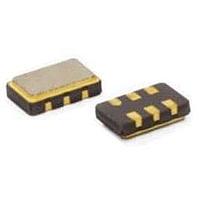

![CTS Electronic Components CA32C5002NLT Standard Oscillators 3.2mmx2.5mm Surface Mount Automotive Grade [AEC-Q200] HCMOS Clock, 50.0000MHz, +3.3V, Stab +/-100ppm, -40C/+150C, Pin 1 Enable, Phase Jitter 500fs typical, 1k/reel](/s-cdn/1d/1d41e5ac8eeaff78202294ab18ebbaed71134e3e.jpg)