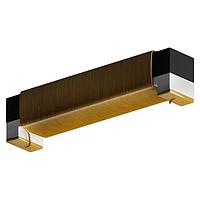
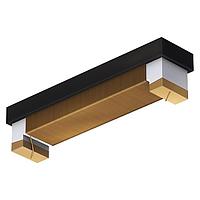
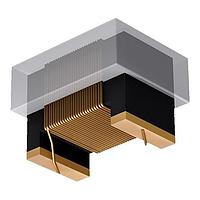
NFC/RFID Transponder Coils
Reliable short-range identification starts with the quality of the magnetic coupling path. In many NFC and RFID designs, that role is handled by a dedicated coil that helps the system read, energize, or communicate with tags and transponders under tightly controlled electrical conditions. For engineers working on access systems, industrial tracking, automotive electronics, or embedded identification devices, choosing the right NFC/RFID Transponder Coils is an important part of achieving stable performance.
This category brings together PCB-mount transponder coils used in compact electronic designs where inductance, tolerance, mounting style, and environmental robustness all matter. The range includes surface-mount parts for space-conscious layouts as well as automotive-qualified options for applications that demand greater consistency across temperature and vibration conditions.
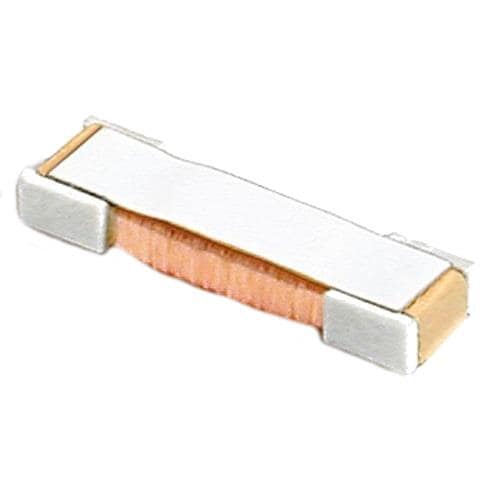
Where transponder coils fit in an NFC or RFID design
A transponder coil is part of the resonant front end that enables inductive communication between a reader and a tag, card, or embedded device. In low-frequency and near-field systems, the coil influences magnetic field coupling, resonance behavior, and overall sensitivity of the circuit. That makes it more than a generic passive part; it is a component selected with the communication architecture in mind.
Compared with general-purpose inductors, transponder coils are intended for identification and coupling tasks where electrical behavior must align with the operating frequency and front-end design. Parameters such as inductance value, Q behavior, DC resistance, package size, and tolerance can directly affect reading distance, signal quality, and matching performance.
Common selection criteria for engineers and buyers
One of the first checks is inductance, because it must match the target circuit and resonant network. In this category, available examples span a broad range, from lower values such as 400 uH and 2.2 uH to several millihenries, including 1 mH, 4.15 mH, 7 mH, 8.1 mH, 9 mH, and 15 mH. This spread supports different transponder architectures and board constraints.
Package dimensions and mounting style are also important when the coil has to fit into a compact reader module or an embedded tag assembly. Many listed parts use PCB mount and SMD/SMT termination, making them suitable for automated assembly. For designs exposed to harsher operating conditions, buyers often look for AEC-Q200 qualified components to support more demanding reliability requirements.
Another practical point is resistance and tolerance. Lower tolerance can help reduce variation in tuned circuits, while DC resistance influences losses and efficiency. Depending on the design objective, engineers may prioritize a balance between inductance value, compact footprint, Q characteristics, and temperature capability rather than focusing on a single headline specification.
Representative product options in this category
Several manufacturers in this range illustrate how application needs can differ. From Coilcraft, the 5315TC-415XGLD offers 4.15 mH in an unshielded SMT format with AEC-Q200 qualification, while the 4513TC-105XGLD provides a 1 mH option for designs that require a different tuning point. These parts are relevant where repeatable assembly and controlled electrical characteristics are priorities.
EPCOS is represented by parts such as the B82450A7004A000 at 7 mH and the B82453C0285A000, a 3D Z coil variant listed for transponder use. These examples are useful for engineers comparing form factor, tolerance, and resonance-related behavior in RFID front ends. In applications where orientation or coupling geometry matters, coil construction can be as important as nominal inductance.
For compact and application-specific implementations, Murata Electronics and Fastron also provide notable choices. Murata Electronics 1143AA-153J=P3 is a 15 mH option, while Fastron offers multiple values such as 4.7 mH, 4.8 mH, 5.6 mH, and 8.1 mH, including versions described as high Q or exceptionally high Q. That variety helps support both broad sourcing needs and more precise tuning targets.
How application requirements influence coil choice
In access control, asset identification, and embedded authentication systems, the main goal is often stable communication in a constrained space. Here, engineers usually compare coil size, tolerance, and mounting style to fit a reader board or transponder assembly without compromising electromagnetic performance. Small dimensional changes can affect placement options and nearby component interaction.
Automotive and industrial electronics add another layer of complexity. Temperature range, vibration exposure, and qualification status become more significant, which is why AEC-Q200 appears on many products in this category. If the design will operate alongside other passive components such as capacitors for tuning or matching, component consistency across production lots is especially valuable.
Comparing manufacturers in a practical sourcing workflow
Brand preference often depends on design history, qualification policy, and availability strategy. Coilcraft, EPCOS, Murata Electronics, and Fastron each appear in this category with parts that cover different inductance ranges and package styles. Rather than selecting by brand alone, it is usually more effective to shortlist options by electrical target, PCB constraints, and reliability requirements first.
For procurement teams supporting long-life products, it also helps to review whether the part aligns with the broader passive component strategy. A project that already standardizes around a certain supplier may still need to compare multiple approved sources when balancing lead time, cost control, and technical fit. In that process, transponder coils should be treated as application-critical passives rather than interchangeable commodity items.
Integration with the wider passive component ecosystem
Although these parts serve a specific identification and coupling function, they are rarely chosen in isolation. The final circuit may depend on surrounding passives for resonance tuning, filtering, and signal conditioning. For example, engineers may evaluate related filters when managing unwanted frequency behavior, or coordinate coil selection with other passives used in the analog front end.
This wider view is useful when developing NFC or RFID hardware for production rather than just laboratory testing. A well-matched passive network can improve repeatability, simplify validation, and reduce redesign risk later in the product cycle. That is why category-level comparison is often the right starting point before narrowing down to a final part number.
What to review before placing an order
Before final selection, confirm the operating frequency target, intended resonant network, available board space, assembly method, and environmental requirements. It is also worth checking whether the application calls for a standard planar coil, a higher-Q option, or a specialized structure such as a 3D transponder coil. These details can materially influence real-world communication performance.
If you are comparing several candidate parts, focus on the specification combination rather than any single line item. Inductance, tolerance, resistance, temperature capability, qualification level, and package geometry should be reviewed together. That approach makes it easier to identify the most suitable transponder coil for both technical validation and long-term sourcing.
For teams building NFC and RFID-enabled products, this category provides a focused selection of transponder coils from established manufacturers and across a useful range of values and package types. Reviewing parts at the category level can speed up early design decisions, improve sourcing clarity, and help narrow the shortlist to components that fit both the circuit and the production environment.
Get exclusive volume discounts, bulk pricing updates, and new product alerts delivered directly to your inbox.
By subscribing, you agree to our Terms of Service and Privacy Policy.
Direct access to our certified experts