
Resistors
Stable circuit behavior often depends on one of the simplest components on the board: the resistor. Whether the goal is limiting current, dividing voltage, setting bias conditions, or building pull-up and termination networks, choosing the right part matters for reliability, layout efficiency, and long-term performance. This category brings together Resistors used across industrial electronics, embedded systems, control hardware, and general-purpose design work.
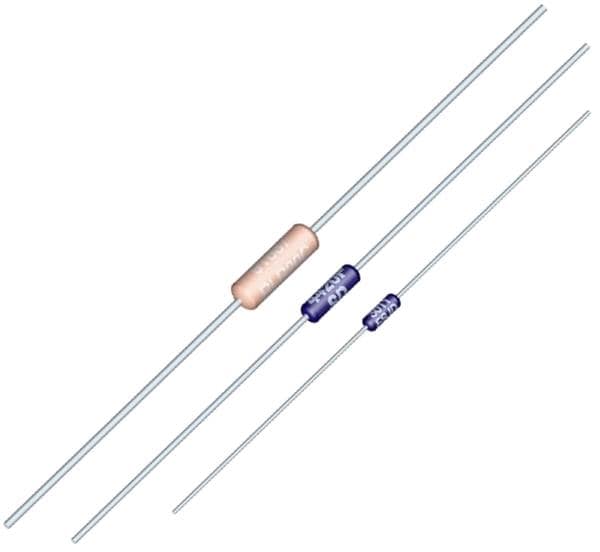
Where resistors fit in electronic design
Resistors are fundamental passive components found in power supplies, signal conditioning stages, interface circuits, sensor modules, communication boards, and protection networks. In practical engineering, they are rarely selected by resistance value alone. Power handling, tolerance, mounting style, package size, temperature behavior, and circuit topology all affect the final choice.
On a typical PCB, resistors work alongside capacitors and inductors to shape filtering, timing, damping, and energy management functions. This is why a resistor category is relevant not only for repair and replacement, but also for new design, BOM optimization, and production sourcing.
Common resistor formats in this category
The range represented here includes both individual fixed resistors and resistor networks and arrays. Single fixed resistors are a straightforward option when a design calls for one defined resistance at a specific location. Examples from the category include Clarostat / Honeywell parts such as the 381NS5K, 53C3200K, and 53C32.5MEG, which illustrate the role of discrete fixed resistors in established circuit designs.
Resistor networks and arrays combine multiple resistor elements into one package. This approach can reduce board space, simplify placement, and improve consistency across repeated channels. Parts such as the Bourns 4308H-102-222, 4308H-101-911, and 4606X-101-822 show how array packages can support isolated or bus-style resistor configurations for logic interfaces, pull-up networks, and compact multi-line designs.
Why resistor arrays are often preferred in compact assemblies
In many digital and mixed-signal circuits, engineers need several resistors with similar characteristics placed close together. Using an array instead of multiple separate components can help streamline assembly and improve layout density. This is especially useful in I/O conditioning, address/data bus support, and repetitive signal paths where matching and footprint efficiency are important.
For example, Bourns devices in this category include through-hole array formats as well as thin-film network options in surface-mount packages. Models such as the 2QSP20-RJ2-471LF and 2QSP20-RJ2-272LF are relevant when designers need integrated resistor networks in compact SMD layouts. For buyers comparing sourcing options by manufacturer, the broader Bourns offering may also be useful to review.
Key selection criteria before ordering
A resistor that matches the nominal resistance value may still be unsuitable if other parameters are overlooked. In B2B procurement and engineering environments, selection usually starts with the electrical requirement and then moves to packaging, environmental conditions, and assembly constraints. The most common checkpoints include resistance value, tolerance, power rating, temperature coefficient, package style, and mounting method.
It is also important to consider whether the circuit needs isolated elements or a common bus arrangement. Through-hole resistor arrays may suit legacy boards, prototyping, or rugged assemblies, while SMD options are often preferred for automated production. If your application includes filtering or impedance control around RF or signal lines, related categories such as filters can help complete the passive component selection process.
Examples of parts covered in the category
This category includes representative products from manufacturers such as Clarostat / Honeywell and Bourns. On the discrete side, cement-based fixed resistors like the Clarostat / Honeywell 381NS5K and 53C3200K reflect use cases where stable fixed resistance is needed in a single-component format. On the array side, Bourns parts such as 4116R103, 4310R-1-682, and 4310R-1-680 illustrate the variety of network package options available for board-level integration.
Some listed resistor arrays specify details such as element count, tolerance, operating temperature range, and through-hole mounting. Those parameters are especially relevant when selecting components for industrial environments, maintenance replacement, or production continuity. Rather than focusing only on part name, it is usually better to compare how each option fits the intended topology and assembly process.
Use cases across industrial and embedded applications
Resistors are used in control panels, embedded boards, communication interfaces, measurement electronics, and power-related circuitry. In industrial equipment, they may appear in input conditioning, LED indication, timing paths, current limiting, and signal biasing. In embedded systems, resistor arrays are commonly used for pull-up or pull-down functions, compact bus networks, and multi-channel signal organization.
Because resistors interact closely with surrounding passive parts, selection is rarely isolated from the rest of the design. Engineers may evaluate them together with antenna matching sections in communication hardware or with broader passive networks where board space and repeatability matter. The right resistor choice supports not just electrical performance, but manufacturability and serviceability as well.
How to compare options efficiently
When reviewing products in this category, it helps to separate the decision into three layers. First, confirm the required electrical behavior: resistance value, network type, and acceptable tolerance. Second, verify the physical fit: through-hole or surface-mount, pin count, and package dimensions where applicable. Third, check environmental and operational factors such as power dissipation and temperature range.
This approach is useful for both engineering teams and purchasing teams managing approved vendor lists or replacement parts. It also reduces the risk of selecting a resistor that appears similar on paper but does not align with the actual board footprint or circuit structure. For larger projects, consistent sourcing from recognized manufacturers can also simplify qualification and repeat orders.
Finding the right resistor for your application
This resistor selection supports a wide range of design and replacement needs, from individual fixed components to multi-element network packages. Whether you are maintaining existing hardware, building a new PCB, or refining a production BOM, the most effective choice comes from matching the resistor format to the circuit function, assembly method, and operating conditions.
Use the available product data to narrow down value, topology, and package style, then compare manufacturers and series that fit your project requirements. A well-chosen resistor may be a small part of the system, but it plays a critical role in keeping the whole design stable, repeatable, and easier to manufacture.
Get exclusive volume discounts, bulk pricing updates, and new product alerts delivered directly to your inbox.
By subscribing, you agree to our Terms of Service and Privacy Policy.
Direct access to our certified experts

