AC/DC Converters
Stable power conversion is a basic requirement in industrial electronics, embedded systems, control cabinets, and many kinds of OEM equipment. When a design needs to turn mains or line-level AC input into regulated DC rails for downstream circuits, selecting the right AC/DC converter becomes an important step for efficiency, reliability, thermal performance, and long-term serviceability.
This category brings together components used in AC-to-DC power conversion within broader power management design. It is relevant for engineers sourcing compact conversion devices for electronic assemblies, as well as buyers comparing options for industrial control, instrumentation, communications, and other B2B applications where consistent DC output is essential.
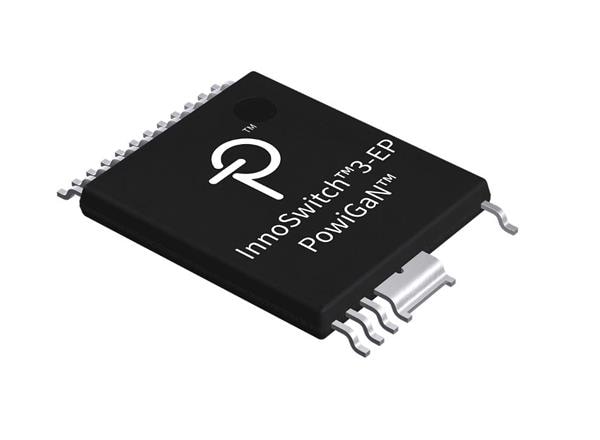
Where AC/DC converters fit in electronic power design
An AC/DC converter is used to transform alternating current input into a usable DC supply for electronic loads. In practice, this function sits near the front end of a power architecture, feeding logic, analog circuits, sensors, communication modules, and other subsystems that depend on stable voltage rails.
Within a wider power ecosystem, AC/DC conversion often works alongside supervision, regulation, and load management functions. For projects that also require signal-conditioning flexibility or integrated control logic, it can be useful to review related configurable mixed signal ICs as part of the overall system design.
Typical applications in industrial and embedded systems
AC/DC converters are commonly specified in factory automation equipment, test instruments, embedded controllers, HMI panels, networking hardware, and building systems. In these environments, the goal is not only to generate DC power, but to do so with predictable behavior under varying load, temperature, and installation conditions.
Design teams also pay close attention to how the converter interacts with the rest of the board or subsystem. Output quality can affect analog measurement paths, digital stability, and communication performance, especially in systems that combine power conversion with precision sensing or data acquisition.
What to consider when selecting an AC/DC converter
A practical selection process usually starts with input range, required output voltage, power level, isolation needs, and physical integration constraints. Engineers then narrow options based on efficiency targets, thermal budget, package style, and interface requirements for the surrounding electronics.
It is also important to look at the downstream load profile. Some applications demand clean rails for mixed-signal circuits, while others prioritize compact size or simplified power distribution. If the design also involves load supervision or rail tracking, related devices in current and power monitoring solutions may help complete the architecture.
Understanding performance trade-offs in power conversion
No single converter specification tells the whole story. Real-world selection often involves balancing efficiency, heat dissipation, dynamic response, and available board space. In industrial enclosures and high-density electronics, thermal behavior can become just as important as nominal electrical ratings.
Designers should also consider how the converter will behave across startup, transient loads, and extended operating hours. A stable front-end supply supports overall system reliability, especially in equipment that must run continuously or with minimal maintenance intervention.
Component ecosystem and related signal-chain devices
Although this category focuses on AC/DC conversion, many systems combine power devices with analog and mixed-signal components from suppliers such as Analog Devices and Asahi Kasei Microdevices (AKM). That matters because power quality and reference stability can influence the performance of converters, sensing circuits, and control electronics elsewhere in the design.
For example, components such as the Analog Devices AD872ASD/883B ADC, LTC2205CUK-14 ADC, AD7691BCPZRL7 ADC, and AD5627BCPZ-R2 DAC illustrate the kinds of data-conversion devices often found downstream from regulated power rails. Likewise, the AK4353VF DAC highlights how precision or high-resolution analog functions depend on an appropriate supply environment, even when the AC/DC stage itself is only one part of the broader system.
Examples of device types seen around converter-based designs
In practical applications, AC/DC converters are rarely chosen in isolation. A complete design may include ADCs for measurement, DACs for control outputs, monitoring circuits for feedback, and protection elements for safe operation. This is why sourcing often extends beyond the primary power stage into adjacent functional categories.
Representative products in the broader component mix include the Analog Devices AD9246BCPZ-80, AD9280ARSZKL2, LTC2616CDD-1, DAC8512FS-REEL, and DAC8840FS-REEL. These examples should not be treated as substitutes for AC/DC converters, but they do reflect the kind of surrounding electronics that influence converter choice in precision, embedded, and industrial designs.
How buyers and engineers can evaluate options more effectively
For procurement teams, the most effective comparison usually combines technical fit with supply-chain practicality. Beyond basic electrical compatibility, it helps to confirm package style, mounting approach, operating conditions, and how easily the selected part fits the intended assembly process.
For engineering teams, documenting the required input conditions, DC output expectations, load behavior, and integration constraints upfront will make shortlisting faster and more accurate. If a project also needs coordinated supply control, startup sequencing, or closed-loop regulation, nearby categories such as feedback loop power controllers can provide useful supporting devices.
Choosing the right AC/DC converter for long-term design stability
The right converter is usually the one that matches the electrical requirement without creating avoidable compromises elsewhere in the system. In B2B and industrial environments, that often means giving equal weight to power architecture, thermal constraints, integration effort, and long-term maintainability.
As you review this AC/DC converter category, it helps to think in terms of the complete application rather than the power block alone. A well-matched converter supports stable operation for the entire design, from front-end supply handling to the analog, digital, and control functions that depend on clean and dependable DC power.
Get exclusive volume discounts, bulk pricing updates, and new product alerts delivered directly to your inbox.
By subscribing, you agree to our Terms of Service and Privacy Policy.
Direct access to our certified experts