Battery Management
Reliable battery-powered equipment depends on more than the cell itself. Charging, protection, voltage regulation, and system-level power control all have to work together to keep portable electronics, embedded systems, and industrial designs stable across changing load conditions. This is where Battery Management devices play an important role within modern power architectures.
On this page, buyers and design engineers can explore battery management ICs and closely related power components used to support safe charging, regulated output rails, and efficient battery operation. The category is relevant for applications ranging from compact embedded boards to portable instruments and other electronics that need controlled power delivery over the full battery lifecycle.

How battery management fits into a power design
In practical circuit design, battery management is not limited to charging a cell. It usually involves coordinating multiple functions such as charge control, power-path behavior, undervoltage or thermal protection, and the regulation stages that feed downstream electronics. A well-chosen solution helps improve operating stability, supports battery health, and reduces the risk of abnormal operating conditions.
Many designs also rely on surrounding power ICs to complete the system. For example, regulated rails may be generated by LDOs or monitored through dedicated sensing devices, while charging behavior may be integrated with broader current and power monitoring solutions depending on the application requirements.
Typical devices found in this category
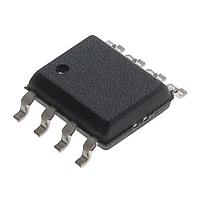
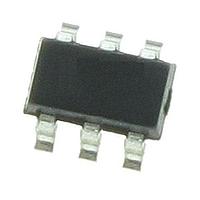
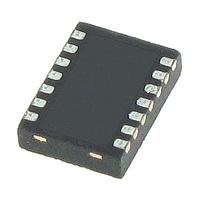
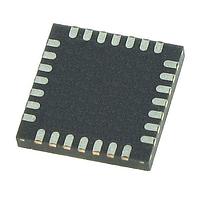
This category can include dedicated battery management ICs as well as support devices that help condition and regulate power around the battery subsystem. A representative example is the Analog Devices LTC1731EMS8, identified here as a battery management device and suitable as a clear reference point for engineers looking at charger-oriented power control.
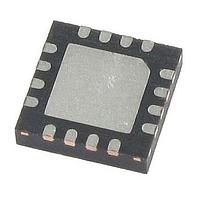
Alongside dedicated battery management parts, related linear and LDO regulators are often used to create clean supply rails from a battery source or from an upstream adapter. Examples shown in this range include the Analog Devices ADP1708ARDZ, ADP1707ACPZ-0.95R7, and ADP122AUJZ25R7, as well as AKM devices such as AP1152ADU18, AP1151ADS, and AP1150ADS33. These parts are not interchangeable by default, but they illustrate the broader ecosystem surrounding battery-powered design.
Key selection points for engineers and buyers
Choosing a battery management IC usually starts with the battery chemistry and power architecture. Even when the full charging profile is not shown in a short product listing, engineers typically review input voltage range, output regulation needs, current capability, thermal behavior, and whether the design requires enable, tracking, or other control features.
For support regulators, parameters such as dropout voltage, output current, quiescent current, and package style can materially affect runtime, heat dissipation, and PCB layout. For instance, products in this selection range from lower-current dual LDO devices like the Analog Devices ADP220ACBZ-2828R7 to higher-current single-output options such as the ADP1708ARDZ and ADP1707ACPZ-0.95R7. This makes it easier to align the component choice with always-on rails, noise-sensitive loads, or compact embedded boards.
Why LDOs and linear regulators matter in battery-powered systems
Battery systems often need more than one voltage rail. Sensitive analog sections, sensors, communications modules, and microcontrollers may all require stable, low-noise power even when the battery voltage changes during charge and discharge cycles. In these cases, LDO regulators are commonly used to derive a controlled output with relatively simple implementation.
Devices such as the Analog Devices ADP1708ARDZ and ADP122AUJZ25R7, along with AKM AP1150 and AP1151 series examples listed here, show the kind of regulation components that designers pair with charger or battery control ICs. If your project also needs broader regulation and supervision functions, it can be useful to review related feedback loop power controllers as part of the same power tree.
Featured manufacturers in this range
Among the manufacturers represented in this category, Analog Devices stands out through the variety of listed parts spanning battery management and linear regulation. The presence of parts such as LTC1731EMS8, ADP1708ARDZ, ADP122AUJZ25R7, and several ADP1147 variants gives engineers multiple reference points for charger-related and regulator-related design work.
Asahi Kasei Microdevices (AKM) also appears in this selection with LDO regulator options including AP1152ADU18, AP1151ADS, and AP1150ADS33. For buyers who already know their preferred vendor strategy, manufacturer pages can be a practical way to narrow sourcing choices by brand while still comparing package, output, and voltage requirements at the product level.
Application contexts where battery management ICs are commonly used
Battery management devices are relevant anywhere a design must balance portability, runtime, and stable power delivery. Common examples include handheld electronics, data acquisition units, wireless nodes, portable test equipment, compact control modules, and embedded systems that alternate between battery power and external input sources.
In these environments, the battery subsystem often interacts with charging inputs, local regulators, and monitoring circuits. That is why engineers frequently evaluate this category alongside adjacent areas such as AC/DC converters for front-end power entry or configurable power ICs when more integrated control behavior is needed elsewhere in the design.
What to compare before placing an order
For B2B purchasing, the right comparison process usually goes beyond part name alone. Review whether the device is intended as a dedicated battery management IC, an LDO regulator, or a related support component in the battery power chain. Then confirm the operating voltage window, output current, package format, mounting style, and any listed protection or control functions that are relevant to your board design.
It is also worth checking whether the design requires a fixed output, an adjustable range, a single regulator, or multiple regulated outputs in one package. Product examples in this category show that even closely related devices can differ significantly in current capability, input range, and control behavior, so matching the part to the exact power rail or battery function is essential.
Supporting better battery-powered designs
A strong battery-powered design depends on selecting the right mix of charger control, protection, and voltage regulation. This category brings together battery management components and closely related power devices that help engineers build stable, efficient systems for portable and embedded electronics.
Whether you are sourcing a dedicated charger IC like the LTC1731EMS8 or comparing companion regulators from Analog Devices and AKM, the most effective approach is to evaluate the full power path rather than any single component in isolation. That makes it easier to choose parts that support reliable operation, cleaner rail performance, and a more predictable battery-powered system overall.
Get exclusive volume discounts, bulk pricing updates, and new product alerts delivered directly to your inbox.
By subscribing, you agree to our Terms of Service and Privacy Policy.
Direct access to our certified experts