Current & Power Monitors & Regulators
Reliable current and power measurement is central to modern electronics, whether the goal is protecting a battery pack, improving energy efficiency, or giving a control system accurate feedback. In power architectures, these devices help designers observe load behavior, detect abnormal conditions, and regulate operating limits without adding unnecessary complexity to the circuit.
Current & Power Monitors & Regulators covers a practical range of ICs used to sense current flow, supervise power conditions, and support safer, more stable system operation. This category is especially relevant in embedded systems, industrial electronics, battery-powered equipment, automotive designs, and any application where visibility into power consumption matters.

Where these devices fit in a power design
In many circuits, voltage alone does not tell the full story. Designers often need to know how much current a load is drawing, whether a rail is operating within safe limits, or when a fault condition such as overcurrent may occur. That is where current monitors, power monitors, and related regulator functions become important.
Depending on the design goal, the device may provide an analog output proportional to measured current, support fault detection, or act as part of a broader protection and control strategy. For systems that also need charging, cell protection, and pack supervision, it is often useful to review related solutions in battery management as part of the same design flow.
Common device types in this category
This category typically includes current sensor ICs, current-sense amplifiers, high-side or low-side monitoring devices, and supporting components used to translate shunt or magnetic sensing into a usable control signal. Some parts are focused on measurement accuracy, while others are optimized for compact layouts, fault response, or integration into cost-sensitive designs.
Hall-effect based sensors are often selected when galvanic isolation by magnetic sensing or reduced insertion loss is beneficial. Shunt-based monitoring devices are commonly used when designers need a compact and efficient way to measure current through a resistor and feed that information into control, protection, or telemetry functions. In broader power system architectures, these parts often sit alongside devices from feedback loop power controllers when regulation and monitoring need to work together.
Example solutions from leading manufacturers
Several recognized semiconductor suppliers are represented in this area, including Infineon, Diodes Incorporated, and Broadcom. Each brings a different emphasis, from magnetic current sensing to compact monitor and protection devices suited to portable or embedded platforms.
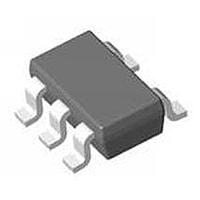
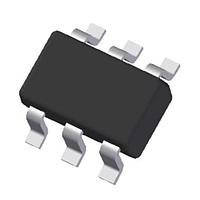
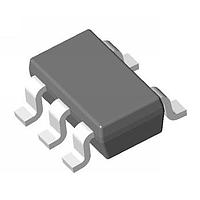
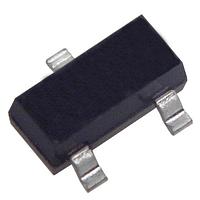
Examples in this category include the Infineon TLI4971A025T5UE0001XUMA1 and TLE4973AE35D5S0001XUMA1, both positioned as current sensor IC solutions for current measurement in power electronics. Broadcom ACHS-7192-000E is another representative current sensor option, while Diodes Incorporated devices such as ZXCT214QADW-7, ZXCT211QADW-7, ZXCT215BDW-7, and ZXCT213CDW-7 illustrate the compact current-monitoring side of the category. For protection-oriented designs, parts such as AP9101CK6-CMTRG1, AP9234LA-AA-HSB-7, AP9101CAK6-AXTRG1, and AP9214L-AE-HSBR-7 show how current and power supervision often overlaps with battery protection functions.
How to choose the right monitoring or regulating IC
Selection starts with the electrical architecture. Designers should consider whether the application measures AC, DC, or both, whether sensing is required on the high side or low side, and whether the output needs to be analog, comparator-based, or intended for a downstream controller. Required measurement range, acceptable error, supply voltage, package constraints, and operating temperature are all basic filters that shape the shortlist.
It is also important to think about the system-level objective. Some applications need fast fault detection, while others prioritize trend monitoring, energy reporting, or stable closed-loop regulation. In compact battery-powered products, a small package and low power consumption may matter more than bandwidth. In industrial or automotive environments, temperature range and qualification expectations may carry more weight.
Typical applications across industrial and embedded systems
Current and power monitoring ICs are widely used in motor drives, battery-powered tools, telecom equipment, industrial controllers, consumer electronics, and distributed power systems. They support functions such as load monitoring, overcurrent protection, predictive maintenance, and power budgeting across multiple rails.
In battery-operated designs, these devices can help detect abnormal discharge or charging conditions before they become a reliability issue. In automation and control equipment, they give engineers a clearer view of real operating conditions, enabling better diagnostics and safer shutdown behavior when thresholds are exceeded. Where additional power conversion stages are involved, designers may also compare options in AC/DC converters to align monitoring with the rest of the power chain.
Why integration matters in compact designs
As boards become denser and power rails more distributed, integrating monitoring and regulation functions at the IC level helps reduce design effort and simplify layout. A well-chosen device can reduce the need for discrete support circuitry while improving repeatability and making it easier to implement protection features early in the design cycle.
This is particularly useful in products where multiple subsystems share limited power budgets. By adding accurate sensing at the right points in the circuit, engineers can validate real current demand, tune regulation behavior, and improve fault visibility during both development and field operation.
Finding suitable parts for your design
When comparing options in this category, it helps to start with the measurement method, expected current range, output type, and environmental conditions. From there, package style, interface simplicity, and the role of the device in the wider power architecture can narrow the choice efficiently.
Whether the requirement is a compact monitor, a Hall-effect current sensor, or a protection-oriented IC for battery-connected systems, this category brings together components that support more informed and more robust power design. A careful match between sensing approach and application requirements will usually deliver better performance than choosing solely by package or price point.
Get exclusive volume discounts, bulk pricing updates, and new product alerts delivered directly to your inbox.
By subscribing, you agree to our Terms of Service and Privacy Policy.
Direct access to our certified experts