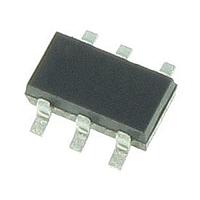
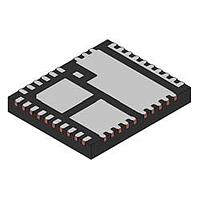
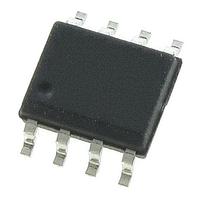
Gate Drivers
Efficient power switching depends on more than the power transistor itself. In many converter, inverter, motor control, and load management designs, the driver stage is what determines switching speed, protection behavior, noise performance, and overall system reliability. That is why Gate Drivers remain a core building block in modern power electronics, especially where MOSFETs, IGBTs, bridge stages, or isolated drive paths must be controlled accurately.
This category brings together devices used to drive high-side, low-side, half-bridge, full-bridge, and multi-phase switching stages across industrial and embedded applications. Whether the design priority is compact DC motor control, high-frequency switching, or robust load actuation, selecting the right driver helps improve efficiency, simplify control, and protect downstream power components.
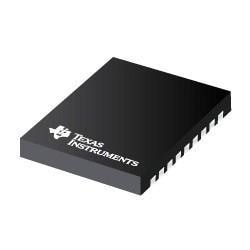
Where gate drivers fit in a power design
A gate driver acts as the interface between a controller and a power switch. Microcontrollers, DSPs, and logic devices usually cannot source or sink enough current, or handle the required voltage domains, to switch a MOSFET or IGBT directly. A gate driver IC bridges that gap by delivering the current and timing needed to charge and discharge the transistor gate efficiently.
In practical systems, this function affects switching losses, thermal behavior, dead-time control, and immunity to false triggering. Designers often evaluate the driver stage together with related power sections such as AC/DC converter ICs or current and power monitoring solutions when building a complete power architecture.
Typical applications for gate drivers
Gate drivers are widely used in motor drives, industrial automation, power supplies, solenoid control, relay actuation, LED power stages, and switching regulators. They are also common in inverter topologies where coordinated high-side and low-side switching is required. In these environments, the driver must support clean transitions while helping prevent shoot-through and other switching faults.
Application needs vary significantly. A compact embedded design may require a simple low-side driver, while a three-phase system may call for a more integrated multi-output solution. Isolation can also be important where safety, noise rejection, or high common-mode voltage is a design concern.
Common device types in this category
This category includes several related device classes rather than one single format. Some parts are straightforward gate drivers for driving discrete MOSFETs or IGBTs. Others are integrated high-side and low-side drivers for half-bridge or three-phase stages, while some products combine drive functions with load switching or protection features.
For example, the Infineon IR2101C is a well-known style of gate driver used in switch control architectures, while the Infineon IR21362SPBF addresses more complex multi-output drive requirements in three-phase bridge applications. Devices such as the Analog Devices TMC6200-TA-T are relevant where power stage driving is closely tied to motion or motor control needs, and optically isolated drive components like Broadcom HCPL-3101 variants are useful when signal isolation is part of the design strategy.
Examples of parts used in real designs
Several products in this category illustrate how broad the gate driver ecosystem can be. The Infineon 2EDN7224GXTMA1 and 2EDN7223FXTMA1 are examples of dedicated gate driver devices used to switch external power transistors with fast and controlled gate charge behavior. These are typically evaluated in designs where switching speed, efficiency, and PCB layout discipline matter.
Other listed parts show how adjacent functions overlap with driver selection. The Infineon TLE75008EMDXUMA1 and BTT6200-1ENA support power distribution and load driving, while the Diodes Incorporated AP2152AMPG13 addresses protected load switching. In motion-oriented architectures, the Allegro MicroSystems UDN2916EBTR-T demonstrates how bridge drive functions may be integrated into motor drive solutions. For users comparing supplier ecosystems, Infineon, Allegro MicroSystems, and Analog Devices are among the established names represented here.
How to choose the right gate driver
The first step is to match the driver topology to the switching stage. Designers usually start by identifying whether the circuit needs low-side, high-side, half-bridge, full-bridge, or three-phase drive. From there, attention shifts to drive voltage range, source and sink capability, switching frequency, propagation delay, and whether isolation is required.
It is also important to look at the protection and integration level. Some applications benefit from built-in current limiting, open-load detection, overtemperature protection, or overvoltage handling. Others prioritize simplicity and fast switching performance. If the design includes broader energy control functions, it may also be useful to review related categories such as battery management ICs or feedback loop power controllers to ensure the driver fits the wider power chain.
Key design considerations beyond the datasheet headline
Choosing a suitable device is not only about voltage rating or number of outputs. PCB layout, gate resistor selection, dv/dt behavior, grounding strategy, bootstrap design for high-side operation, and thermal conditions all influence real-world performance. A strong driver can still underperform if parasitics or return paths are not managed carefully.
Another important factor is the relationship between the control side and the power stage. In noisy industrial environments, designers often prefer devices with better protection behavior or isolated signaling to improve robustness. Where space and BOM count are constrained, integrated drivers or protected load driver ICs can reduce the amount of external circuitry required.
Why this category matters in industrial and embedded systems
In many B2B electronics projects, gate drivers are not selected in isolation. They sit at the center of a wider system that may include controllers, power monitoring, conversion stages, and actuators. A well-matched driver helps support faster switching, lower losses, improved EMC behavior, and more predictable control of the output stage.
This is especially relevant in industrial automation, motorized equipment, embedded control boards, and power distribution subsystems where reliability and repeatability are more important than simply achieving basic switching. Reviewing options across topology, protection level, and manufacturer ecosystem helps narrow down parts that are practical for both prototype and production use.
Final thoughts
When evaluating Gate Drivers, the most useful approach is to start from the switching topology and application conditions rather than from part numbers alone. Output structure, isolation needs, protection requirements, and system-level integration all shape which device family makes the most sense.
This category is intended to help engineers and sourcing teams compare suitable solutions for power switching and drive control, from basic gate drive functions to more integrated load and bridge-driving devices. If you are building or refining a power stage, taking time to align the driver with the rest of the power management chain will usually lead to a more stable and scalable design.
Get exclusive volume discounts, bulk pricing updates, and new product alerts delivered directly to your inbox.
By subscribing, you agree to our Terms of Service and Privacy Policy.
Direct access to our certified experts