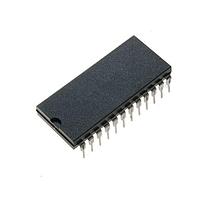
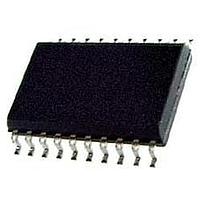
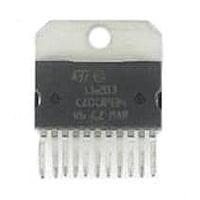
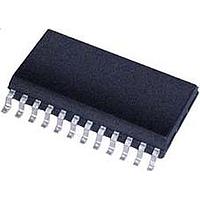
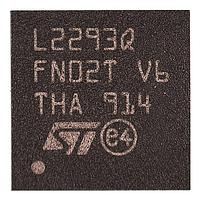
Motor / Motion / Ignition Controllers & Drivers
Precise motor control starts at the power stage. In industrial automation, automotive electronics, and embedded motion systems, the right controller or driver helps translate low-power control signals into stable, repeatable movement while protecting the rest of the design from overload, switching noise, and abnormal operating conditions.
Motor / Motion / Ignition Controllers & Drivers covers a broad range of power management ICs used to drive motors, manage motion-related power stages, and support ignition-style control functions where timing, current handling, and switching behavior matter. For engineers and buyers, this category is typically relevant when selecting the interface between a control system and an electromechanical load.
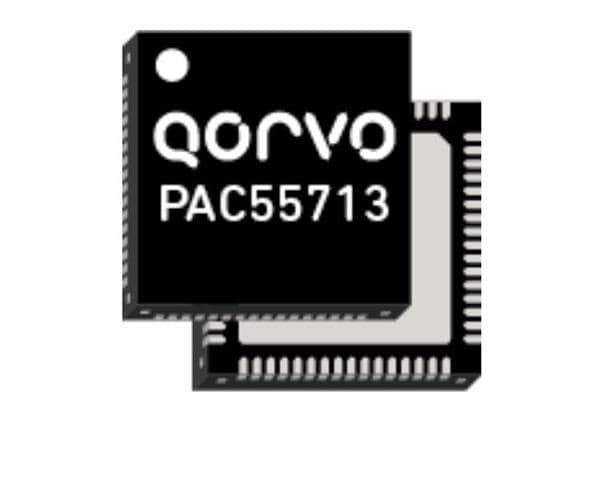
Where these devices fit in a power electronics design
These ICs are commonly used between the logic domain and the load-driving stage. Depending on the application, they may handle commutation, gate driving, current control, switching coordination, or integrated motion control functions for DC motors, BLDC systems, stepper-based motion designs, and related electromechanical platforms.
In many designs, motor and motion devices are not selected in isolation. They are often considered alongside power conversion, sensing, and regulation functions. For example, a motion subsystem may also rely on current and power monitoring devices to supervise load behavior, detect faults, or improve energy efficiency under changing operating conditions.
Typical applications across industrial and embedded systems
This category is relevant in factory equipment, robotics subsystems, pumps, fans, actuators, access control units, and automotive electronics. In these environments, designers usually need a balance between switching performance, thermal behavior, input voltage compatibility, and protection features that help maintain reliable operation over long service intervals.
Motion-related ICs can also appear in designs where the motor is only one part of a larger control architecture. A compact embedded system may combine a driver IC, local regulation, sensing, and supervisory logic to simplify PCB layout and reduce external component count. Where battery-powered or portable equipment is involved, related functions from battery management may also influence overall device selection.
Representative products in this category
Several parts in this category illustrate the variety of use cases. The Infineon IM231L6T2BAKMA1 is listed as a motion motor controller and is relevant when the design focus is on controlled motor operation rather than only basic switching. For applications that need a more direct power-stage interface, the Infineon BTN7971BAUMA1 half-bridge motor driver is an example of a device intended for driving motor loads in compact automotive-oriented formats.
Control ecosystems around motion hardware may also involve devices from Analog Devices that support surrounding power functions such as monitoring, sequencing, regulation, or DC/DC control. Examples in the broader selection include LTC3889IUKG#PBF, LTC3883EUH-1#WTRPBF, LTC2992CMS-1#TRPBF, and LTC3891EFE#TRPBF, which are useful to consider when the motor stage must be integrated into a wider managed power architecture rather than treated as a standalone block.
How to choose the right motor or motion control IC
A practical selection process usually starts with the motor type and load profile. Engineers typically define whether the application uses DC, BLDC, stepper, or another motion approach, then evaluate supply voltage range, expected current, startup behavior, braking needs, switching frequency, and the control method available from the host processor or controller.
After that, it helps to look at the level of integration required. Some designs benefit from a more integrated driver that reduces development time and external circuitry, while others need a more flexible architecture built from separate controllers, gate drivers, regulators, and sensing devices. Thermal constraints, package style, PCB space, and fault handling should also be part of the decision, especially in industrial and automotive environments.
Why surrounding power functions matter
Motor subsystems rarely operate well without stable upstream power management. Input rail variation, inrush behavior, current spikes, and transient conditions can all affect the reliability of the drive stage. That is why engineers often review this category together with nearby power building blocks such as feedback loop power controllers or converter stages that support the required supply rails.
For example, parts such as the Analog Devices LTC3026EDD#TRPBF VLDO and LTC3891EFE#TRPBF synchronous step-down controller reflect the kind of support circuitry often found around motion electronics. These devices are not substitutes for motor drivers, but they help show how regulation and control functions contribute to a more stable and manageable power design.
Leading manufacturers available in this range
This category includes products associated with established semiconductor suppliers used in industrial and embedded design. Infineon is a natural fit when the application emphasizes motor drive and power-stage control, while Analog Devices is often relevant where motion control must coexist with advanced monitoring, regulation, and managed power functions. Fuji Electric also appears in the range, including FA5510N-D1 for power management and control-related use.
Depending on the project, buyers may also evaluate solutions from ADI Trinamic, Allegro MicroSystems, Cirrus Logic, Dialog Semiconductor, Diodes Incorporated, ebm-papst, and Fairchild where those brands align with the design approach, control method, and system constraints already defined by the engineering team.
When this category is the right starting point
This page is a good starting point when the requirement is clearly tied to motion control, motor drive stages, or ignition-related switching functions within the broader PMIC landscape. It is especially useful during early component selection, BOM refinement, or when comparing integrated versus distributed architectures for electromechanical loads.
If the main need is not the drive stage itself but the supporting circuitry around it, adjacent categories may be more relevant. Projects focused on mixed-function integration, power conversion, or supervisory behavior may benefit from exploring configurable mixed-signal devices or AC/DC converter options elsewhere in the PMIC portfolio.
Final considerations for sourcing and design review
Choosing motor and motion control ICs is usually less about finding a generic part and more about matching the device to the electrical, thermal, and control demands of the real application. A suitable part should fit the motor topology, supply conditions, protection strategy, and available board space while still supporting reliable operation over the intended lifecycle.
By reviewing this category in the context of the complete power chain, engineering teams can narrow down components more efficiently and build a solution that is easier to validate, integrate, and maintain. If your project involves controlled movement, switching power to electromechanical loads, or building out a robust motion subsystem, this category provides a practical foundation for further selection.
Get exclusive volume discounts, bulk pricing updates, and new product alerts delivered directly to your inbox.
By subscribing, you agree to our Terms of Service and Privacy Policy.
Direct access to our certified experts