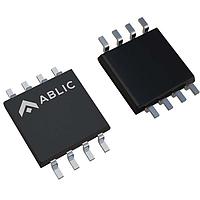
Supervisory Circuits
Reliable startup and fault handling are critical in embedded electronics, industrial controls, and digital power designs. When a supply rail rises too slowly, dips unexpectedly, or falls outside a safe threshold, the system may lock up, corrupt data, or restart unpredictably. Supervisory Circuits help prevent those issues by monitoring voltage conditions and issuing reset or control signals at the right moment.
On this page, you can explore supervisory ICs used to improve power sequencing, reset behavior, and overall system robustness. These devices are commonly selected for microcontroller boards, communication modules, industrial equipment, and other applications where clean power-up and reliable recovery from abnormal conditions matter.
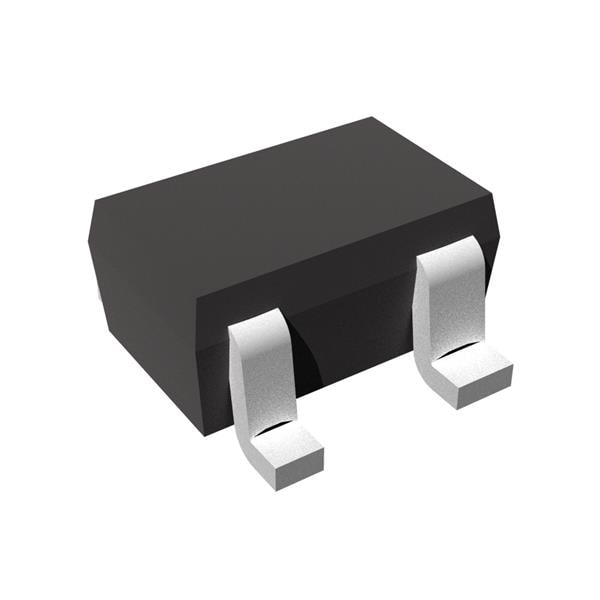
Where supervisory circuits fit in a power design
In many electronic systems, voltage regulation alone is not enough. A regulator may provide the correct nominal rail, but the downstream processor or logic still needs protection against undervoltage, delayed startup, brownout events, or unstable ramp conditions. That is where voltage supervision becomes an important part of the power architecture.
Supervisory circuits are often used alongside related devices such as current and power monitoring solutions or rail management components. In designs with multiple supplies, they can also complement broader battery management strategies, especially when safe reset behavior is needed during low-voltage conditions.
What these devices typically do
A supervisor IC monitors one or more supply rails and compares the measured voltage to an internal or adjustable threshold. If the input drops below that threshold, the device can assert a reset output, hold a processor in reset during startup, or signal that the rail is not yet valid for normal operation.
Depending on the design, a part may provide power-on reset, brownout detection, reset timeout control, active-low or push-pull outputs, and in some cases more advanced sequencing or multi-rail management. The exact function varies by device family, so selection usually depends on system voltage, reset logic type, timing requirements, and package constraints.
Common selection criteria for supervisory ICs
Engineers typically begin with the monitored rail and the reset behavior required by the processor, FPGA, or controller being protected. Threshold voltage is one of the most important factors, because the supervisor must trip at a level that matches the safe operating window of the downstream device.
Reset polarity, output structure, and delay time also matter. Some applications require an active-low reset with a fixed timeout, while others benefit from adjustable thresholds or open-drain outputs for easier integration into shared reset lines. Package style, mounting method, and temperature range are also practical considerations in compact or industrial environments.
For systems with broader power conversion requirements, designers may also evaluate neighboring categories such as AC/DC converters or feedback loop power controllers to ensure the full power chain is stable from input source to logic reset behavior.
Examples from the available range
The product selection in this category includes compact single-function reset devices as well as more capable supervisory solutions. For example, the Diodes Incorporated AP1702BWL-7 is positioned as a simple reset/power-on reset device, which can be suitable when a design needs straightforward voltage monitoring and reset generation without adding unnecessary complexity.
Other examples such as the Diodes Incorporated AZ809ANSTR-E1 and PT7M7433TAEX illustrate how processor supervisors can differ in reset threshold style, output behavior, and timing characteristics. These distinctions are important in embedded boards where startup sequencing and fault recovery must align with the logic family being used.
More advanced devices from Analog Devices, including parts such as ADM8698ANZ, ADM1066ACPZ-REEL, and ADM6315-44D4ARTZRL, show the breadth of the category. Some are intended for simple supervision, while others fit designs that need additional monitoring flexibility or more sophisticated supply management around processors and digital subsystems.
Typical applications in industrial and embedded systems
Supervisory circuits are widely used in PLC-related boards, control panels, sensor nodes, communication equipment, embedded computing platforms, and distributed power systems. In these environments, an unstable reset line can create intermittent faults that are difficult to diagnose, so a dedicated supervisor often improves system consistency and serviceability.
They are also relevant in products with nonvolatile memory, processors, or tightly defined startup requirements. If supply rails dip during transients, switching events, or battery discharge, the supervisor can force an orderly reset instead of allowing undefined processor behavior. This is especially useful where uptime matters but uncontrolled operation is unacceptable.
Single-rail versus more advanced supervision approaches
Not every application needs the same level of monitoring. A basic single-rail reset IC is often enough for compact designs with one main logic supply and a clear reset requirement. These devices are attractive for cost-sensitive products, small PCB layouts, and straightforward MCU-based systems.
However, as designs become more complex, engineers may look for supervisors that support multiple rails, programmable responses, or integration with mixed-signal control functions. In those cases, adjacent technologies such as configurable mixed-signal ICs may also be relevant when reset logic, sequencing, and monitoring need to be combined more closely.
Choosing the right part for long-term reliability
A good selection process starts with the real operating conditions of the end equipment rather than the nominal schematic alone. Consider supply tolerance, startup profile, possible brownout scenarios, processor reset input requirements, and ambient temperature range. A supervisor that looks similar on paper may behave very differently in the field if threshold or timeout assumptions are not aligned with the application.
It is also helpful to compare whether a fixed-threshold device is sufficient or whether an adjustable option offers more flexibility during design validation. For many teams, the right choice is the part that simplifies reliable startup and fault recovery with the least added complexity, rather than the one with the longest feature list.
Final thoughts
Supervisory circuits play a quiet but essential role in making electronic systems start cleanly, recover safely, and behave predictably under real-world power conditions. Whether you need a simple reset IC for a compact controller board or a more capable supervisor for a multi-rail digital design, this category supports a wide range of power integrity and reset management needs.
Review the available devices based on threshold behavior, reset timing, output type, and system architecture. A well-matched supervisor can significantly improve stability and reduce hard-to-trace field failures across industrial, embedded, and B2B electronic applications.
Get exclusive volume discounts, bulk pricing updates, and new product alerts delivered directly to your inbox.
By subscribing, you agree to our Terms of Service and Privacy Policy.
Direct access to our certified experts