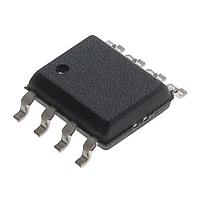
Switching Controllers
Designing an efficient power stage often starts with choosing the right control IC. In modern electronic systems, that means balancing topology, switching method, thermal constraints, output regulation, and board-level integration. Switching Controllers sit at the center of that process, providing the control intelligence needed for buck, boost, flyback, and multi-phase power designs across industrial, embedded, and high-performance applications.
This category brings together control solutions used in switched-mode power supplies and DC/DC conversion circuits, where engineers need stable regulation, compact layouts, and predictable performance under varying load conditions. Whether the goal is point-of-load conversion, multi-rail power delivery, or SMPS control, selecting the right controller depends on both the electrical architecture and the operating environment.
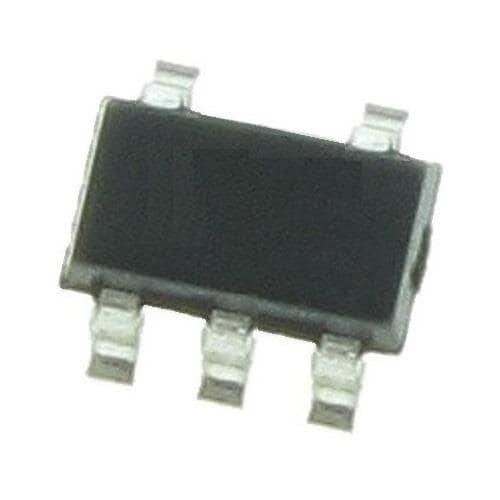
Where switching controllers fit in power design
A switching controller is typically used to drive external power switches and manage the timing, feedback, and regulation behavior of a switching converter. Compared with fully integrated converter ICs, this approach gives designers more flexibility to optimize external MOSFET selection, power stage size, efficiency targets, and thermal performance.
These devices are widely used in telecom power, server and computing rails, industrial control boards, embedded electronics, and other systems that demand efficient voltage conversion. In many projects, switching controllers work alongside related functions such as current and power monitoring to improve visibility and control across the full power path.
Common controller types in this category
The category covers several control approaches, each suited to different converter architectures. Engineers may be looking for PWM controllers for general switched-mode designs, buck controllers for step-down conversion, or digital and multi-phase controllers for tighter regulation and higher current applications.
Examples in this range illustrate that breadth. Devices such as the Infineon ICE2QR2280GXUMA1 and ICE3A0565ZXKLA1 are aligned with SMPS and PWM control use cases, while parts like the Infineon IR3563BMTRPBF, IR3541AMTRPBF, and IR3566AMTRPBF target buck and digital multi-phase power control. For more advanced digital power architectures, products such as the Infineon XDPS2222XUMA1 and XDPS2221XUMA1 show how controllers can support more sophisticated regulation strategies in compact packages.
How to choose the right switching controller
The first selection step is usually the power topology. A buck controller is suitable for step-down conversion, while flyback-oriented PWM control is more common in isolated AC/DC or offline SMPS designs. If the design must support high current rails with fast transient response, multi-phase control may be the better fit.
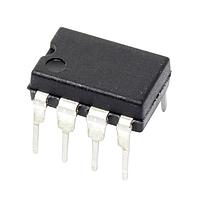
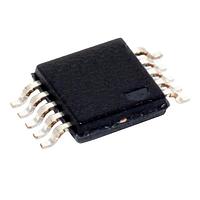
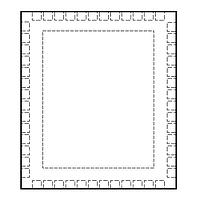
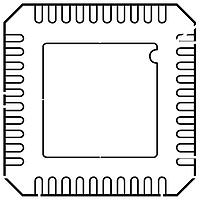
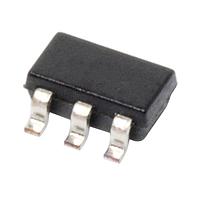
Next, review practical constraints such as input supply range, switching frequency, output count, operating temperature, and package style. These details affect magnetics size, thermal design, PCB density, and control-loop behavior. For example, a compact surface-mount QFN device may suit dense digital power designs, while through-hole or simpler package formats can still be relevant in legacy or serviceable industrial assemblies.
It is also important to consider whether the application benefits from analog control simplicity or from a digital controller with more configuration flexibility. In systems where power sequencing, monitoring, and response tuning matter, digital solutions can offer a more scalable path.
Representative products and design scenarios
Several featured Infineon devices help illustrate how different controller classes are used in practice. The IR3566AMTRPBF is positioned as a digital multi-phase buck controller, making it relevant for designs where multiple phases help distribute current and improve transient performance. The IR3567AMTRPBF, described as a multi-phase PWM controller, similarly fits applications that need coordinated phase control rather than a simple single-rail converter.
For single-output step-down designs, the IR3563BMTRPBF and IR3541AMTRPBF represent more focused buck control options. In SMPS-oriented applications, the ICE2QR2280GXUMA1 and ICE3BR2565JFXKSA2 show the role of PWM and current-mode control in managing switching behavior, startup conditions, and regulation in compact power supplies. These examples do not define the entire category, but they do show the range from mainstream PWM control to more advanced digital and multi-phase implementations available from Infineon.
Applications across industrial and embedded systems
Switching controllers are used wherever efficiency and controlled power conversion matter. Industrial automation boards, communication equipment, embedded computing platforms, and distributed power systems all rely on switching architectures to convert available input rails into stable voltages for processors, memory, sensors, and interface circuitry.
In higher complexity systems, these controllers are often part of a broader power-management strategy that may also include battery management devices, feedback components, and monitoring ICs. That wider ecosystem matters because converter stability is not just about the controller itself, but about how the power stage interacts with load dynamics, protection requirements, and upstream energy sources.
Analog, digital, and multi-phase control considerations
Not every design needs the same level of control sophistication. Traditional analog PWM controllers remain practical where the design is stable, cost-sensitive, and well understood. They are often a strong fit for fixed-function power rails and established SMPS designs.
Digital and multi-phase solutions become more attractive when the application demands tighter load regulation, programmable behavior, or higher output current with improved thermal spreading. In those cases, control granularity can be just as important as raw conversion efficiency. Engineers evaluating advanced power architectures may also explore adjacent categories such as feedback loop power controllers for related design needs.
Working with leading manufacturers
This category includes products from well-known semiconductor suppliers active in power management, including Allegro MicroSystems, Analog Devices, Dialog Semiconductor, Diodes Incorporated, Fairchild, Infineon, Intersil, Littelfuse, and Maxim Integrated. The right choice depends less on brand visibility and more on matching the controller type to the converter architecture, control method, and operating conditions of the target design.
Among the featured examples here, Infineon appears prominently through devices spanning PWM control, buck control, and digital multi-phase regulation. That makes it a useful reference point for engineers comparing solutions across legacy SMPS requirements and newer digital power designs.
Finding the right part for your design
When filtering products in this category, it helps to start with the converter function you need to build: step-down regulation, flyback power supply control, multi-phase core power delivery, or a digitally managed conversion stage. From there, narrow the list by package, operating temperature, voltage range, output structure, and switching behavior.
A careful selection process reduces redesign risk and helps align the controller with the wider power subsystem. If your project also involves front-end conversion stages, it may be useful to review related AC/DC converter solutions as part of the same design flow.
For engineers and procurement teams sourcing power-management components, this category provides a practical starting point for comparing controller architectures and identifying devices suited to real-world converter requirements. The best fit will usually come from understanding the application first, then choosing the controller that supports the needed topology, control method, and system constraints.
Get exclusive volume discounts, bulk pricing updates, and new product alerts delivered directly to your inbox.
By subscribing, you agree to our Terms of Service and Privacy Policy.
Direct access to our certified experts