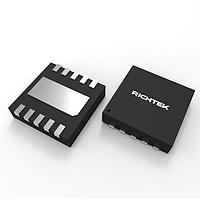
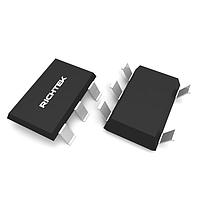
Switching Voltage Regulators
Stable power conversion is a core requirement in embedded electronics, industrial control boards, communication hardware, and energy-conscious designs. When efficiency, thermal performance, and flexible input-to-output conversion matter, Switching Voltage Regulators are often the preferred choice over simpler linear regulation approaches.
This category brings together power management ICs designed for step-down, step-up, and related switching topologies used to regulate voltage with lower power loss and better scalability. It is especially relevant for engineers selecting compact DC/DC solutions for systems that must handle varying input rails, controlled output levels, and demanding load conditions.
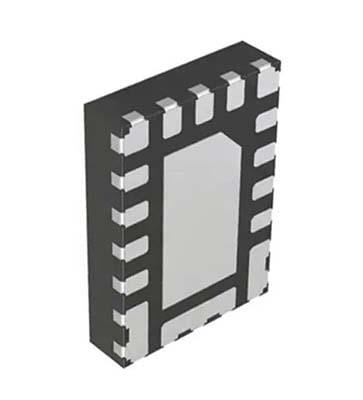
Where switching regulators fit in modern power design
In practical system design, a switching regulator is used to convert one DC voltage to another while improving efficiency compared with purely dissipative methods. That matters in applications where heat, battery life, board space, or wide input ranges directly affect product reliability and operating cost.
These devices appear across industrial controllers, automotive electronics, instrumentation, IoT hardware, and distributed power architectures. They may be used to derive lower logic rails from higher supply lines, generate boosted voltages where needed, or support isolated and non-isolated conversion stages depending on the system requirement.
Common conversion needs covered by this category
The category includes regulators used for several familiar power tasks. Buck regulators reduce a higher input voltage to a lower output rail, which is common when powering processors, sensors, communication modules, and digital logic from 12 V, 24 V, or similar sources.
It also includes devices for boost and flyback-related applications. For example, the Analog Devices LT1316CS8#TRPBF is suited to step-up or flyback-style conversion, while parts such as the Analog Devices LT1976HFE and LT1976BIFE families are representative of step-down regulation across broad input ranges. This makes the category useful for both straightforward rail conversion and more specialized DC/DC design work.
In systems that also need upstream conversion from mains or higher-level source conditioning, related categories such as AC/DC converters and feedback loop power controllers can help complete the broader power architecture.
Examples of devices and design approaches
Several products in this category illustrate the range of design targets engineers may encounter. The Analog Devices LT8300IS5#TRMPBF is an example of a switching regulator intended for higher input voltage conditions, while the LT3641EFE and LTC3854EDDB#TRPBF reflect the diversity of DC/DC regulation strategies available within compact IC form factors.
On the high-current step-down side, Alpha and Omega Semiconductor devices such as AOZ2153EQI-30, AOZ1094AIL, AOZ1092DI, and AOZ2233CQI-12 show how this category supports variable-output regulation for different current and voltage requirements. These parts are relevant when designers need efficient point-of-load conversion for processors, FPGAs, memory, or distributed low-voltage rails.
Analog Devices is also strongly represented here, particularly in designs requiring broad input range capability, established switching regulator families, and options suited to embedded and industrial power stages. Rather than focusing only on one package or one current class, the category supports a range of regulator choices for different design constraints.
How to choose the right switching voltage regulator
Selecting the right part usually starts with the electrical basics: input voltage range, target output voltage, output current, and the expected load profile. Once those are clear, designers typically compare topology, switching frequency, thermal behavior, package style, and whether the output must remain fixed or adjustable.
Efficiency is often the main decision factor, but it should be considered alongside EMI behavior, component count, and control simplicity. A wide-input industrial board, for example, may prioritize robust input tolerance and thermal margin, while a compact digital subsystem may favor a high-current synchronous buck regulator with small external components.
It is also useful to think in terms of the complete power chain. If the design includes charging, cell protection, or power-path functions, the related battery management category may be relevant. If rail supervision and measurement are important, current and power monitoring devices can complement the regulator stage.
Important technical considerations in real applications
A switching regulator should not be evaluated only by nominal voltage conversion. Engineers also need to consider transient response, allowable ripple, startup behavior, and the operating environment. Industrial and automotive-adjacent use cases may require attention to temperature range, supply variation, and load-step performance under worst-case conditions.
Topology selection also affects the surrounding design. A buck device is often the simplest answer when the input is always above the output, but boost, flyback, or more specialized controller arrangements may be better where voltage must rise, isolation is needed, or a wider range of system states must be supported.
Board-level implementation matters as much as the IC itself. Layout, inductor choice, switching node routing, grounding strategy, and input/output capacitor placement can strongly influence noise, stability, and thermal performance. For that reason, category-level selection should always be followed by detailed review of each product’s operating conditions and recommended application circuit.
Why this category matters for B2B sourcing
For OEMs, design houses, maintenance teams, and electronics manufacturers, sourcing from a focused category page saves time during early-stage comparison. Instead of searching model by model, buyers can narrow the selection based on conversion function, current level, input range, and preferred manufacturer ecosystem.
This is particularly useful when multiple approved brands must be evaluated or when a design may need alternatives within the same power architecture. Whether the requirement is a compact buck regulator for logic rails or a higher-voltage switching solution for industrial electronics, this category helps connect specification-driven selection with available stock and compatible product families.
Final thoughts
Choosing a switching regulator is ultimately about balancing electrical performance, thermal behavior, topology, and system-level integration. A well-matched device can improve efficiency, reduce heat, and support more reliable power delivery across embedded and industrial designs.
As you review the products in this category, focus on the actual conversion task your design must perform: step-down, step-up, current demand, input variation, and application environment. That approach makes it easier to identify a regulator family that fits the wider power system, not just the headline voltage numbers.
Get exclusive volume discounts, bulk pricing updates, and new product alerts delivered directly to your inbox.
By subscribing, you agree to our Terms of Service and Privacy Policy.
Direct access to our certified experts