Voltage References
Stable voltage is a basic requirement in almost every electronic design, especially where sensing, conversion, control, or precision regulation is involved. When engineers need a dependable benchmark for comparison or control, voltage references become a key part of the power and signal chain.
This category brings together devices used to provide a defined reference voltage for analog circuits, data converters, monitoring functions, and embedded power designs. Whether the goal is improving measurement consistency, supporting comparator thresholds, or building a more reliable control loop, the right reference device helps reduce drift and improve overall system predictability.
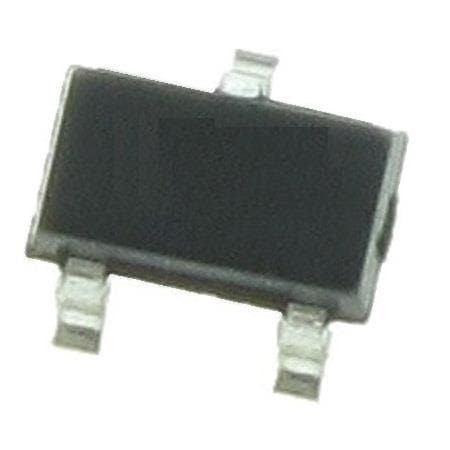
Where voltage references fit in a design
A voltage reference is typically used wherever a circuit needs a known, stable electrical level that is less dependent on supply variation, temperature change, or load fluctuation than a general-purpose source. These devices are common in instrumentation, industrial control boards, sensor interfaces, test equipment, portable electronics, and many embedded systems.
In practical terms, a reference can define the operating point for ADCs and DACs, establish thresholds in supervisory circuits, or support precision analog stages. In broader power architectures, they often work alongside devices in current and power monitoring circuits, where stable comparison points are important for accurate regulation and reporting.
Common reference types and selection logic
Not every application needs the same level of precision. Some systems prioritize a compact footprint and low power consumption, while others need tighter tolerance, lower noise, or better temperature stability over long operating periods. That is why reference selection is usually based on a balance of accuracy, output voltage, temperature coefficient, noise behavior, and package constraints.
Series and shunt architectures are both used depending on circuit requirements. A designer may also need to consider startup behavior, input voltage range, and output drive capability when integrating a reference into a real board design. For applications that involve wider power conversion stages, related product groups such as feedback loop power controllers can also be relevant when building a complete regulation strategy.
Examples from leading manufacturers
This category includes parts from established semiconductor suppliers such as Analog Devices, Maxim Integrated, and Microchip Technology. Each brand is widely used in power management and analog design, with options suited to compact embedded electronics as well as more demanding precision applications.
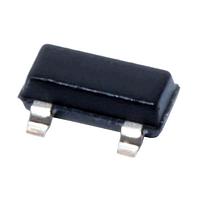
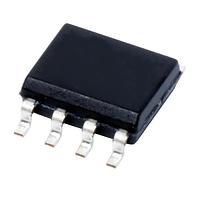
Representative products in this range include the Analog Devices LT1004CS8 2.5T2 Voltage Reference and LT1790ACS6-2.048#PBF, both relevant where a defined precision voltage is needed in a small package. From Microchip Technology, LM4041DYM3-1.2 and LM4040DYM3-5.0 illustrate how reference devices can support different nominal voltage targets in low-profile SOT-23 formats. Maxim Integrated devices such as the MAX6192BESAT and MAX6143AASA50+ show another side of the category, with solutions suited to designs that need precision reference performance as part of a larger analog or power subsystem.
Voltage references and supervisor functions in the same ecosystem
While a voltage reference provides a stable benchmark, a voltage supervisor is typically used to detect whether supply rails remain within expected limits. These functions are different, but they often appear in the same design because both contribute to system reliability and controlled behavior during startup, brownout, or fault conditions.
That is why products such as the Maxim Integrated MAX6439UTAJVD3-T, MAX6439UTBGSD7-T, MAX6440UTBJYD7-T, MAX6462XR20-T, and MAX6846KARD3-T are useful points of comparison within the wider power management context. They are not direct substitutes for reference ICs, but they show how reference accuracy and supply supervision often work together in embedded and industrial electronics.
What to evaluate before choosing a part
For many buyers and design engineers, the right selection starts with the operating environment. If the circuit is sensitive to drift, long-term stability and thermal behavior will matter more than a basic nominal voltage alone. If board space is limited, package style and pin count can become equally important.
It is also worth reviewing how the device interacts with the surrounding system. A reference used in a precision analog front end may need lower noise than one used only for threshold setting. In battery-powered or portable equipment, low supply current can help reduce power overhead. When the design is part of a portable energy platform, related categories such as battery management ICs may also help complete the system design picture.
Typical applications across industrial and embedded electronics
Voltage references are used in a wide range of applications because many control and measurement tasks depend on a repeatable electrical baseline. Typical examples include sensor measurement boards, industrial transmitters, process control electronics, portable instruments, data acquisition modules, medical electronics, and communication hardware.
They are also important in systems where digital processing depends on analog accuracy upstream. Even when a design uses mixed-signal integration to reduce component count, a dedicated precision reference can still be preferred when consistency and calibration performance are critical over time.
Finding the right option in this category
Because reference devices are selected for specific electrical goals, the best approach is usually to filter by output voltage, precision level, package, and intended operating conditions. Shortlisting a few appropriate parts is often more effective than choosing purely by manufacturer or part family.
If you are comparing compact references for embedded boards, higher-precision options for analog measurement paths, or related monitoring components within the same power architecture, this category provides a practical starting point. Reviewing available parts from Maxim Integrated, Analog Devices, and Microchip Technology can help narrow the search to devices that match your design priorities without adding unnecessary complexity.
In short, a well-chosen voltage reference supports more stable measurement, cleaner control behavior, and better confidence in overall circuit performance. For engineers building reliable power and analog systems, this category is an essential part of the component selection process.
Get exclusive volume discounts, bulk pricing updates, and new product alerts delivered directly to your inbox.
By subscribing, you agree to our Terms of Service and Privacy Policy.
Direct access to our certified experts