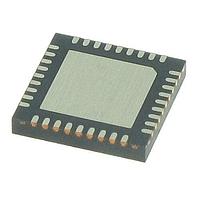
RF Detector
Accurate RF power monitoring is a basic requirement in wireless design, test, and signal-chain control. Whether the goal is measuring signal level, supporting automatic gain control, detecting the presence of a carrier, or evaluating transmitter behavior, RF Detector devices help convert high-frequency energy into a usable output for monitoring and decision-making.
On this category page, you can explore RF detector components used across RF and microwave applications, from embedded circuit designs to lab and production environments. The range includes detector ICs, power detector devices, and related evaluation hardware that support practical development and measurement workflows.
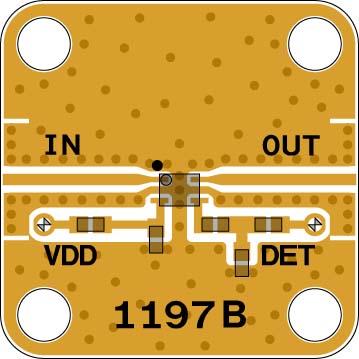
Where RF detectors are used
RF detectors are commonly applied wherever signal level information must be extracted from an RF path without directly processing the full waveform. In real systems, that can include transmit power monitoring, receiver signal-strength indication, envelope detection, front-end protection, and closed-loop control in communication equipment.
They are also widely used in test setups. Instrument-oriented detector solutions from KEYSIGHT and similar suppliers are often selected for measurement chains, while semiconductor-based detector ICs are integrated into compact boards and modules for OEM equipment. In many architectures, the detector works alongside parts such as a coupler that samples signal power from the main RF path.
Typical product types in this category
This category covers more than one implementation style. Some parts are standalone power detectors or RF detector ICs intended for PCB-level integration, while others are packaged detector solutions used in bench measurement, production test, or calibration workflows.
Examples from the available range include the Analog Devices LTC5531ES6#TRMPBF and HMC713LP3ETR for integrated RF designs, as well as the Analog Devices LTC5587IDD#PBF Power Detector. For development and evaluation, the Analog Devices ADL5920-EVALSDPZ Detector Controller provides a practical way to assess detector behavior in a broader signal-measurement setup. Instrument-style options such as KEYSIGHT 33330C RF Detectors, KEYSIGHT 8471E-103 RF Detectors, and KEYSIGHT 8474C-012-301 RF Detectors illustrate the category’s relevance in precision test environments.
How RF detection supports RF system design
An RF detector typically converts RF input energy into a DC or low-frequency signal that represents power level, envelope information, or a related measurement parameter. That output can then be read by control circuitry, data acquisition hardware, or embedded processors for system feedback and monitoring.
In practical RF design, detector performance is rarely considered in isolation. Engineers often review how the detector fits with surrounding functional blocks such as phase detectors and shifters, modulators, or front-end routing components. The best choice depends on whether the detector is being used for simple threshold detection, continuous power monitoring, or a more measurement-focused signal path.
Selection criteria that matter
When comparing RF detector devices, the first question is usually the intended role in the system. A detector used for board-level monitoring in a compact wireless product may be evaluated differently from a detector used in calibration or laboratory test equipment. Key considerations typically include operating frequency range, response behavior, integration level, package style, and how the output will interface with the rest of the circuit.
It is also important to consider whether you need a simple detector IC, a dedicated detector controller, or a proven instrument-compatible detector solution. For example, the ADL5920-EVALSDPZ is relevant when evaluating a broader detector-based measurement approach, while parts like the Maxim Integrated MAX4003EUA+T are better aligned with embedded design use cases. If the wider RF path also involves switching or signal routing, related categories such as RF multiplexers may also become part of the design discussion.
Representative manufacturers and solution styles
This category includes products associated with established RF and measurement suppliers. Analog Devices appears prominently in integrated detector and evaluation-oriented solutions, while KEYSIGHT is strongly associated with RF detector products used in test and measurement contexts. Maxim Integrated is also represented with detector components suited to compact electronic designs.
Different manufacturers often align with different application priorities. Some are better known for highly integrated semiconductor building blocks, while others are widely used in instrumentation and metrology workflows. That distinction can help buyers narrow the short list faster, especially when sourcing for either production electronics or RF test benches.
Examples of devices in this range
For users who need quick reference points, the category includes several notable examples. KEYSIGHT 8471D-103 RF Detectors, KEYSIGHT 8470B-001-002-301-701 RF Detectors, and KEYSIGHT 8474B-002-102-301 RF Detectors represent detector options often associated with established RF measurement practice.
On the semiconductor side, Analog Devices LTC5531ES6#TRMPBF RF Detectors and HMC713LP3ETR RF Detectors show the type of parts commonly considered for embedded RF monitoring. The Maxim Integrated MAX4003EUA+T RF Detectors provide another compact-device reference, while the Analog Devices LTC5587IDD#PBF Power Detector highlights the importance of choosing the right detector format for the intended measurement method.
Choosing the right fit for purchasing and engineering teams
For engineering teams, the right RF detector depends on how the signal is being sampled, what level of accuracy is needed, and whether the output is used for indication, control, or measurement. For procurement teams, it is equally useful to evaluate package format, ecosystem compatibility, and whether the part is intended for direct product integration or test-support use.
Looking at the wider signal chain can prevent mismatches during selection. In some designs, shielding and layout control are as important as the detector itself, which is why adjacent product groups such as RF shields may also be relevant during system planning. A well-matched detector helps improve observability in the RF path without adding unnecessary complexity.
Final considerations
RF detectors play a practical role in making high-frequency systems measurable, controllable, and easier to validate. From integrated power detector ICs to detector solutions used in RF test setups, this category supports a broad range of wireless, measurement, and electronic design requirements.
If you are comparing parts for a new design or refining an existing RF chain, focus on application intent first: monitoring, control, or measurement. That approach makes it easier to identify the most suitable device style and narrow the options within this RF detector selection.
Get exclusive volume discounts, bulk pricing updates, and new product alerts delivered directly to your inbox.
By subscribing, you agree to our Terms of Service and Privacy Policy.
Direct access to our certified experts