
RF Receiver
Reliable wireless links depend on more than antenna choice and transmit power. On the receiving side, signal sensitivity, selectivity, protocol support, and integration level all affect how well a design performs in real environments. This is why choosing the right RF Receiver solution matters for applications ranging from connected sensors and handheld devices to embedded communication nodes and network equipment.
Within modern RF designs, receiver functions may appear as dedicated receiving ICs, wireless SoCs, Bluetooth LE devices, multiprotocol components, or highly integrated networking chipsets. This category brings together parts used to receive, process, and manage radio-frequency signals in compact electronic systems, with options suitable for short-range wireless, embedded communications, and more complex RF architectures.
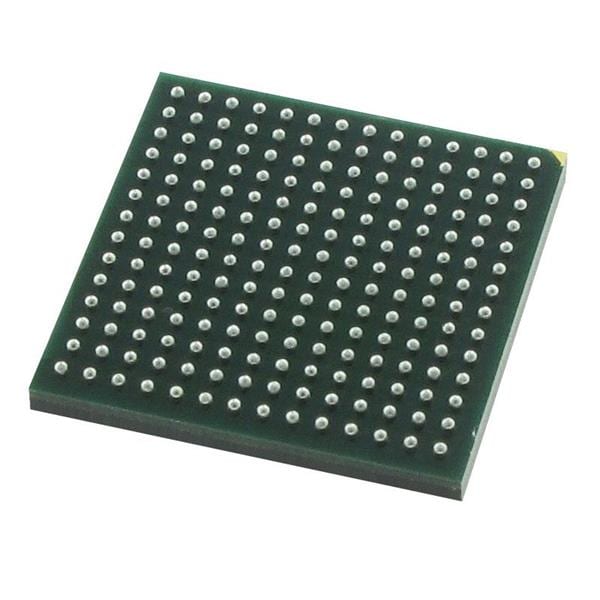
Where RF receivers fit in a wireless system
An RF receiver is responsible for capturing incoming radio signals and converting them into usable data or intermediate signals for further processing. In practical terms, this means handling weak signals in noisy environments, supporting required wireless standards, and working within the power, size, and performance limits of the end product.
In many current designs, the receiver is not always a standalone chip. It may be embedded inside a Bluetooth LE SoC, a multiprotocol device, a Wi-Fi SoC, or a switch-oriented communications chipset that supports broader network functions. For engineers, the key task is not only to identify “receiver” functionality, but to select the right level of integration for the system architecture.
Common application scenarios
RF receiver devices are widely used in products that must receive wireless commands, sensor data, beacon signals, or network traffic with stable performance. Typical use cases include wireless sensor nodes, smartphone accessories, PC peripherals, remote controls, sports and fitness devices, and other embedded electronics where compact wireless connectivity is required.
Bluetooth Low Energy and related short-range wireless technologies are especially relevant when power consumption and small form factor are priorities. For example, devices such as the NXP QN9020/DY and Nordic Semiconductor NRF52832-QFAB-R illustrate how receiver capability is often integrated into broader wireless SoCs that also support protocol handling and control logic.
Integrated SoCs versus narrower receiver-focused designs
One of the first selection questions is whether the project needs a highly integrated wireless SoC or a device aimed at a more specific RF function. Integrated solutions can reduce BOM complexity, simplify board layout, and shorten development time, especially in Bluetooth LE or multiprotocol applications. Parts such as the Infineon BCM20736 family and the Nordic Semiconductor NRF52832-QFAB-R are examples of devices used where reception, protocol support, and embedded processing are combined in one package.
On the other hand, some systems require RF signal handling as part of a larger communications path that includes switching, filtering, shielding, or signal routing. In these designs, receiver performance must be considered alongside related building blocks such as RF multiplexers and signal conditioning components rather than as an isolated function.
Representative product directions in this category
The range of products associated with receiver functionality can vary significantly. Broadcom devices in this category include networking and wireless SoCs such as BCM53346A0IFSBLG, BCM53416A0IFSBG, BCM6715B0KFFBG, and BCM4366KMMLG, reflecting use cases where RF reception is part of an integrated communications platform. These types of components are often relevant in designs that combine wireless connectivity with switching or advanced data handling.
For low-power short-range wireless, examples from Infineon such as BCM20736ST, BCM20736S, BCM20732S, BCM20736E, BCM20736A1KML2G, and BCM20737S show the importance of Bluetooth Low Energy integration in compact devices. NXP and Nordic Semiconductor also represent common design paths where BLE or multiprotocol support is required for connected embedded products.
Key factors when selecting an RF receiver
The right component depends on the communication standard, target range, noise conditions, power budget, and software complexity of the application. A battery-powered sensor node may prioritize low-energy operation and protocol integration, while a gateway or wireless infrastructure design may need higher data throughput, richer networking functions, or tighter coexistence control.
Engineers should also look at packaging, pin count, and board-level integration. Compact packages such as QFN-EP, LGA, HVQFN, and SMD formats can support space-constrained layouts, but they also influence assembly and thermal design. If the surrounding RF path is complex, related elements like RF shields and layout discipline may have a direct effect on receive performance.
Receiver performance in the context of the full RF chain
No RF receiver works alone. End performance depends on the antenna path, matching network, interference environment, and nearby circuit activity. A well-chosen receiver can still underperform if the rest of the RF chain introduces loss, leakage, or coupling problems.
For this reason, system designers often evaluate receiver devices together with companion RF functions. Depending on the architecture, supporting categories such as couplers or modulator / demodulator components may be relevant when building a stable and efficient signal path. Looking at the complete chain helps avoid mismatches between protocol goals and actual field performance.
How to narrow down the right option
A practical way to compare parts in this category is to start from the wireless protocol and application class. If the project is centered on Bluetooth LE peripherals, wearables, or sensor nodes, integrated wireless SoCs from manufacturers such as Infineon, NXP, and Nordic Semiconductor may be the most efficient route. If the design belongs to a networking or data-transport platform, integrated communications devices from Broadcom may align better with the overall system requirement.
It is also useful to define early whether the receiver must operate as a standalone RF function or as one part of a broader embedded platform. That choice affects firmware effort, PCB complexity, external component count, and long-term scalability. In B2B sourcing, this kind of structured comparison is often more valuable than focusing only on a single headline feature.
Conclusion
This category is intended for buyers and engineers who need RF receiving capability in forms ranging from low-power wireless SoCs to more integrated communication chipsets. The best choice depends on how the receiver will interact with the rest of the design, including protocol requirements, power limits, packaging constraints, and supporting RF circuitry.
By evaluating the full signal path and the integration level your application actually needs, it becomes easier to select an RF receiver solution that supports stable wireless performance and a cleaner development process.
Get exclusive volume discounts, bulk pricing updates, and new product alerts delivered directly to your inbox.
By subscribing, you agree to our Terms of Service and Privacy Policy.
Direct access to our certified experts
