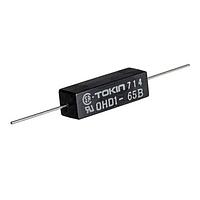
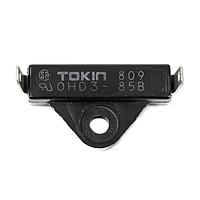
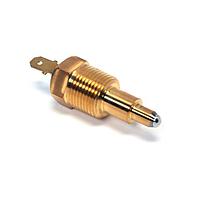
Thermostats
Temperature protection is often one of the simplest functions in a design, but it can also be one of the most critical. In control panels, power supplies, battery systems, HVAC assemblies, and embedded electronics, a reliable switching point helps prevent overheating, stabilize operation, and protect nearby components from unnecessary thermal stress.
Thermostats in this category are used where temperature needs to trigger a direct switching action rather than continuous analog measurement alone. They are commonly selected for compact thermal control, overtemperature cut-off, fan control, and equipment safety logic across industrial and electronic applications.
Where thermostats fit in temperature control systems
A thermostat is typically chosen when the application needs a clear threshold-based response: turn something on, turn it off, open a circuit, or signal that a temperature limit has been reached. This makes thermostats useful in systems where a simple, dependable thermal decision is more practical than a full closed-loop control scheme.
In many designs, thermostats work alongside other sensing components. For example, a system may use board mount temperature sensors for monitoring and compensation, while a thermostat provides a separate hardware-level protection layer. That combination is especially relevant in electronics where both measurement and fail-safe switching are required.
Typical applications across industrial and electronic equipment
Thermostats are widely used in assemblies that generate heat or must stay within a safe operating window. Common examples include power conversion equipment, motor protection circuits, lighting systems, battery packs, thermal management modules, and compact appliances integrated into industrial environments.
They are also relevant in broader environmental control strategies. In some installations, a thermostat acts as a straightforward local switching device, while other sensing technologies such as environmental sensors provide ambient data for the wider system. This helps engineers separate local component protection from overall air quality, humidity, or room-condition monitoring.
Common thermostat types and selection logic
Although implementations vary, buyers usually compare thermostats based on a few practical criteria: the switching temperature, mounting style, electrical interface, package size, and how the device behaves at the threshold. Some applications need a compact surface-mount solution for PCB-level protection, while others prefer a more traditional thermal switch format for direct equipment integration.
Another important factor is the required output behavior. In electronic designs, engineers may look for options such as push-pull or open-drain output, depending on how the thermostat will connect to alarms, microcontrollers, or shutdown circuits. Mechanical and solid-state approaches each have their place, so the right choice depends on response expectations, design constraints, and the criticality of the protection function.
Representative products in this category
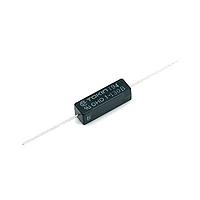
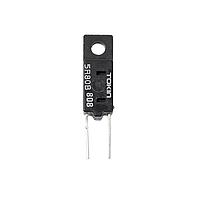
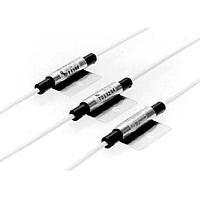
This category includes examples from established component manufacturers such as KEMET and Microchip. From KEMET, models like the TRS5-110BLRVU, TRS5-120BLRVU, and TRS5-130BLRVU illustrate the role of thermostat devices used for fixed-temperature switching in compact thermal protection tasks.
For semiconductor-based temperature switching, the Microchip MCP9510HT-E/CH is a useful reference point. It represents a temperature switch format suited to PCB-oriented designs where space, integration, and signal compatibility matter. These examples help show the range within the thermostat category, from direct thermal cutoff components to device-level switching solutions for embedded systems.
How to choose the right thermostat for your application
Selection usually starts with the actual thermal event you need to control. Define whether the thermostat is intended for overheating protection, fan activation, temperature warning, process stabilization, or automatic reset behavior. The physical location of the hot spot also matters, because the mounting method and thermal coupling strongly affect real-world switching performance.
Next, review the electrical side of the design. Consider supply conditions, output compatibility, load characteristics, and whether the thermostat will interface directly with control electronics or act as a stand-alone switching element. If the thermal event is related to media flow or system efficiency, it may also be useful to look at complementary technologies such as flow sensors & pitot tubes when diagnosing the root cause of temperature rise in process equipment.
Thermostats compared with other sensor categories
Thermostats are different from continuous measurement sensors because their main function is decision-making at a threshold. Instead of supplying a rich stream of temperature data, they are designed to trigger action when a defined limit is reached. That makes them highly practical in protection circuits, simplified control schemes, and redundant safety layers.
In more advanced architectures, they can be part of a wider multi-sensor design. Pressure, flow, and temperature may all affect thermal stability, especially in industrial equipment. In those cases, a thermostat is not a replacement for broader instrumentation, but a focused component that adds direct thermal protection where it is needed most.
Manufacturer landscape and sourcing considerations
The products shown in this category reflect a mix of component-oriented and industrial technology ecosystems. Brands such as KEMET and Microchip are relevant when the design requires integration into electronic assemblies, while the wider manufacturer landscape in temperature and sensing technologies helps buyers compare packaging styles, switching methods, and application fit.
When sourcing thermostats for B2B projects, it is useful to evaluate both immediate compatibility and long-term maintenance needs. Engineers and procurement teams typically review the required switching profile, installation format, and system role before narrowing the shortlist. This leads to a more dependable selection than choosing only by nominal temperature point.
Finding the right thermostat for reliable thermal protection
A well-matched thermostat supports equipment safety, improves thermal reliability, and adds a practical switching layer to larger control systems. Whether the requirement is PCB-level shutdown, localized overheating protection, or a simple threshold trigger, the right device depends on how the thermal event appears in the actual application.
Explore the available thermostat options in this category with attention to switching behavior, integration method, and system context. For many industrial and electronic designs, that approach leads to better protection performance and a cleaner overall temperature management strategy.
Get exclusive volume discounts, bulk pricing updates, and new product alerts delivered directly to your inbox.
By subscribing, you agree to our Terms of Service and Privacy Policy.
Direct access to our certified experts