
Fans & Blowers
Keeping enclosures, power electronics, control cabinets, and embedded systems within a stable operating temperature range often depends on one simple but critical component: Fans & Blowers. In thermal management, the right airflow solution helps remove heat, reduce thermal stress, and support more reliable performance across industrial and electronic applications.
This category brings together cooling devices used to move air through or across equipment where passive dissipation is not enough. Whether the priority is compact forced-air cooling, higher static pressure for restrictive paths, or replacement parts for existing assemblies, selecting the right fan format and performance profile can make a measurable difference in system design.
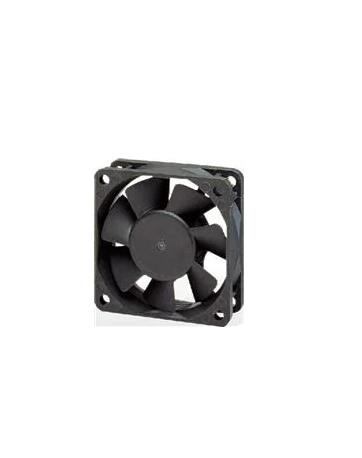
Where fans and blowers fit in thermal management
Air movement is a core part of many cooling strategies. In practical terms, fans and blowers help carry heat away from heat-generating components such as power supplies, drives, processors, communication hardware, and densely packed control electronics. They are often used alongside heat sinks, vents, filters, and other thermal accessories to maintain acceptable operating conditions.
Compared with passive cooling alone, forced-air cooling is especially useful when equipment density increases or ambient temperatures become more demanding. In many systems, airflow selection is not only about lowering temperature, but also about balancing noise, power draw, mounting constraints, and long-term serviceability.
Understanding the difference between fan and blower formats
Although the terms are sometimes used interchangeably, fans and blowers are typically chosen for different airflow conditions. Axial fans are commonly used when a system needs relatively direct airflow through open or moderately restrictive paths. They are often found in panel cooling, chassis ventilation, telecom hardware, and electronics housings.
Blowers are generally more suitable when air must be pushed through tighter spaces, ducts, or assemblies with higher resistance. This distinction matters because thermal performance depends not just on air volume, but also on static pressure. In compact equipment with filters, grilles, or dense internal layouts, that pressure capability can be just as important as nominal airflow.
Typical product types available in this category
This range includes compact DC axial fans, flange-mount units, and supporting thermal accessories used in broader cooling assemblies. Examples from this category include the Aavid PAAD26015BH PF00 Advance Series, Aavid PEAD28038BH PF00, Aavid PEAD28038BH MF00, and Aavid PEAD28025BM PF00, which illustrate the variety of form factors used in electronics and equipment cooling.
For applications that require monitored operation or specific electrical characteristics, products such as the Delta Electronics, Inc. GFC0612DW-F00, Delta Electronics, Inc. FFB1212VHE-F00, and Delta Electronics, Inc. FFB0924VH-R00 show how DC fan solutions may be selected around frame size, voltage, airflow, sensor options, and installation needs. Supporting parts like Aavid 6110G1BD or the 3M 19.05MM-20.57MM-25-8810 accessory also highlight that effective cooling often depends on the surrounding hardware, not just the fan itself.
How to choose the right airflow solution
A good starting point is the thermal load and the physical path the air must take. Open ventilation paths may allow a standard axial design, while more restrictive assemblies may need a blower or a higher-pressure fan. Designers and buyers should also consider frame dimensions, supply voltage, expected operating environment, and whether feedback features such as speed or alarm sensing are needed for system monitoring.
Noise and lifecycle requirements are also important in industrial and commercial equipment. Ball bearing designs, speed control, and sensor-enabled models can be relevant where maintenance access is limited or where uptime matters. If temperature monitoring is part of the overall strategy, it can also be useful to review related devices such as industrial temperature sensors or thermistors for more complete thermal control.
Leading manufacturers in this category
This category includes products from recognized suppliers used across electronics and industrial thermal management. Aavid is well known in thermal solutions and appears here with both fan products and related accessories, making it relevant for users building or maintaining integrated cooling assemblies.
Delta Electronics, Inc. is another important manufacturer in this space, with DC fan models suited to a range of airflow and mounting requirements. Additional context in the category also includes brands such as 3M and ams OSRAM, which may be relevant where thermal management involves not only air movement but also accessory components and broader system integration.
Applications across industrial and electronic equipment
Fans and blowers are widely used in control panels, embedded computers, communication devices, instrumentation, power conversion equipment, LED-related assemblies, and compact industrial systems. Their role is often preventive: reducing hot spots, stabilizing internal temperatures, and helping components operate within intended limits during continuous duty.
In many projects, airflow devices are selected as part of a broader protection strategy. Overtemperature sensing and cutoff components may be added where extra safeguards are needed, so engineers comparing cooling architectures may also look at complementary products such as thermal cutoffs. This helps frame fans and blowers not as isolated parts, but as one layer in a complete thermal management approach.
What matters when replacing an existing fan or blower
Replacement selection should start with the installed unit’s mechanical footprint, thickness, mounting style, and electrical compatibility. After that, the most important functional checks are airflow behavior, pressure capability, connector or lead configuration, and any monitoring features used by the equipment. Even when two units appear similar in size, their operating characteristics may differ in ways that affect cooling results.
It is also worth considering the real operating conditions rather than only the nominal specification. Dust, restricted ventilation, elevated ambient temperature, and continuous run time can all change what is needed from a replacement. For maintenance teams and OEM buyers, choosing with the full thermal path in mind helps reduce repeat failures and unnecessary overdesign.
Build a more reliable thermal management setup
Choosing the right airflow component is ultimately about matching the cooling method to the system, not simply selecting a fan by size alone. From compact DC axial units to blower-style solutions and supporting accessories, this category supports a wide range of thermal design and replacement needs.
If you are comparing options for enclosure cooling, electronics protection, or system-level thermal control, reviewing airflow requirements together with sensing and protection components will usually lead to a more dependable result. A well-matched selection of fans, blowers, and thermal support components can help improve thermal stability, support uptime, and simplify maintenance over the product lifecycle.
Get exclusive volume discounts, bulk pricing updates, and new product alerts delivered directly to your inbox.
By subscribing, you agree to our Terms of Service and Privacy Policy.
Direct access to our certified experts
