Thermal Interface
Managing heat at the component level often comes down to one critical detail: how efficiently thermal energy moves from a device into a heatsink, chassis, or enclosure surface. In practical electronics design and assembly, that gap-filling layer can make a meaningful difference in operating stability, reliability, and service life. This is where Thermal Interface materials fit into the thermal management chain.
This category brings together materials and accessories used to improve heat transfer between mating surfaces, reduce air gaps, and support cleaner mechanical contact in electronic assemblies. It is especially relevant for power devices, compact boards, industrial controls, LED systems, and other applications where thermal resistance must be managed without overcomplicating the build.
What thermal interface materials do in real applications
No machined surface is perfectly flat. Even when a component and heatsink appear smooth, microscopic irregularities create small air pockets that weaken heat transfer. Thermal interface materials help fill those gaps so heat can move more efficiently from the source into a cooling structure.
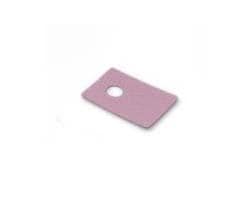
Depending on the assembly method, designers may use sheets, pads, tapes, adhesive materials, or mounting accessories. In many cases, the objective is not only better thermal coupling, but also easier installation, electrical isolation where required, and more consistent long-term contact pressure across the interface.
Common product forms in this category
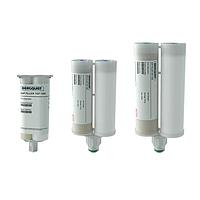
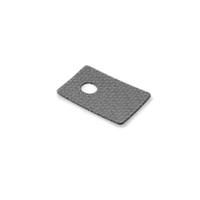
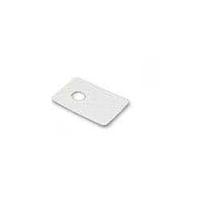
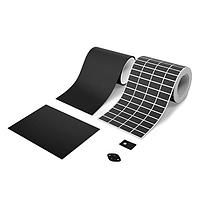
The products shown in this category typically support thermal transfer in different ways. Heat-resistant sheets, tapes, and adhesive agents are commonly selected when engineers need a thin interface layer that can conform to surface variation while also fitting an assembly workflow. Examples in this range include Panasonic parts such as EYG-A121802DM, EYG-Y0912QN4S, and EYG-R1818ZLX2, along with 3M options such as 3764-TC.
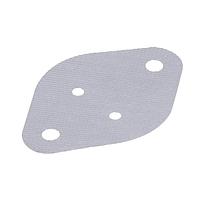
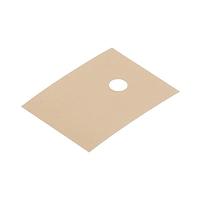
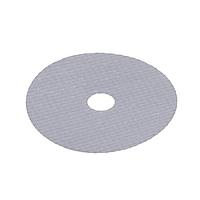
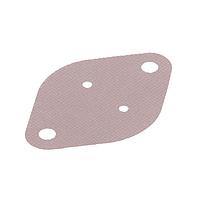
Other items in the category play a supporting role in heatsink attachment and insulation. For example, Aavid solutions such as the 4880SG Thermalsil III TO-220 mounting kit and the 53-77-4G thermal pad are relevant when working with package-specific mechanical interfaces. These types of products are often chosen not as standalone cooling devices, but as part of a broader heatsink and mounting strategy.
Selection factors that matter in engineering and procurement
Choosing the right interface material usually starts with the assembly itself. Engineers often evaluate the mating surfaces, allowable thickness, mechanical compression, rework needs, insulation requirements, and whether the interface must also provide adhesion. A tape or adhesive-based material may simplify assembly, while a pad or sheet may be more appropriate when serviceability or dimensional consistency is important.
Thermal performance should be considered alongside manufacturability. A very thin material may reduce interface resistance, but only if the surface finish, flatness, and mounting pressure are well controlled. In production environments, repeatability can be just as important as nominal thermal properties, especially for assemblies exposed to vibration, thermal cycling, or long operating hours.
It is also useful to review the wider thermal design rather than selecting the interface layer in isolation. If heat buildup is driven by airflow constraints, a stronger interface material alone may not solve the problem, and complementary hardware such as fans and blowers may need to be considered as part of the overall cooling approach.
Typical use cases across electronics and industrial equipment
Thermal interface products are commonly used with power semiconductors, voltage regulation sections, motor control electronics, power supplies, communication modules, and LED assemblies. In these systems, even small improvements in thermal contact can help maintain component temperatures within a more reliable operating window.
They are also useful in compact enclosures where direct airflow is limited and heat must be conducted into a metal frame or spreader. In such designs, interface sheets, pads, or tapes can help bridge uneven surfaces between the heat source and the mechanical structure without requiring extensive machining or highly customized mounting parts.
Examples from leading manufacturers in this category
This selection includes solutions from PANASONIC, 3M, and Aavid, each representing a slightly different role in thermal interface design. Panasonic products in the EYG and EYGA series illustrate the use of heat-resistant sheet, tape, and adhesive formats for electronics assembly. 3M materials such as 165PR4A and 3764-TC are relevant where thermal transfer and adhesive integration are needed in the same interface layer.
Aavid products are especially useful when the thermal path involves a specific semiconductor package and heatsink mounting arrangement. The 4880SG kit and 53-77-4G pad show how interface materials can be paired with mechanical fastening and insulation considerations, particularly in TO-220-related applications.
How thermal interface products fit into a broader thermal management strategy
An interface layer should be viewed as one part of a complete thermal system. Heat still needs a path away from the component, and the success of that path depends on package design, heatsink size, enclosure geometry, airflow, and operating conditions. For this reason, thermal interface selection is often coordinated with temperature monitoring and protective components elsewhere in the design.
Where thermal feedback is important, engineers may also review related components such as board mount temperature sensors or thermal cutoffs. These categories support a more complete approach to heat control by helping monitor or limit temperature in the final system.
Practical buying considerations for B2B sourcing
For procurement teams, the right product choice is not only about thermal performance on paper. It is also about fit with the production process, consistency across batches, package compatibility, and whether the product supports manual assembly, automated placement, or field service requirements. Adhesive-backed materials, die-cut formats, and package-specific accessories can all affect total assembly efficiency.
When comparing options, it helps to align purchasing decisions with the application profile: prototype work, pilot production, or stable volume manufacturing. A part that works well in a lab setup may not always be the most efficient choice for repeatable industrial assembly, especially where handling, placement accuracy, or replacement cycles matter.
Finding the right thermal interface for your application
If your project involves moving heat from semiconductors or other power-dense parts into a heatsink or enclosure wall, this category provides a practical starting point. The available range covers interface sheets, tapes, adhesive materials, thermal pads, and mounting accessories used to improve thermal contact in real assemblies.
A good selection process balances thermal transfer, electrical and mechanical requirements, assembly method, and long-term reliability. By reviewing the interface layer in the context of the full cooling path, buyers and engineers can narrow down products that better match the application instead of choosing by specification alone.
Get exclusive volume discounts, bulk pricing updates, and new product alerts delivered directly to your inbox.
By subscribing, you agree to our Terms of Service and Privacy Policy.
Direct access to our certified experts