Thermoelectric Assemblies
Precise thermal control often requires more than passive heat sinking or airflow alone. In compact electronics, sealed enclosures, analytical instruments, telecom cabinets, and industrial systems, thermoelectric assemblies provide an active approach to heating and cooling when temperature stability, localized control, or space efficiency matter.
This category brings together thermoelectric cooling and temperature-management solutions used to move heat across a module, stabilize sensitive components, and support system-level thermal design. Depending on the application, that can mean air-to-air cooling, direct-to-air heat transfer, liquid-to-air exchange, or integration of Peltier-based assemblies into a broader thermal control architecture.
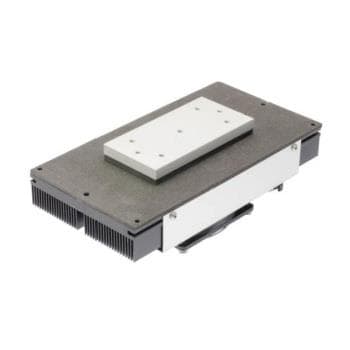
Where thermoelectric assemblies fit in thermal design
Unlike conventional passive components, thermoelectric assemblies actively transfer heat when electrical power is applied. This makes them useful in systems that need controlled cooling below ambient, stable internal temperatures, or compact thermal regulation without refrigerants or complex mechanical compression systems.
They are commonly selected for applications where engineers need targeted cooling for electronics, optical devices, medical or laboratory equipment, control panels, and outdoor or industrial enclosures. In these environments, the ability to manage heat at the point of need can improve reliability, performance consistency, and operating life.
Main solution types in this category
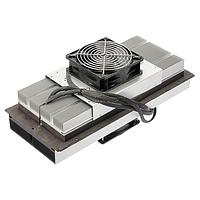
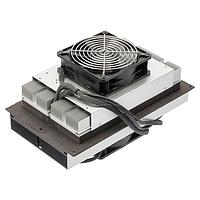
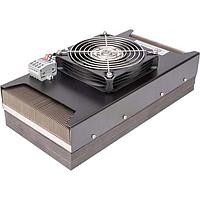
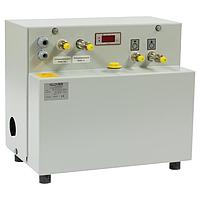
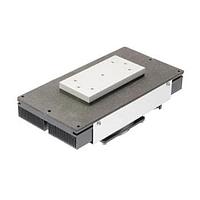
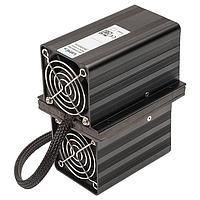
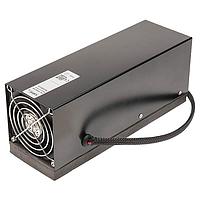
This category covers several practical configurations rather than a single product format. Air-to-air assemblies are often used when heat must be moved between two isolated air paths, such as in enclosure cooling. Direct-to-air units are typically chosen when a device or internal zone needs active cooling with airflow on the heat rejection side.
Liquid-to-air assemblies are relevant when heat is collected through a liquid loop and then dissipated to ambient air, which can be useful in higher heat-density systems or where remote heat transport is needed. In addition, TEC and Peltier assemblies support OEM integration, giving designers flexibility to build custom thermal control subsystems around the core thermoelectric element.
Representative products and configuration examples
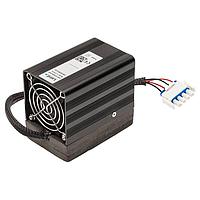
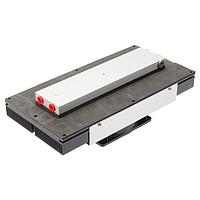
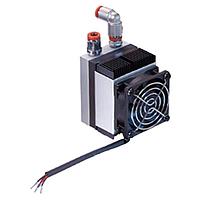
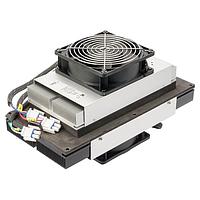
Several products in this category illustrate the range of available approaches. From Laird Thermal Systems, examples include the DA-051-24-02-00-00 Direct-to-Air KYLSYSTEM 24V, the 387002414 Direct-to-Air DA-280-24-02-00-00, and compact air-to-air options such as the AA-033-12-22-00-00 and 387000919 AAT-027-12-22-00-00.
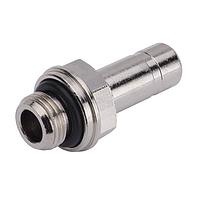
For liquid-assisted thermal management, the LA-024-12-02-00-00 and LA-115-24-02-00-00 show how liquid-to-air formats can address different power and size requirements. The category also includes TEC-oriented items such as the 1109.00 WW 5001, 1155.00 OW 4002, DA-039-12-02-00-00, and the L-ADAP-8-1/8 accessory, which are relevant when the thermoelectric module is part of a larger engineered assembly.
On the heat-exchanger side, Aavid contributes liquid-to-air solutions such as the 4210G10SB-G9 and 4105G1SB-D9 tube-fin heat exchangers. These examples help define the category scope: not just individual modules, but practical thermal assemblies that support complete cooling strategies.
How to choose the right thermoelectric assembly
Selection usually starts with the thermal load and the target temperature conditions. Engineers typically review cooling capacity, available input voltage, current limits, ambient conditions, and the required temperature difference between the cooled object and the surrounding environment. Physical size and mounting constraints are equally important, especially in compact cabinets or instrument housings.
System architecture also matters. If the application depends on forced convection, the performance of fans and blowers can directly affect heat rejection and overall stability. If temperature feedback is part of the control loop, pairing the assembly with industrial temperature sensors can help improve monitoring, regulation, and protection.
For OEM integration, it is also worth considering whether the goal is a prebuilt assembly or a more modular design around a TEC. Preconfigured air-to-air, direct-to-air, or liquid-to-air units can simplify implementation, while TEC assemblies may offer more freedom for custom mechanical and control design.
Common application scenarios
Thermoelectric assemblies are well suited to applications where contamination control, orientation flexibility, low maintenance, or compact form factor are priorities. They are often used in electronics enclosures, imaging systems, laboratory instruments, battery-related subsystems, kiosks, and communication equipment where stable internal temperature helps maintain performance.
They can also be useful when localized cooling is needed for a specific device instead of the entire machine. That approach may reduce energy use at the system level and simplify thermal zoning, particularly in equipment with uneven heat generation or mixed-sensitivity components.
Integration considerations for reliable operation
Performance in the field depends not only on the assembly itself but also on how the full system is designed. Heat rejection path, airflow management, insulation, condensation risk, power supply quality, and control strategy all influence whether the expected cooling effect is achieved in real operating conditions.
For safety-oriented designs, supporting components such as thermal cutoffs may be relevant where overtemperature protection is required. In more tightly regulated thermal loops, sensing elements such as thermistors or board-level sensors can help fine-tune response, especially in compact electronics or embedded platforms.
Finding the right fit for your system
This category is designed for buyers and engineers who need more than generic cooling hardware. Whether the priority is a compact air-to-air solution, a direct-to-air assembly for localized active cooling, a liquid-to-air configuration, or a TEC-based building block for a custom design, the available range supports different heat loads, installation constraints, and control strategies.
Review the thermal path, available power, environmental conditions, and integration method before selecting a model. A well-matched thermoelectric assembly can help deliver stable temperature control, improved equipment reliability, and a cleaner overall thermal design for demanding industrial and electronic applications.
Get exclusive volume discounts, bulk pricing updates, and new product alerts delivered directly to your inbox.
By subscribing, you agree to our Terms of Service and Privacy Policy.
Direct access to our certified experts