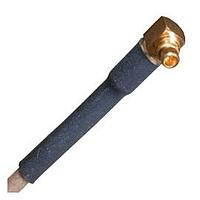
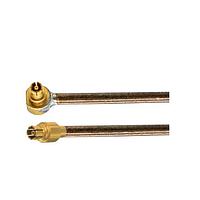
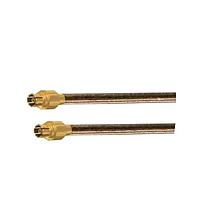
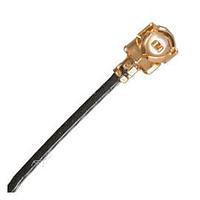
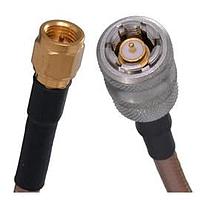
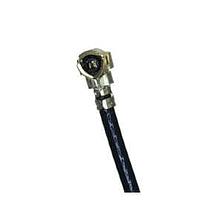
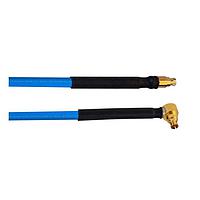
RF Cable Assemblies
Reliable signal transmission depends on more than connector compatibility alone. In RF systems, the cable assembly itself plays a major role in maintaining impedance, controlling loss, reducing interference, and simplifying installation across test setups, communications equipment, industrial electronics, and embedded hardware.
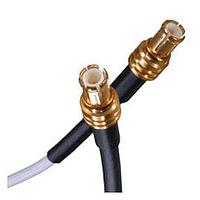
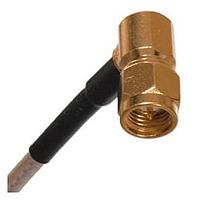
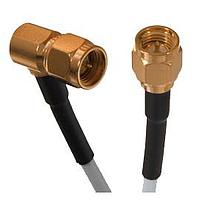
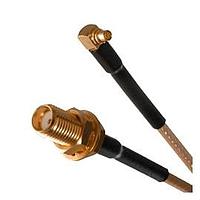
RF Cable Assemblies are used wherever high-frequency signals need a ready-to-install interconnect between devices, modules, antennas, instruments, or panel interfaces. This category is especially relevant for engineers and buyers looking for practical coaxial solutions in defined lengths, connector combinations, and cable types without moving into fully custom cable design.
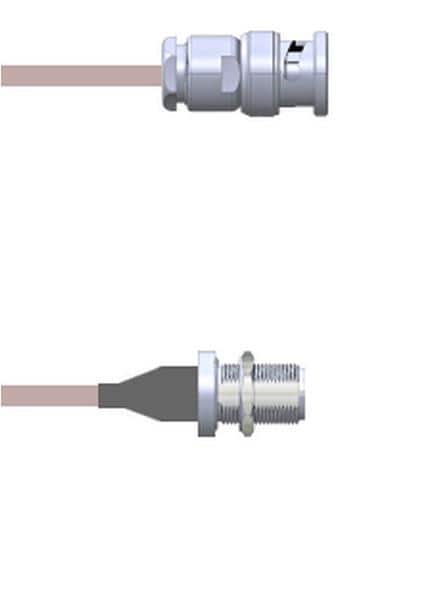
Where RF cable assemblies fit in real applications
These assemblies are commonly selected for laboratory measurement systems, wireless infrastructure, antenna routing, embedded communication devices, and general electronic integration. A pre-terminated coaxial assembly helps reduce assembly time, improves consistency, and lowers the risk of installation errors compared with building cables from loose components.
In many projects, the requirement is not just “a cable,” but a stable RF link with predictable electrical behavior. That is why buyers typically evaluate cable type, connector style, length, flexibility, shielding, and routing conditions together. For adjacent interconnect needs outside RF, teams may also compare options such as Ethernet and networking cables when the application is carrying data rather than radio-frequency signals.
What to consider when selecting an assembly
The most important starting point is the signal path. In RF applications, cable assemblies are often chosen around impedance matching, insertion loss, mechanical flexibility, and connector interface requirements. A mismatch in any of these areas can affect measurement quality, link stability, or overall system efficiency.
Length also matters. Short assemblies may be preferred in compact instrument racks or bench setups, while longer runs are used when antennas, outdoor equipment, or remote mounting points are involved. The right choice depends on balancing attenuation, handling needs, bend radius, and environmental constraints rather than selecting by length alone.
Another practical consideration is connector combination. Assemblies may be used to bridge interfaces between instruments, modules, and installed hardware, so the cable must suit both the electrical path and the physical connection points. For buyers working across multiple interconnect formats, related categories such as computer cables may be relevant elsewhere in the system, but RF links should be chosen according to signal-frequency demands.
Common cable families seen in this category
This category includes coaxial assemblies built around widely recognized cable constructions such as RG and LMR families. In practical terms, these names often indicate differences in flexibility, shielding style, physical size, and suitability for shorter patch leads versus longer, lower-loss runs.
For example, RG58-based assemblies are often considered for lighter-duty routing or shorter connections, while larger formats such as LMR-400 or LMR-900 are more aligned with installations where signal loss over distance becomes a more important factor. Flexible variants can also be useful where tight routing or repeated handling is expected. The exact choice should always be aligned with the intended frequency range, path length, and mechanical installation conditions.
Examples of products in the range
Several assemblies in this category illustrate the variety of cable and connector combinations available. Shorter options such as the Amphenol RG55-NF-NM(QTY:5ft) Cable Coaxial can suit compact interconnect tasks, while products like the Amphenol LMR-240-UF-FR-1meter Cable Coaxial address applications where a short, flexible RF link is needed between nearby devices.
For longer runs, assemblies such as the Amphenol LMR-400-DB-NM-NF(QTY:19ft) Cable Coaxial, Amphenol RG213-NF-NF(QTY:20M) Cable Coaxial, and Amphenol LMR-900-FR-NM-NM(QTY:150ft) Cable Coaxial show how this category supports different installation distances and cable formats. There are also options like the Amphenol RG58-BM-SM(QTY:13m) Cable Coaxial and Amphenol RG142-NM-UM(QTY:90M) Cable Coaxial for users with specific connector-end requirements.
These examples should be viewed as representative solutions rather than one-size-fits-all choices. The best assembly is the one that matches the electrical interface, routing layout, and expected operating conditions of the end system.
Manufacturers and sourcing considerations
Amphenol is prominently represented in this category, with multiple coaxial cable assemblies covering different cable types, lengths, and connector configurations. For many procurement teams, that breadth is useful when standardizing on a known supplier while still needing flexibility across project requirements.
Depending on broader system design, buyers may also compare offerings from other interconnect-focused manufacturers available across the platform, including Amphenol RF for related RF connectivity context. The key is to source assemblies from manufacturers that align with the required connector ecosystem, documentation expectations, and long-term maintenance strategy.
How to narrow down the right RF assembly
A practical selection workflow starts with four questions: what interfaces are on each end, how long is the run, how much loss can the application tolerate, and what mechanical routing conditions will the cable face? From there, it becomes easier to narrow the shortlist by cable family, connector gender, connector series, and jacket or flexibility requirements.
It also helps to separate fixed installation needs from service or test needs. A cable intended for a static routed path may be chosen differently from one used in repeated bench testing, where flexibility and handling durability matter more. If the application mixes RF with other signal types, related categories such as audio and video cables may support non-RF portions of the design, but the RF path should remain specified around coaxial performance first.
Why pre-assembled RF cables are often preferred
Using factory-terminated assemblies can improve consistency in both procurement and installation. Instead of separately sourcing cable, connectors, and termination tools, teams can order a finished assembly that is ready to deploy, helping reduce assembly labor and the variability that can come with manual termination.
This is especially helpful in production support, field maintenance, prototype builds, and test environments where time and repeatability are important. A properly selected assembly supports cleaner system integration, more predictable RF performance, and easier replacement planning when cables need to be swapped or upgraded later.
Final notes for buyers and engineers
Choosing an RF cable assembly is ultimately about matching electrical performance with practical installation needs. Cable family, connector interface, length, flexibility, and application environment all influence whether an assembly will perform as expected once installed.
This category is designed to support that selection process with ready-to-use coaxial options from established suppliers and across a range of routing scenarios. If you are comparing assemblies, focus first on the actual signal path and connection points, then narrow by cable construction and mechanical constraints to find a solution that fits the system with fewer compromises.
Get exclusive volume discounts, bulk pricing updates, and new product alerts delivered directly to your inbox.
By subscribing, you agree to our Terms of Service and Privacy Policy.
Direct access to our certified experts