
Sensor / Actuator Cables
Reliable field wiring is essential when sensors, switches, valves, and actuators need to communicate with control hardware without introducing unnecessary installation time or connection risk. In industrial automation, pre-terminated cable assemblies help simplify panel-to-device connections, improve consistency, and support faster maintenance in machines, process lines, and distributed I/O systems.
Sensor / Actuator Cables are commonly selected where repeatable connections, compact interfaces, and dependable signal or power delivery matter. This category is relevant for OEM machine builders, system integrators, and maintenance teams looking for ready-to-use cable assemblies that fit into broader automation and connectivity requirements.
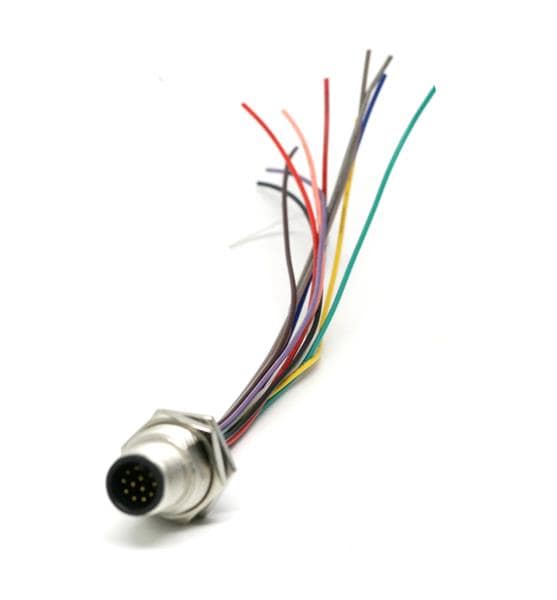
Where sensor and actuator cable assemblies are used
These cable assemblies are typically found in industrial control cabinets, machine tools, packaging equipment, conveyors, robotics cells, and factory sensing networks. They connect field devices such as proximity sensors, photoelectric sensors, limit switches, and actuators back to PLCs, I/O modules, junction blocks, or interface points.
Compared with loose cable and on-site termination, pre-assembled solutions can reduce wiring errors and help standardize installation across multiple machines. In applications that demand stable routing, cleaner cable management, and quicker replacement during service, using the right assembly often improves uptime and simplifies troubleshooting.
Common cable types within this category
The category can include different assembly styles depending on connector format, routing method, and the type of signal being carried. Some designs are intended for low-level signal transmission, while others support combined power and signal paths between field devices and controllers.
For example, Amphenol appears in this category with several assembly types, including coaxial cable assemblies and circular connector harnesses. While a coaxial assembly and a sensor harness are used in different connection scenarios, both reflect the broader need for durable, pre-configured interconnect solutions in industrial and electronic systems.
Representative products in the range
Several listed products illustrate the variety available in this category. The Amphenol Q-2403Y000H060i Coaxial Cable Assembly and Amphenol Q-1T03S0003003M Coaxial Cable Assembly are examples of ready-made assemblies for controlled signal transmission where connector compatibility and cable length are important selection points.
On the harness side, products such as the Amphenol GTC01LCFZ24-3SW-025-B30-LC Circular connector harness and Amphenol GTC01LCF24-21PX-025 Circular connector harness show how pre-terminated circular connectivity can support robust interfaces in harsher industrial environments. The 3M 9V4-S6L-VAT-3.00 QDD ASSY Other Cable Assembly is another example of how this category can also include specialized interconnect assemblies for more application-specific system layouts.
What to consider when selecting sensor / actuator cables
The right choice usually depends on the device interface, mating connector style, cable length, routing constraints, and the operating environment. Buyers should confirm whether the application involves signal-only transmission, mixed signal and power, or a specialized interface that requires a particular assembly format.
Mechanical fit is just as important as electrical compatibility. A cable that must pass through tight machine frames or flex repeatedly may need a different construction approach than one used in static cabinet wiring. For projects that also involve networked devices or controller communications, it may be useful to review related options such as Ethernet / Networking Cables when planning the overall connectivity architecture.
Benefits of pre-assembled cables in industrial environments
Pre-terminated assemblies help reduce field labor because connectors are already attached and matched to the cable design. This can shorten installation time, especially in multi-device systems where repeated manual termination would increase the chance of pinout mistakes or inconsistent workmanship.
They also support more predictable maintenance. When a cable fails or is damaged, replacing one complete assembly is often faster than reworking conductors on site. In environments with vibration, motion, or regular service intervals, that speed can make a practical difference for maintenance teams and production planners.
How this category fits into a broader cable ecosystem
Sensor and actuator connectivity rarely exists in isolation. A machine or system may combine field-device cables with data, control, and equipment interconnects across several cable families. Depending on the application, buyers may also need computer cables for industrial PCs or HMI connections, or more specialized assemblies for adjacent subsystems.
This is why category-level evaluation matters. Rather than choosing by part number alone, it helps to consider the full installation path: controller side, field side, cable routing, replacement strategy, and compatibility with the rest of the machine. That approach usually leads to a more reliable and easier-to-maintain wiring design.
Manufacturer context and sourcing considerations
Manufacturer consistency can be important for projects that need repeatable sourcing across builds or maintenance cycles. In this category, examples from Amphenol and 3M highlight two recognized suppliers of interconnect-related products used across industrial and electronic applications.
When comparing options, procurement teams often look beyond the connector style alone. Availability, assembly format, replacement planning, and alignment with existing installed hardware all affect the final decision. For B2B buyers, selecting a cable assembly is usually part of a broader reliability and lifecycle strategy, not just a one-time purchase.
Finding the right fit for your application
Sensor / Actuator Cables are best evaluated in the context of the equipment they support: the type of sensor or actuator, the control interface, the installation environment, and the expected maintenance workflow. Pre-assembled cable solutions can help streamline deployment while supporting cleaner, more repeatable wiring practices.
If you are narrowing down options, focus on connector compatibility, assembly style, routing needs, and the role the cable plays in the full system. A well-matched cable assembly can make installation simpler today and maintenance easier over the long term.
Get exclusive volume discounts, bulk pricing updates, and new product alerts delivered directly to your inbox.
By subscribing, you agree to our Terms of Service and Privacy Policy.
Direct access to our certified experts
