Flat Cables
Space is often limited inside control panels, instrumentation assemblies, compact electronics, and wire harnesses. In these environments, cable routing is not just about making a connection—it also affects installation speed, airflow, bend management, and long-term reliability. Flat Cables are widely used when designers need organized conductor spacing, clean routing paths, and predictable termination across multiple contact positions.
This category brings together cable formats used in board-to-board, board-to-wire, internal equipment wiring, and compact interconnect layouts. Depending on the application, users may be looking for standard ribbon constructions, round-to-flat designs, jacketed versions, or flexible jumper styles for tighter routing requirements. The right choice usually depends on conductor count, pitch, insulation material, voltage needs, operating temperature, and the type of connector system used at each end.
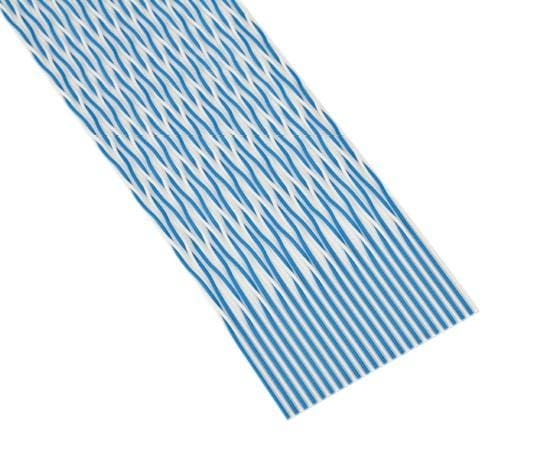
Where flat cable designs are commonly used
Flat cable constructions are common in electronic equipment, control systems, test fixtures, embedded devices, and industrial assemblies where multiple conductors need to stay aligned. The flat profile helps simplify routing through narrow spaces and can make termination more consistent when paired with insulation displacement or other multi-position connector systems.
Compared with loose discrete conductors, a multi-conductor flat format can reduce wiring complexity in applications that benefit from clear conductor spacing and easier cable organization. In many builds, this helps with serviceability as well, since circuits remain easier to identify and manage during installation or maintenance.
Key cable types within this category
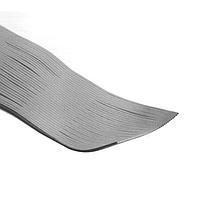
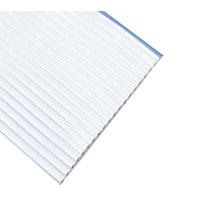
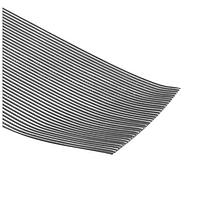
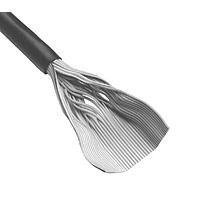
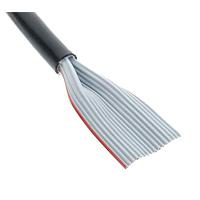
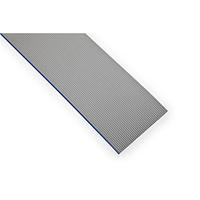
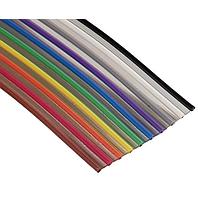
Not all flat cable products serve the same purpose. Some are designed as classic ribbon cable for general signal routing, while others are built as round-to-flat constructions that combine a compact conductor arrangement with handling characteristics suited to specific terminations. There are also jacketed variants for added protection and flexible jumper styles intended for compact devices.
Examples in this range include products from 3M Electronic Solutions Division and Molex. Representative options include the 3M Electronic Solutions Division HF100/30TP twisted cable, the 3M Electronic Solutions Division 3609/30 round-to-flat cable, the 3M Electronic Solutions Division 3603/10-100 jacketed flat cable, and Molex Premo-Flex RFC jumper styles such as 15061-3246 and 15061-2826. These examples illustrate the variety of pitch, flexibility, and packaging approaches available within the category.
Important selection factors
When comparing flat cable options, pitch and conductor count are usually among the first criteria to review. These affect connector compatibility, routing density, and the overall footprint of the wiring path. Smaller pitch constructions can support compact electronic assemblies, while wider spacing may suit more traditional ribbon cable interfaces.
Material and environmental requirements also matter. Depending on the product, cable designs in this category may use insulation materials such as polyolefin, FEP, or PVC, each with different tradeoffs related to flexibility, temperature range, and application environment. Voltage rating, shielding needs, and whether the cable is stranded or optimized for repeated movement should also be considered before final selection.
For applications exposed to elevated heat, it may also be helpful to review related options in temperature wire and cable. If the routing challenge is less about flat geometry and more about general internal wiring, hook-up wire may be a better fit for certain assemblies.
Understanding construction details in practical terms
Several construction details can influence performance in real installations. Conductor spacing affects termination compatibility and signal organization, while wire gauge influences current handling and mechanical robustness. Stranded constructions are often chosen where better flex behavior is needed, whereas other builds may prioritize compactness and stable conductor positioning.
Insulation and shielding are equally important in equipment design. Unshielded ribbon or jumper styles may be suitable for short internal runs in controlled environments, while shielded or jacketed variants can offer added protection where abrasion, electrical noise, or handling demands are greater. A product such as the 3M Electronic Specialty 7100162025 shielded/jacketed flat cable is an example of how flat cable designs can be adapted for applications needing a more protected cable structure.
Typical applications across industrial and electronic systems
Flat cable products are often selected for internal connections in control interfaces, instrumentation modules, compact machine electronics, display assemblies, and cable harnesses where space efficiency matters. In many cases, they support fast, repeatable assembly because the conductors remain in a defined arrangement throughout the run.
Flexible jumper styles such as Molex Premo-Flex products are commonly associated with compact interconnect layouts, especially where short, neat cable paths are important. More traditional ribbon and round-to-flat constructions can be useful for panel wiring, data paths between modules, and organized signal distribution inside enclosures or devices.
Where the application requires a different media type altogether, users may also compare solutions in fiber optics or broader specialized cables to match bandwidth, environment, or mechanical constraints.
Why manufacturer and ecosystem compatibility matter
In flat cable selection, the cable itself is only part of the decision. Buyers often need to confirm fit with connector families, contact spacing, assembly methods, and the overall interconnect architecture already used in a system. This is why established suppliers such as 3M, 3M Electronic Solutions Division, 3M Electronic Specialty, and Molex are often considered in projects where consistency and known interconnect ecosystems are important.
For procurement and engineering teams, staying within a familiar manufacturer ecosystem can simplify qualification, documentation, and replacement planning. It can also reduce risk when matching cables to existing connectors, jumper configurations, or standard assembly practices used across multiple products or production lines.
Choosing the right flat cable for your project
A good starting point is to define the electrical and mechanical requirements together rather than separately. Check the required number of conductors, contact spacing, cable length, bend path, voltage level, and expected temperature exposure. Then review whether the application needs a simple ribbon style, a more flexible jumper, or a jacketed and possibly shielded construction for added protection.
If the cable will be installed in a dense assembly, think about service access and connector orientation early in the design process. A carefully selected flat cable can support cleaner routing, easier installation, and better consistency across production builds without adding unnecessary bulk.
For engineers, buyers, and integrators working on compact electrical or electronic assemblies, this category offers practical options for organized multi-conductor routing. Reviewing pitch, materials, protection level, and termination compatibility will usually lead to a more reliable fit than choosing by form factor alone.
Get exclusive volume discounts, bulk pricing updates, and new product alerts delivered directly to your inbox.
By subscribing, you agree to our Terms of Service and Privacy Policy.
Direct access to our certified experts