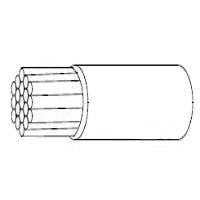
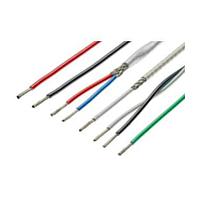
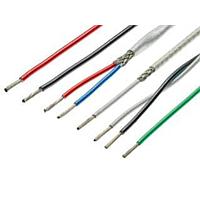
MultiConductor Cables
Reliable signal and power routing often depends on how well multiple conductors are organized, protected, and matched to the application. In control panels, machinery, robotics, communication systems, and equipment wiring, MultiConductor Cables help simplify installation by combining several insulated conductors within a single cable construction.
This category is relevant for engineers, maintenance teams, OEMs, and buyers who need an efficient way to handle grouped circuits while maintaining manageable cable routing. Whether the priority is control, communication, or machine interconnection, selecting the right cable structure can improve durability, reduce wiring complexity, and support cleaner system integration.
Where multi-conductor cables fit in industrial and electronic systems
A multi-conductor cable is typically used when several signals or power lines need to travel together in one jacketed assembly. This approach helps reduce clutter compared with running individual wires separately, and it can also support better organization during installation, troubleshooting, and maintenance.
These cables are commonly chosen for machine wiring, control cabinets, communication interfaces, automation equipment, and moving applications. In broader wiring projects, they are often evaluated alongside hook-up wire for point-to-point internal wiring and specialized cables for more application-specific requirements.
Common application needs this category supports
Not every project needs the same cable construction. Some systems require compact multi-pair designs for communication and low-level control signals, while others need cable assemblies with defined connectors for faster deployment in the field. In automation environments, flexing, routing space, shielding, and connector compatibility can all influence selection.
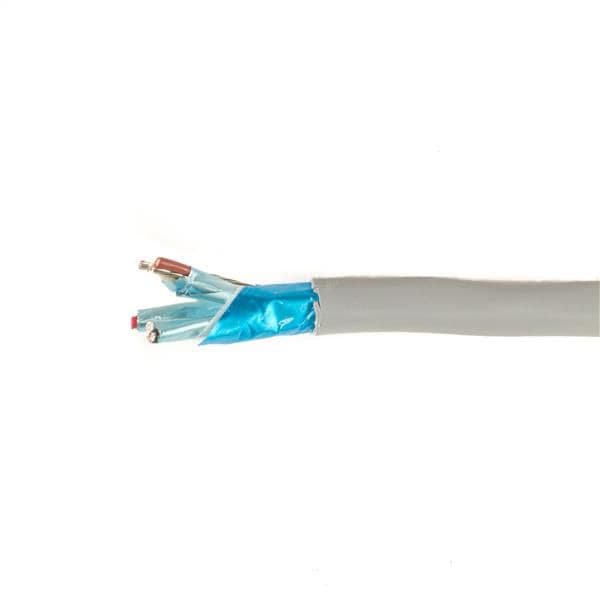
Examples from this category reflect that range. The 3M 3750/16SF Multi-Conductor Cable is an example of a multi-pair cable intended for communication, computer, and control contexts, with grouped twisted pairs and a shielded construction that can help support signal integrity. On the interconnect side, HARTING cable assemblies such as the 21348400383010 M12 A-Coded Cable Assembly and the 21348485484050 cord set illustrate how pre-terminated solutions can streamline machine and sensor connectivity.
Key selection factors before you buy
Choosing the right cable usually starts with the basics: conductor count, wire gauge, voltage rating, and the nature of the signals being carried. If a cable will handle multiple low-level circuits, pair arrangement and shielding may matter more than in simple power distribution. If it will be installed in equipment with repetitive movement, cable flexibility and mechanical resilience become more important.
It also helps to review the installation environment. For example, jacket and insulation materials should align with the expected routing conditions, while cable diameter affects bend radius and pathway capacity. In applications exposed to motion or machine vibration, products described as robot cable, such as the 3M 3644B/36SF or HARTING 21348485390010, may be more appropriate than a general fixed-installation cable.
Shielding, pairing, and cable construction
Shielding is often a critical consideration when cables carry communication or control signals near motors, drives, or other potential noise sources. Foil shielding, paired conductors, and organized internal geometry can all contribute to more stable signal transmission, especially in electrically busy environments.
For example, the 3M 3750/16SF includes 16 conductors arranged as 8 twisted pairs, making it relevant for grouped signal applications where pair structure matters. Other items in this category, such as the 3M 3600B/26SF and 3M 3600G/50 300, represent multi-conductor formats that may suit broader equipment wiring needs where multiple circuits must be bundled in a practical, space-conscious way.
Pre-terminated assemblies vs. bulk cable
One of the most important purchasing decisions is whether the project calls for bulk cable or a ready-to-install cable assembly. Bulk multi-conductor cable is often preferred when cable lengths, termination methods, or connector types need to be customized during panel building or equipment manufacturing. It offers flexibility for engineering teams that build to drawing and terminate in-house.
By contrast, pre-assembled options can reduce labor and help standardize installation quality. HARTING products in this category, including M12-based assemblies and robot cables, are useful examples of cable solutions designed for faster integration in industrial connection points. If the installation also needs structured cable management, related accessories such as cable ties can help support routing discipline and maintenance access.
Representative manufacturers in this category
This category includes products associated with established industrial and interconnect brands. 3M appears in examples covering multi-conductor cable and robot cable formats, while HARTING is represented with robot cables and M12 cable assemblies for industrial connectivity.
Other manufacturers listed in the broader catalog, such as Belden, Commscope, Banner Engineering, and TE Connectivity-related brands, add context for buyers comparing cable ecosystem options across industrial networking, control wiring, and connection hardware. The right choice depends less on brand alone and more on matching cable construction to movement, signal type, installation method, and system architecture.
How to narrow down the right option
A practical selection process starts by defining the circuit function: power, control, communication, or mixed use. Then verify conductor quantity, conductor size, shielding needs, routing path, and whether a connectorized assembly is preferred. This reduces the chance of selecting a cable that fits physically but does not align with electrical or mechanical demands.
It is also useful to think about the broader wiring environment. Some projects may involve adjacent technologies such as fiber optics for high-speed data transmission or other cable families for temperature-specific or application-specific conditions. Multi-conductor cables remain a strong choice when several copper conductors must be grouped efficiently for dependable system wiring.
Final considerations for sourcing multi-conductor cable
MultiConductor Cables are a practical foundation for many industrial, electronic, and automation installations because they simplify multi-circuit routing while supporting organized, scalable wiring. From shielded multi-pair constructions to robot cable and connectorized cord sets, this category covers a range of needs that can support both fixed and dynamic applications.
When comparing options, focus on how the cable will actually be used rather than choosing by description alone. Reviewing conductor arrangement, shielding approach, motion requirements, and termination style will make it easier to identify the most suitable product for the job and build a more reliable wiring system overall.
Get exclusive volume discounts, bulk pricing updates, and new product alerts delivered directly to your inbox.
By subscribing, you agree to our Terms of Service and Privacy Policy.
Direct access to our certified experts