
Test Lead Wire
Reliable measurement starts with more than just the instrument. In many bench, field-service, and electrical test setups, the wire between the device and the point under test plays a direct role in safety, flexibility, and signal integrity. Choosing the right Test Lead Wire helps support consistent results while matching the electrical, thermal, and mechanical demands of the job.
This category brings together wire intended for test lead assembly, measurement accessories, and related electrical test applications. It is especially relevant where users need flexible conductors, defined voltage ratings, and insulation materials suited to repeated handling, routing, and connection in laboratory, maintenance, or industrial environments.
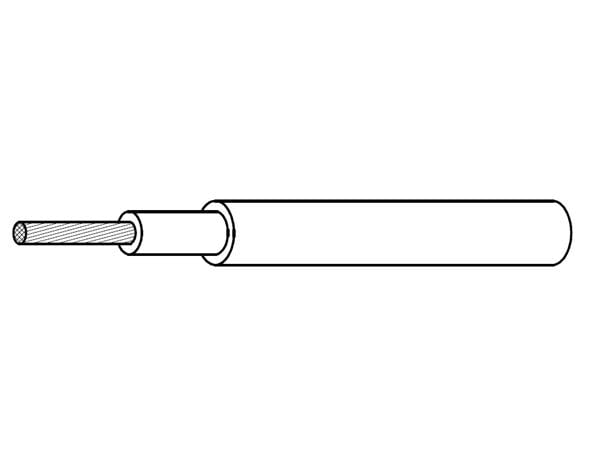
Where test lead wire is commonly used
Test lead wire is typically selected for applications that involve multimeters, bench testing, prototype validation, diagnostic work, and custom lead assembly. In these environments, users often need cable that remains manageable during repeated movement while maintaining dependable insulation performance. Compared with more general-purpose conductors, this type of wire is often chosen with closer attention to voltage category, jacket material, and flexibility.
It can also be useful in fixture building, educational labs, repair stations, and service kits where color coding and spool length matter for organization. If your application is broader than electrical testing alone, you may also want to review related options such as hook-up wire or more application-specific constructions under specialized cables.
Key properties that affect selection
The most practical way to compare products in this category is to look at a few core factors together rather than focusing on a single specification. These usually include conductor size, strand construction, insulation material, outer diameter, voltage rating, temperature capability, and available spool length. In real-world use, those properties influence flexibility, durability, routing convenience, and suitability for the test environment.
Conductor gauge affects current handling and mechanical robustness, while strand count often influences flexibility. A finer-stranded conductor can be easier to manage in portable or frequently handled leads, whereas a thicker gauge may be preferred where lower resistance or higher current capacity is needed. Jacket diameter also matters when space is limited or when the wire must fit into existing connectors, boots, or cable management systems.
Another major consideration is the insulation material. Silicone-insulated wire is often selected where high flexibility and elevated temperature resistance are important, while PVC can be a practical choice for many general testing environments. For applications exposed to heat, it may also be worth comparing products in temperature wire and cable to evaluate whether a different cable family is more appropriate.
Silicone and PVC options in this range
Several products in this category illustrate the difference between common insulation types used for test leads. The Cal Test Electronics range includes multiple silicone-insulated CAT III and CAT IV wires designed for flexible test applications, with examples covering different gauges, diameters, colors, and spool lengths. Products such as CT2956-0-50, CT2884-0-10, CT2884-5-50, and CT2885-5-50 show how the same product family can support different assembly needs, from short packaged lengths to longer spools for production or maintenance stock.
PVC-insulated options are also represented, including models like CT2880-9-100, CT2882-9-50, and CT2837-0-100. These provide an alternative where users need test lead wire with defined voltage ratings and standard insulation characteristics for bench or workshop use. The choice between silicone and PVC is often driven by handling preference, ambient temperature, and how often the lead will be flexed during normal operation.
Examples for higher-voltage and heavier-duty test setups
Not every test application has the same electrical or environmental demands. Some setups require wire intended for higher voltage exposure or more rugged insulation systems, especially in power-related measurement work or maintenance activities. In those cases, looking closely at voltage category markings and insulation composition becomes more important than selecting by color or length alone.
Belden models in this category provide a useful point of comparison. The Belden 8899 002U1000 and Belden 8899 010500 test lead wire options are built with 18 AWG tinned copper conductors and EPDM insulation, with a 5 kV rating listed in the provided data. That makes them relevant for users who need robust test wire for demanding electrical setups, while the available long lengths may be helpful for bulk lead fabrication or workshop inventory planning.
How to choose the right test lead wire for your application
A practical starting point is to define the test environment first. Consider whether the wire will be used on a bench, in a field service bag, inside a test fixture, or in proximity to warmer equipment. From there, narrow the selection by required voltage rating, insulation type, and conductor gauge. This approach helps avoid over-specifying in simple applications while reducing the risk of choosing wire that is too light or too stiff for repeated use.
Length and packaging are also important for purchasing efficiency. Shorter packaged lengths can make sense for prototyping, repairs, or small-batch assembly, while 50 m, 100 m, 500 ft, or 1000 ft spools are better suited to regular fabrication or stocking programs. Color selection, such as black, green, red, or white, can further support identification in multi-lead assemblies and reduce wiring errors during setup or maintenance.
Where frequent movement is expected, flexibility often becomes a deciding factor. Fine-stranded copper and silicone insulation may be preferred for leads that need to remain supple during repeated handling. For more stationary arrangements, users may prioritize durability, stock availability, and cost control across standard spool formats.
Fit within a broader wire and cable ecosystem
Test lead wire usually sits between general electronic wiring and more application-specific cable families. It is not simply a substitute for all-purpose building wire, and it may not replace specialty constructions designed for data transmission, fiber, or harsh industrial routing. Its value is in supporting electrical testing and lead assembly with properties that align more closely to measurement tasks.
In complete installations or organized workstations, supporting materials also matter. For example, cable routing and bundling may call for accessories such as cable ties to keep custom test leads manageable and reduce tangling. Thinking about the full assembly process can make product selection more efficient, especially for labs, OEMs, and maintenance teams building leads in quantity.
What buyers often compare before ordering
Technical buyers typically compare a short list of practical details before placing an order: insulation material, AWG size, strand construction, spool length, voltage rating, outer diameter, and color. These details affect not only electrical suitability but also how easily the wire can be terminated, labeled, routed, and stored. In B2B purchasing, consistency across repeat orders can be just as important as the initial technical match.
Manufacturer preference may also influence selection when a facility already standardizes on certain accessories or test components. In this category, names such as Belden and Cal Test Electronics are relevant points of reference based on the products shown here. Reviewing representative items side by side can help determine whether you need a more flexible silicone wire, a PVC-based option for routine applications, or a heavier-duty construction for higher-voltage work.
Final considerations
When selecting test lead wire, the best choice usually comes from matching the wire to the actual testing conditions rather than choosing by gauge alone. Voltage class, insulation type, temperature capability, flexibility, and spool format all contribute to long-term usability. A well-matched wire can make custom lead assembly easier, improve handling during measurement, and support safer, more organized test setups.
Use this category to compare options for bench testing, maintenance, electrical troubleshooting, and custom lead fabrication. By filtering the range according to insulation material, conductor size, and application demands, buyers can identify products that fit both immediate project needs and ongoing operational requirements.
Get exclusive volume discounts, bulk pricing updates, and new product alerts delivered directly to your inbox.
By subscribing, you agree to our Terms of Service and Privacy Policy.
Direct access to our certified experts