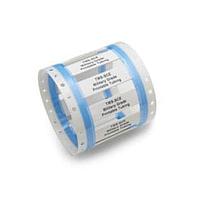
Wire & Cable Management
Protecting conductors is just as important as selecting the right cable itself. In control panels, machinery, harness assemblies, and field installations, effective wire & cable management helps reduce abrasion, improve identification, support routing, and extend service life in demanding electrical environments.
This category brings together products used to organize, insulate, bundle, and protect cable runs in a practical way. Whether the job involves compact electronics, industrial wiring, or cable terminations exposed to heat and movement, the right tubing and management accessories can make installation cleaner, safer, and easier to maintain over time.
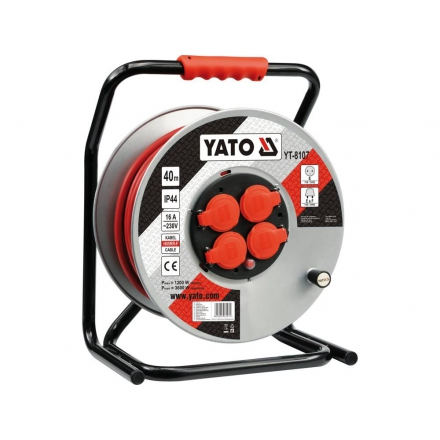
Where wire and cable management adds value
Good cable management is not only about appearance. In industrial and commercial applications, it supports mechanical protection, electrical insulation, strain relief, and better service access. A well-managed cable path can also reduce the risk of snagging, bending damage, and confusion during troubleshooting or upgrades.
These products are commonly used in panel building, cable harness preparation, equipment assembly, maintenance work, and retrofit projects. They are also relevant when different conductor groups need color coding, localized insulation repair, or added protection around splices, connectors, and cable exits.
Heat shrink tubing as a core solution
A major part of this category is heat shrink tubing, widely used to insulate and protect wires, terminals, and cable joints. When heated to its recovery temperature, the tubing contracts around the underlying component to create a tighter, more secure fit. This makes it useful for both new installations and rework.
Examples in this range include several 3M tubing options such as FP301 series variants in clear, black, white, red, and green, along with products like 3M ITCSN-1100-6-Box and 3M VFP-876-1/4-48-BLACK. For heavier-duty needs, the Amphenol HST ARA-6X 40.0/7.4 (00) model illustrates that some applications require thicker-wall or more rugged tubing depending on the environment and cable geometry.
How to choose the right tubing or cable protection product
Selection usually starts with the cable or component dimensions before and after installation. The relationship between the tubing’s supplied inner diameter, recovered diameter, and wall thickness matters because it determines fit, sealing behavior, and flexibility. In the products listed here, common materials such as polyolefin appear frequently because they offer a balanced combination of insulation performance, shrink behavior, and handling ease.
It is also important to consider the shrink ratio and expected operating conditions. For example, 2:1 tubing may suit many standard insulation and identification tasks, while 3:1 options can be better for parts with greater diameter variation between connector bodies and cable sections. Temperature range, shrink temperature, and color requirements can all influence the final choice, especially in production environments where repeatability matters.
Typical applications across industrial wiring
In control cabinets and machine wiring, cable management materials help keep conductor runs separated and easier to identify. Heat shrink tubing is often applied over wire ends, soldered joints, crimp transitions, and breakout points where extra insulation or reinforcement is needed. Clear tubing can also be useful where underlying markings remain visible, while colored tubing supports circuit grouping and visual organization.
For harness work and cable preparation, these products often complement items such as cable ties for bundling and retention. In other projects, they may be used alongside hook-up wire when assembling internal wiring for instruments, panels, or prototype systems.
Material, color, and wall style considerations
Not all tubing is intended for the same purpose. Thin-wall polyolefin products are commonly chosen where flexibility, general insulation, and easy installation are priorities. Heavier constructions may be more suitable when the assembly needs added resistance to wear or more robust mechanical coverage around larger cable transitions.
Color can also be more than a cosmetic decision. Black is often used for general-purpose protection, while white, red, and green variants can support marking schemes, phase identification, or assembly consistency. Clear tubing is a practical option when visibility of labels or conductors is still required after installation. Looking at representative items such as 3M FP301 3/64 CL, 3M FP301 3/64 BK, or 3M FP-301-1-GREEN-50' shows how the same product family can address different installation preferences.
When brand and product family matter
For many B2B buyers, consistency across maintenance and production workflows is important. Choosing established product families can help standardize fit, handling, and documentation across repeat jobs. Within this category, 3M appears prominently with multiple heat shrink tubing options, while Amphenol is also represented for applications that may call for more specialized cable protection formats.
Brand selection should still be tied to the actual use case rather than the label alone. The most suitable product depends on cable diameter range, installation method, thermal conditions, and whether the priority is identification, insulation, or more durable physical protection.
Building a more complete cable management setup
Wire and cable management works best as part of a broader interconnection strategy. Tubing and protective sleeves address local insulation and strain points, but project performance also depends on the surrounding cable type, routing method, and installation environment. For systems with application-specific signal or power requirements, related categories such as specialized cables may also be relevant.
Where temperature exposure is a deciding factor, cable insulation and protective components should be reviewed together so the assembly is matched to real operating conditions. This is particularly important in equipment that sees elevated heat, outdoor variation, or concentrated thermal loads near power devices and enclosures.
Practical guidance for buyers
When comparing options in this category, start with the cable diameter range and the purpose of the tubing: insulation, identification, bundling support, or added mechanical coverage. Then review shrink ratio, material type, recovered wall thickness, and temperature limits. This approach helps narrow the selection more effectively than choosing by color or product family alone.
If your application involves panel wiring, harness building, or cable repairs, a well-chosen wire and cable management product can improve assembly quality and simplify future maintenance. Explore the available range to match the tubing style, size, and protection level to the demands of your installation.
Get exclusive volume discounts, bulk pricing updates, and new product alerts delivered directly to your inbox.
By subscribing, you agree to our Terms of Service and Privacy Policy.
Direct access to our certified experts